 St. Petersburg Siding
 Living With Pinellas County's Climate in Pinellas Park
Pinellas Park sits inland from St. Petersburg's bayfront, but "inland" in Pinellas County doesn't mean sheltered. The same weather system that batters the coastline moves through the whole peninsula, and homes here deal with a combination that's hard on exterior building materials: long stretches of intense UV, humidity that rarely lets up, wind-driven rain during summer storms, and the real possibility of hurricane-force wind gusts during the season. Add in salt-laden air that drifts inland on prevailing breezes off Tampa Bay and the Gulf, and you've got a climate that tests siding, trim, and roofing far harder than most parts of the country.
None of this is unique to any one street or subdivision in Pinellas Park. It's the baseline condition for exterior work across St. Petersburg and the surrounding Pinellas County communities. What it means practically is that the products and installation methods that work fine in a drier, milder climate often don't hold up here — and that's the reasoning behind how we've built our siding business.
What the Climate Actually Does to a House
UV exposure breaks down pigments and surface coatings over years, which is why so many houses in this area show chalky, faded siding on their south and west-facing walls well before the rest of the house looks worn. Humidity and wind-driven rain find their way into any gap, seam, or fastener hole that wasn't sealed correctly, and once moisture gets behind a wall system, it doesn't leave quickly in a climate this humid. Salt air accelerates corrosion on fasteners, flashing, and any metal component that isn't rated for coastal exposure. And wind load during tropical storms and hurricanes puts real mechanical stress on how siding is fastened to the wall — this is a case where installation technique matters as much as the product itself.
Why We Install Only James Hardie Fiber Cement
We get asked fairly often why we don't offer vinyl siding, LP SmartSide, or other engineered wood and fiber cement alternatives like Cemplank or Allura. It's a fair question, and the honest answer is that we made a standardization decision based on what we've seen hold up in this specific climate over time, not a marketing preference.
Vinyl siding is affordable and low-maintenance in mild climates, but it softens and can deform in sustained high heat, and in a wind event its fastening system relies on the panels being able to move slightly within their tracks — which makes wind rating a real variable between products and installations. Engineered wood products like LP SmartSide use treated wood strand technology that resists rot better than untreated wood, but they're still a wood-based substrate, and wood-based substrates are more sensitive to sustained moisture exposure than fiber cement, especially at cut edges and butt joints where the factory treatment doesn't reach unless those areas are field-treated correctly every time. Other fiber cement brands make a legitimate product, but we standardized on one manufacturer so our crews build deep expertise with one set of installation specs, one flashing detail set, and one warranty structure, rather than splitting attention across several systems.
James Hardie is non-combustible, doesn't support pest activity the way wood-based sidings can, and its ColorPlus factory-applied finish is engineered specifically to resist UV fade better than field-applied paint. For a climate that combines heat, humidity, salt air, and wind, that combination is what we're willing to stand behind — and it's the only siding system we put our name on.
The James Hardie Product Lines We Use
James Hardie makes several siding profiles, and we select the right one based on the house, not a one-size-fits-all default. HardiePlank lap siding is the most common choice for traditional home profiles. HardieShingle gives a shingle-style look for homes that want that texture without the maintenance of actual wood shingle. HardiePanel is used for vertical applications and accent sections. All of it is available in Hardie's HZ5 formulation, which is engineered specifically for climate zones like ours that see high humidity and moisture exposure.
| Product Line | Typical Use | Why It Fits This Climate |
|---|---|---|
| HardiePlank Lap Siding | Primary wall cladding, traditional and modern homes | HZ5 formulation resists moisture and humidity-driven damage |
| HardieShingle | Accent walls, gable ends, coastal/craftsman styles | Shingle look without wood's rot and pest vulnerability |
| HardiePanel | Vertical siding, porch ceilings, accent sections | Rigid panel holds a clean line under wind load |
| HardieTrim | Corner boards, window and door trim, fascia | Matches expansion behavior of the field siding, reducing gap and crack issues |
All of it comes with Hardie's ColorPlus factory finish as an option, which is baked on and cured under controlled conditions rather than sprayed or brushed on site. That matters in a climate where UV breaks down field-applied paint faster than it breaks down a factory finish, and it's backed by its own finish warranty separate from the product warranty.
What Correct Installation Looks Like Here
Fiber cement siding is only as good as its installation, and this is the part of the job that separates a siding system that lasts decades from one that causes problems in five years. James Hardie publishes detailed installation specs for a reason — fastener spacing, clearance from grade and roof lines, proper flashing at every penetration and butt joint, and correct caulking at seams all affect how the wall assembly handles wind-driven rain and humidity over time.
Details That Matter in Pinellas County
- Corrosion-resistant fasteners appropriate for coastal-influenced air, not standard interior-grade hardware
- Proper starter strip and clearance at the foundation line to avoid wicking moisture up from grade
- Correctly lapped and sealed house wrap or weather-resistant barrier behind the siding
- Flashing at every window, door, and roof intersection, not just caulk alone
- Fastener spacing and placement that meets Hardie's published wind-load specifications for our zone
- Butt joints and seams treated per manufacturer spec rather than left to absorb water
A crew that cuts corners on any of these details can put up a product that looks identical to correctly installed Hardie siding on day one, but performs very differently after a few hurricane seasons. That's why installation training and manufacturer-spec compliance matter as much as the product choice itself.
Beyond Siding: Roofing, Windows & Decks for the Full Envelope
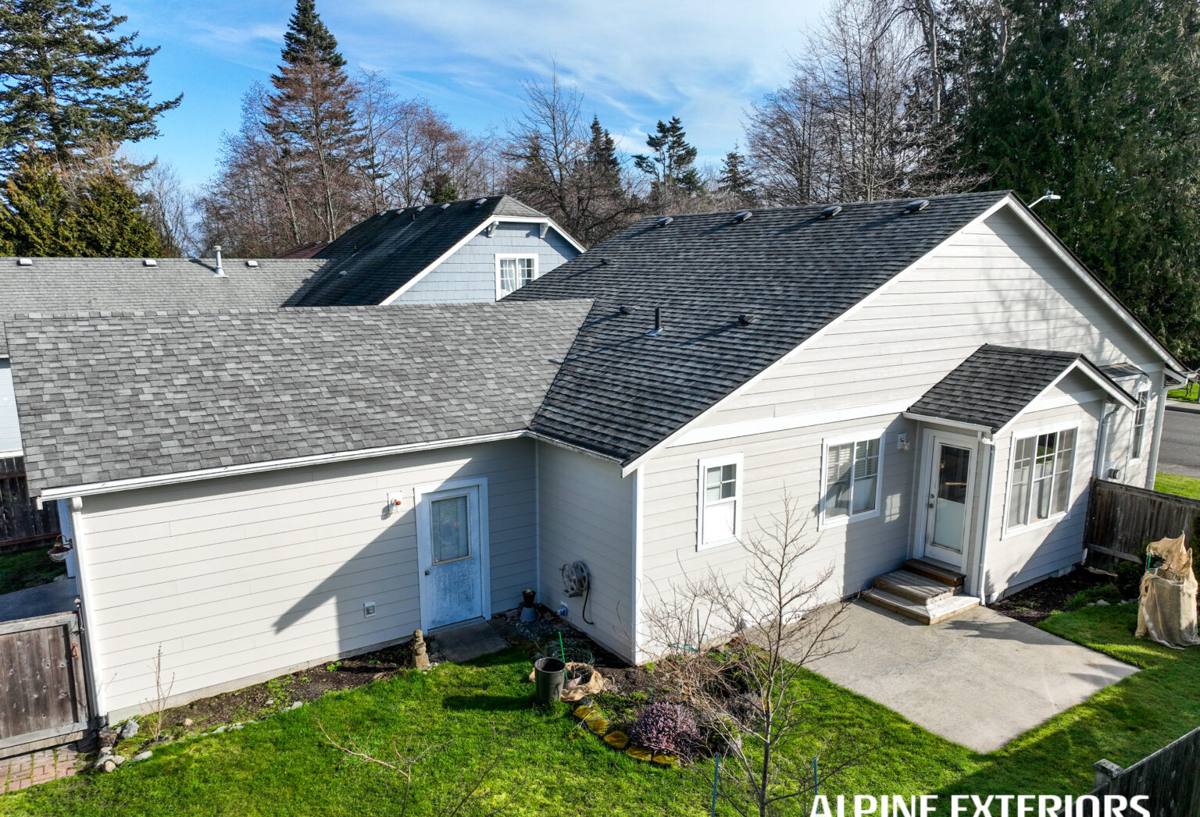
Siding doesn't work in isolation — it's one part of a home's exterior envelope, and the other components have to work with it, not against it. We also handle roofing, windows, and decks, which lets us look at a Pinellas Park home as a complete system rather than patching one component while ignoring how it interacts with the rest.
Roofing
Roof condition directly affects siding performance. A roof that's shedding water improperly, or has failing flashing at a wall intersection, will send water directly into a siding system no matter how well that siding was installed. When we're on a property for siding work, we look at how the roofline interacts with the wall assembly.
Windows
Window flashing and integration with the siding plane is one of the most common failure points on any home, coastal or not. Replacing siding around old or poorly flashed windows without addressing the window integration just relocates the same moisture problem to a new surface.
Decks
Outdoor living structures in this climate face their own UV and moisture exposure, and where a deck attaches to the house, that connection point needs the same careful flashing attention as any other penetration in the wall system.
Homeowners in Pinellas Park often start a conversation with us about one of these — usually siding or roofing — and find it useful to have one crew that understands how all four systems fit together instead of coordinating separate contractors who don't talk to each other.
What Affects Your Project's Cost
Every home is different, and we don't post fixed pricing because wall area, existing condition, trim complexity, and product selection all move the number. What we can walk through honestly are the factors that drive cost up or down on a typical Pinellas Park siding project.
| Factor | How It Affects Cost |
|---|---|
| Total wall square footage | Larger homes and multi-story walls require more material and labor |
| Existing siding removal | Tear-off of old vinyl, wood, or damaged siding adds labor beyond a straightforward install |
| Underlying wall condition | Rot, moisture damage, or sheathing repair found during tear-off adds scope |
| Product line and finish | ColorPlus factory finish vs. field-painted primed product changes material cost |
| Trim and architectural detail | Corner boards, window trim, gable accents, and multiple siding profiles add labor time |
| Access and site conditions | Tight lot lines, multi-story sections, and landscaping obstacles affect crew efficiency |
The only way to get real numbers is a site visit, which is why we don't quote off a phone description alone — condition matters too much to guess at.
Choosing the Right Local Contractor
Pinellas Park homeowners have plenty of contractor options, and it's worth being deliberate about who you hire for exterior work that's meant to last decades. A few things worth checking before signing anything:
- Active Florida contractor licensing and insurance you can verify independently
- Manufacturer training or certification specific to the siding product being installed
- A written scope that specifies product line, finish, fastener type, and flashing details — not just "siding replacement"
- Clear warranty terms covering both the product and the labor, and whether the warranty is transferable if you sell the home
- Local references or a local physical presence, since a crew unfamiliar with Pinellas County wind and moisture conditions is more likely to skip climate-specific details
- A willingness to explain why they recommend a particular product for your specific home, not just a default answer
A local crew that works in this climate regularly understands the difference between a spec sheet written for a national market and what actually holds up two counties from the Gulf. That's the standard we hold ourselves to on every Pinellas Park project.
If you're weighing a siding, roofing, window, or deck project in Pinellas Park or elsewhere in St. Petersburg, we're happy to take a look and talk through what your home actually needs. The estimate is free, there's no pressure, and you'll get a straight answer about condition and options before you decide anything.