 St. Petersburg Siding
 Childs Park and the Reality of Pinellas County Weather
Childs Park is one of St. Petersburg's established residential neighborhoods, and like the rest of Pinellas County, it sits squarely in the path of everything Florida's climate can throw at a house. This isn't a place where exterior materials get a break. Homes here deal with hurricane-force winds during storm season, intense UV exposure nearly every day of the year, wind-driven rain that finds its way into any gap or weak seam, and a steady dose of salt air carried in off Tampa Bay and the Gulf. None of these forces act alone — they compound each other, and over years that combination is what separates a siding job that lasts from one that quietly fails behind the paint.
We've built our business around understanding exactly how that combination affects the exterior products installed on homes in this area. That's why we're selective about what we put on a house, and why we're upfront with Childs Park homeowners about what actually holds up here versus what looks good on a spec sheet in a mild climate.
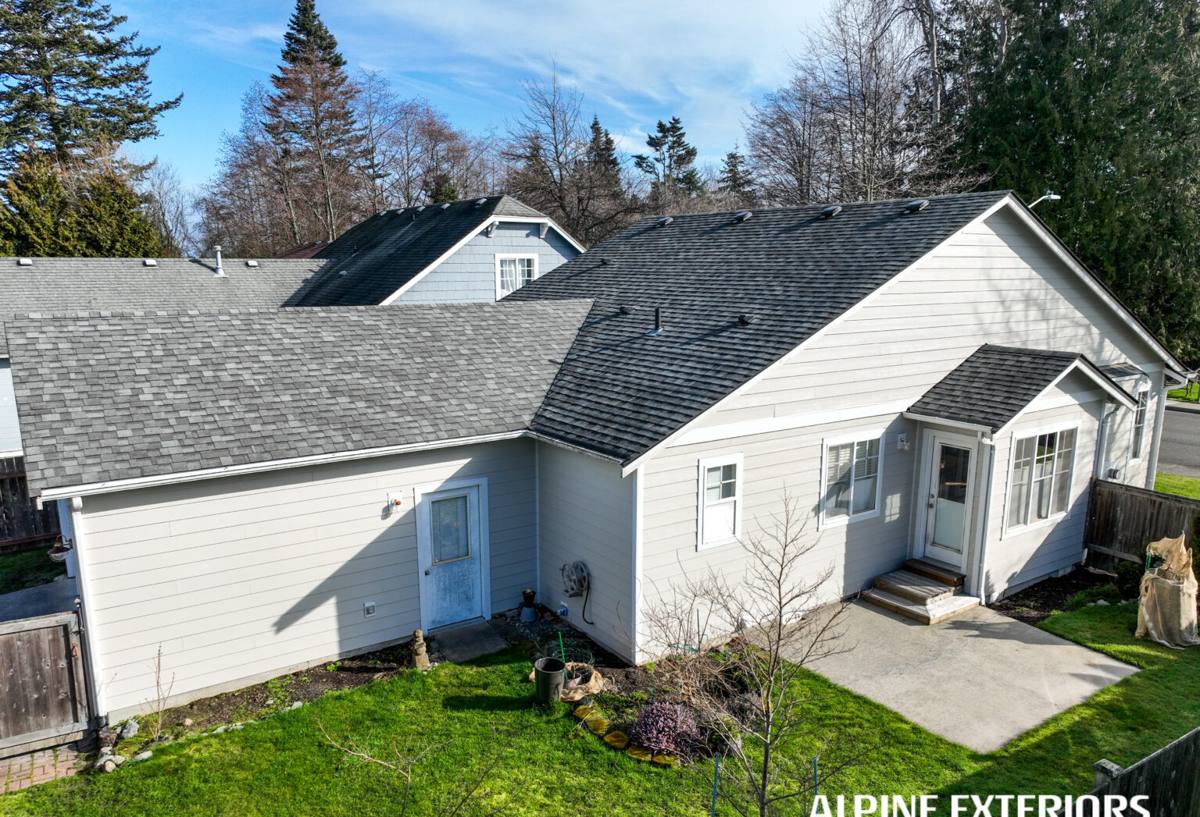
How Sun, Wind, and Moisture Attack a House Here
UV Degradation
Central Florida sun is relentless. Siding materials with poor UV resistance chalk, fade, and become brittle years ahead of their rated lifespan. Paint film that would last a decade in a northern climate can start breaking down in half that time under Pinellas County sun, especially on south- and west-facing walls that take direct exposure most of the day.
Wind-Driven Rain
Rain in this region rarely falls straight down. Storms push it sideways, driving water into laps, seams, and fastener points that were never designed to handle sustained horizontal moisture. Any siding product that swells, warps, or wicks water when it gets wet is fighting a losing battle against this pattern year after year.
Salt Air
Even well inland from the immediate coastline, salt-laden air moves through the Tampa Bay area and accelerates corrosion on fasteners, trim, and any metal components in an exterior system. It also interacts with organic materials in ways that speed up decay in humid conditions.
Hurricane and Tropical Storm Wind Loads
Pinellas County homes need siding that's rated to stay attached and intact under serious wind pressure, not just resist a stiff breeze. Fastener spacing, product density, and installation method all matter more here than in most of the country.
Why We Install Only James Hardie Fiber Cement Siding
We made a deliberate decision as a company: we install James Hardie fiber cement siding, and we don't install vinyl, LP SmartSide, Cemplank, Allura, or primed wood products like spruce or cedar. That's not a marketing position — it's a practical one, built on what we've seen hold up on Florida homes over time.
Vinyl siding is affordable and easy to install, and in a milder climate it can be a reasonable choice. In Pinellas County, it's a different story. Vinyl softens and can deform in sustained high heat, becomes brittle with age under UV exposure, and has real limits on wind resistance compared to fiber cement — a meaningful concern in a hurricane-prone county. It also can't be painted a dark color without risking warping from heat absorption, which limits design options for homeowners who want richer tones.
Engineered wood products like LP SmartSide use a wood-strand core that's more moisture-resistant than raw lumber, but it's still an organic, wood-based material at heart. In a climate with this much humidity and wind-driven rain, any breach in the factory coating or a poorly sealed cut edge gives moisture a path in, and wood-based products don't tolerate sustained moisture exposure the way fiber cement does. Other fiber cement brands like Cemplank and Allura are chemically similar to Hardie, but we've standardized on Hardie specifically for its manufacturing consistency, its ColorPlus factory-baked finish, and the strength of its transferable warranty — details that matter over the 30-plus-year life of a siding job.
Primed spruce or cedar siding can look beautiful when it's new, but raw or lightly primed wood requires an ongoing maintenance commitment — repainting, caulking, and moisture monitoring — that most homeowners underestimate until they're a few years in and already seeing rot at the bottom courses. In a climate like ours, that maintenance burden shows up faster than it would in a drier region.
James Hardie fiber cement is non-combustible, dimensionally stable in heat and humidity, and manufactured in HZ5 formulations specifically engineered for high-moisture, high-humidity climates like Florida's. It holds paint and color far longer than wood, doesn't provide a food source for pests, and carries a robust warranty structure. That combination is why it's the only siding product we put our name behind.
Beyond Siding: Roofing, Windows, and Decks
Siding doesn't work in isolation — it's one part of a home's exterior envelope, and we approach Childs Park projects with that whole picture in mind.
Roofing
A roof in poor condition undermines even the best siding job by allowing water intrusion at the roofline that migrates down behind wall assemblies. We evaluate roof condition, flashing, and drainage as part of any exterior project, since wind and rain don't distinguish between roof and wall — they attack the whole envelope.
Windows
Window flashing and sealant integration with new siding is one of the most common places we find prior water intrusion on older homes. Replacing or properly re-flashing windows during a siding project closes off a failure point that's easy to overlook.
Decks
Outdoor living spaces in this climate take the same UV and moisture punishment as siding, just at ground level with added foot traffic and standing water risk. Deck materials and fastening need the same climate-appropriate approach as the rest of the exterior.
Handling all four trades under one roof means fewer handoffs between contractors, fewer gaps in accountability, and an exterior that's been thought through as one connected system rather than four separate projects.
What Correct Installation Actually Involves
James Hardie siding performs the way it's rated to perform only when it's installed to the manufacturer's specifications — and in a wind-and-rain climate like Pinellas County's, the details matter more than they would elsewhere.
- Proper fastener type, spacing, and embedment depth for local wind zone requirements
- Correct clearances from roof lines, decks, and grade to prevent moisture wicking
- Weather-resistive barrier and flashing integration at every window, door, and penetration
- Proper panel gapping and caulking at butt joints and trim to allow for expansion
- Factory-finished ColorPlus panels handled and cut in ways that protect the factory coating
- Attention to corner and trim details, which are common failure points in wind events
A rushed or corner-cutting installation can undercut even the best product. Most of the siding failures we get called out to inspect trace back to installation shortcuts, not a defect in the material itself.
What a Siding Project Typically Costs
Every home is different, and an accurate number requires an on-site look at square footage, current condition, trim complexity, and any repair work needed underneath. That said, homeowners in Childs Park researching a project generally want to understand what drives the price up or down.
| Cost Factor | Why It Matters |
|---|---|
| Home size and wall complexity | More square footage and more corners, gables, and dormers mean more material and labor time |
| Existing substrate condition | Rot or moisture damage found under old siding adds repair scope before new siding goes up |
| Siding profile and trim style | Lap width, shake accents, and custom trim details affect both material cost and install time |
| Color and finish | Factory-applied ColorPlus finishes cost more upfront than field-painted but eliminate repainting for years |
| Access and site conditions | Tight lot lines, landscaping, or multi-story sections can add labor and equipment needs |
We provide detailed, itemized estimates so homeowners can see exactly what they're paying for rather than a vague lump sum.
Why a Local Crew Matters in This Neighborhood
A crew that works across St. Petersburg and Pinellas County regularly understands things a national installer or an out-of-town crew simply doesn't: how wind uplift behaves on this coastline, how the local permitting and inspection process works, and what moisture patterns actually show up on homes here versus homes in a drier climate. That familiarity shows up in the details — flashing choices, fastener schedules, and where extra attention gets paid on a given house.
It also means accountability. A local company has a reputation in the community to maintain and is available for follow-up, warranty service, or questions long after the crew has packed up — not a call center in another state.
Signs Your Current Siding May Be Struggling
Homeowners in Childs Park often live with early warning signs for longer than they should, simply because the damage isn't obvious from the street. Worth checking for:
- Soft or spongy spots when you press on siding, especially near the bottom courses
- Visible warping, bubbling, or separation at panel seams
- Paint that's peeling, chalking heavily, or fading unevenly across different walls
- Gaps or cracking around window and door trim
- Visible staining or streaking that suggests water is tracking behind the siding
- A musty smell in interior rooms along an exterior wall
Any of these are worth a professional look before they turn into a larger repair.
Get a Straightforward, No-Pressure Estimate
If you're weighing a siding, roofing, window, or deck project for your Childs Park home, we're glad to come take a look, walk you through what we're seeing, and put together a clear, itemized estimate — no pressure, no hard sell. Use the form below to get started.