 St. Petersburg Siding
 Siding in a Neighborhood Built Before Modern Building Codes
Historic Kenwood is one of St. Petersburg's oldest residential neighborhoods, and it looks the part — bungalows, Craftsman-style homes, and early-20th-century construction shaded by mature oak canopy. That character is exactly why homeowners here love the neighborhood, and it's also why exterior work on these homes requires a different mindset than a typical new-construction job in a Pinellas County subdivision. Original wood siding, older wall assemblies, and decades of prior repairs mean every house has its own quirks, and a contractor who treats it like a cookie-cutter job usually ends up creating more problems than they solve.
We work throughout St. Petersburg and Pinellas County, and homes in established neighborhoods like Kenwood make up a meaningful share of our siding, roofing, window, and deck work. We understand what a 60-, 80-, or 100-year-old exterior wall actually looks like once you open it up — and we plan the job around that reality instead of assuming it's the same as a house built in 2015.
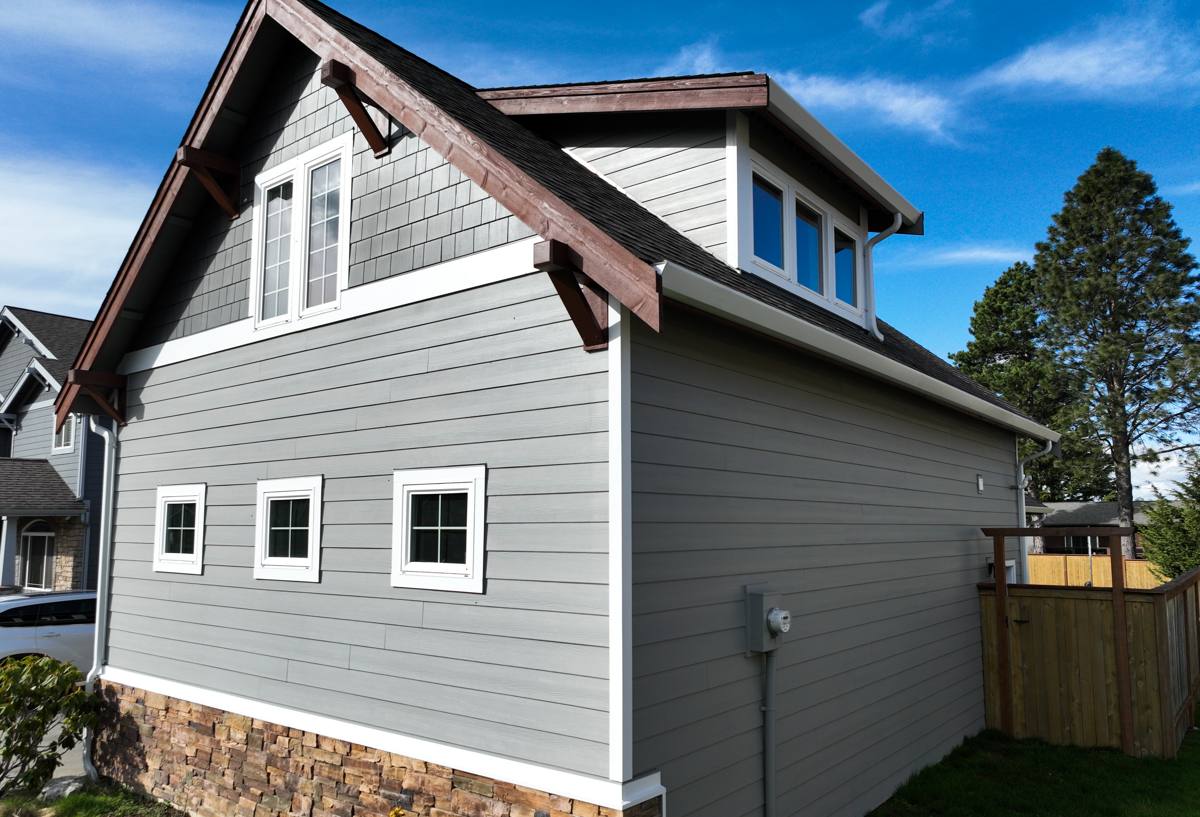
What Central Florida Weather Does to an Older Home's Exterior
St. Petersburg sits on a peninsula, which means every exterior surface on a Kenwood home is dealing with a combination of stresses that inland homes simply don't see to the same degree:
- Hurricane-force wind: Gusts during tropical systems put real lateral load and uplift pressure on siding, fascia, and roof edges — and older fastening methods weren't engineered to today's wind standards.
- Intense, year-round UV: Florida's sun angle and exposure hours are harsher than most of the country's, which breaks down paint film, cracks old wood siding, and fades weaker exterior materials faster than homeowners expect.
- Wind-driven rain: Storms here don't just fall straight down — wind pushes rain sideways into wall assemblies, seams, and trim joints, which is where most long-term moisture damage actually starts.
- Salt air: Kenwood's proximity to Tampa Bay means airborne salt is a constant, low-level corrosive presence on fasteners, flashing, and any material not built to handle it.
None of these factors is unique to Kenwood, but they hit older housing stock harder because the original materials and installation methods predate modern coastal building standards. A 1920s wood-frame bungalow was built for its era — not for the storm frequency and UV exposure it's absorbed since.
Why Historic-Neighborhood Homes Need a Different Approach
Original Wall Assemblies
Many older Kenwood homes still have original sheathing, balloon framing, or repairs layered on top of repairs. Before we talk about what siding goes back on, we look at what's actually underneath — soft spots, moisture-damaged framing, or areas where insulation and vapor management were never addressed properly. Installing a new product over a compromised wall doesn't fix anything; it just hides the problem for a few more years.
Matching the Character of the Home
Homeowners in historic neighborhoods are usually not looking to make their house look "new" — they want it to look like itself, only sound. That means paying attention to trim profiles, reveal spacing, and how the siding relates to window and door casings that may be original to the house. We treat that as part of the job, not an afterthought.
Access and Site Conditions
Mature tree canopy, narrower lots, and older driveways common in historic districts change how a crew stages material and equipment. It's a small thing, but a crew that hasn't worked in neighborhoods like Kenwood before can end up damaging landscaping or struggling with access in ways that slow the job down and drive up cost.
Why We Install Only James Hardie Fiber Cement Siding
We get asked regularly why we don't offer vinyl, LP SmartSide, or other engineered wood products, since they're common and often cheaper up front. The honest answer is that after years of exterior work on Gulf Coast homes, we standardized on James Hardie fiber cement because it holds up to this specific climate better than the alternatives, and we'd rather stand behind one product we trust completely than offer several and let cost be the deciding factor.
- Non-combustible material — fiber cement doesn't burn, which vinyl and wood-based products can't claim.
- Moisture resistance — Hardie's fiber cement composition doesn't absorb and swell the way engineered wood siding can when wind-driven rain gets past the surface.
- Built for heat and UV — Hardie's HZ5 product line is engineered specifically for hot, humid, high-UV climates like ours, not adapted from a product designed for the Midwest.
- ColorPlus factory finish — a baked-on finish that resists fading far longer than field-applied paint, which matters enormously under Florida sun.
- Strong transferable warranty — backed by a manufacturer warranty that adds real value if the home is sold, which matters in a desirable, high-turnover neighborhood like Kenwood.
Vinyl siding is inexpensive and easy to install, but it can warp in high heat, doesn't stand up as well to wind-driven debris, and doesn't suit the trim detail that historic-style homes usually call for. LP SmartSide and similar engineered wood products perform reasonably well when installation is flawless and maintenance stays current, but they carry more moisture risk than fiber cement if a seam or cut edge isn't sealed correctly — and in a coastal, storm-exposed area, we don't think that's a risk worth passing on to a homeowner. Fiber cement gives us a product we can install once and stand behind for the long term.
Siding Material Comparison for Coastal Pinellas County Homes
| Factor | James Hardie Fiber Cement | Vinyl | Engineered Wood (LP SmartSide) |
|---|---|---|---|
| Wind/impact resistance | High | Moderate — can crack or blow off in high wind | Moderate |
| Moisture/rot risk | Very low | Low, but seams can allow water intrusion | Moderate if seams/cuts aren't sealed |
| UV/fade resistance | High (ColorPlus finish) | Moderate — can fade or chalk over time | Moderate — relies on field-applied paint |
| Fire resistance | Non-combustible | Combustible | Combustible |
| Fit for historic trim detail | Excellent — wide profile/color range | Limited | Good |
Roofing, Windows, and Decks: The Rest of the Exterior Envelope
Siding rarely fails in isolation. On older homes especially, the roof, windows, siding, and any deck or porch structure all interact — a roof leak shows up as siding damage two floors down, and a failing window seal drives moisture into the wall cavity behind it. We handle all four because it lets us look at the home as one system instead of quoting a single component and hoping the rest holds up.
Roofing
Roof coverings absorb the brunt of UV exposure and wind uplift, and on an older home the roof deck itself may need attention before new material goes on. We evaluate the full assembly, not just the shingles or tiles on top.
Windows
Original or aging windows are a common source of both energy loss and water intrusion. Replacement windows sized and flashed correctly protect the wall assembly around them — which protects the siding job you just paid for.
Decks
Outdoor structures in this climate take constant sun and moisture cycling. We build and repair decks with materials and fastening methods suited to Gulf Coast exposure, not generic lumberyard specs.
What the Process Looks Like
- On-site assessment: We walk the exterior, check for moisture damage, and identify any wall or structural issues before quoting material.
- Honest scope and estimate: You get a clear breakdown of what's needed and why — no pressure, no inflated scare tactics.
- Prep and repair: Any compromised sheathing or framing gets addressed before new siding goes on.
- Installation to manufacturer spec: James Hardie siding installed following the manufacturer's fastening, clearance, and flashing requirements — the details that actually determine how long it lasts.
- Final walkthrough: We review the finished work with you before calling the job done.
Questions to Ask Before Hiring an Exterior Contractor in an Older Neighborhood
- Have you worked on homes of this age and construction type before?
- Will you inspect the wall assembly before quoting, or just measure and quote?
- Are you a certified James Hardie installer, and what does that certification actually require?
- What's covered under the manufacturer warranty versus your own workmanship warranty?
- How do you handle unexpected damage found once old siding comes off?
A Local Crew Matters More Than It Sounds
A contractor based in or near St. Petersburg understands Pinellas County permitting, knows what hurricane-season timelines actually look like, and isn't guessing about how salt air and coastal humidity behave over a 10- or 20-year span. That local knowledge shows up in small decisions throughout a project — fastener selection, flashing details, scheduling around storm season — that a crew unfamiliar with the area might not think twice about.
If you're weighing a siding, roofing, window, or deck project on a home in Historic Kenwood, we're happy to take a look and give you a straightforward, no-pressure estimate. Use the form below to get started.