 St. Petersburg Siding
 A Historic Neighborhood With a Tougher-Than-Average Exterior Job
Old Northeast sits close to the water, under a mature tree canopy, in a part of St. Petersburg where the homes carry real architectural character — bungalows, Mediterranean Revival cottages, and early-to-mid-century construction that gives the neighborhood its identity. That character is worth protecting, and it's also part of what makes exterior work here different from a newer subdivision on the edge of Pinellas County. Older wall assemblies, closer proximity to Tampa Bay, and a tree canopy that traps humidity all change how siding, trim, and roofing hold up over time.
We work throughout St. Petersburg and Pinellas County, and Old Northeast is one of the areas where the gap between "siding that looks fine for a few years" and "siding built for this specific climate" shows up fastest. Hurricane-force wind events, intense year-round UV, wind-driven rain, and salt air are a normal part of life this close to the coast — the exterior of a home here is doing real work every single day, not just during storm season.
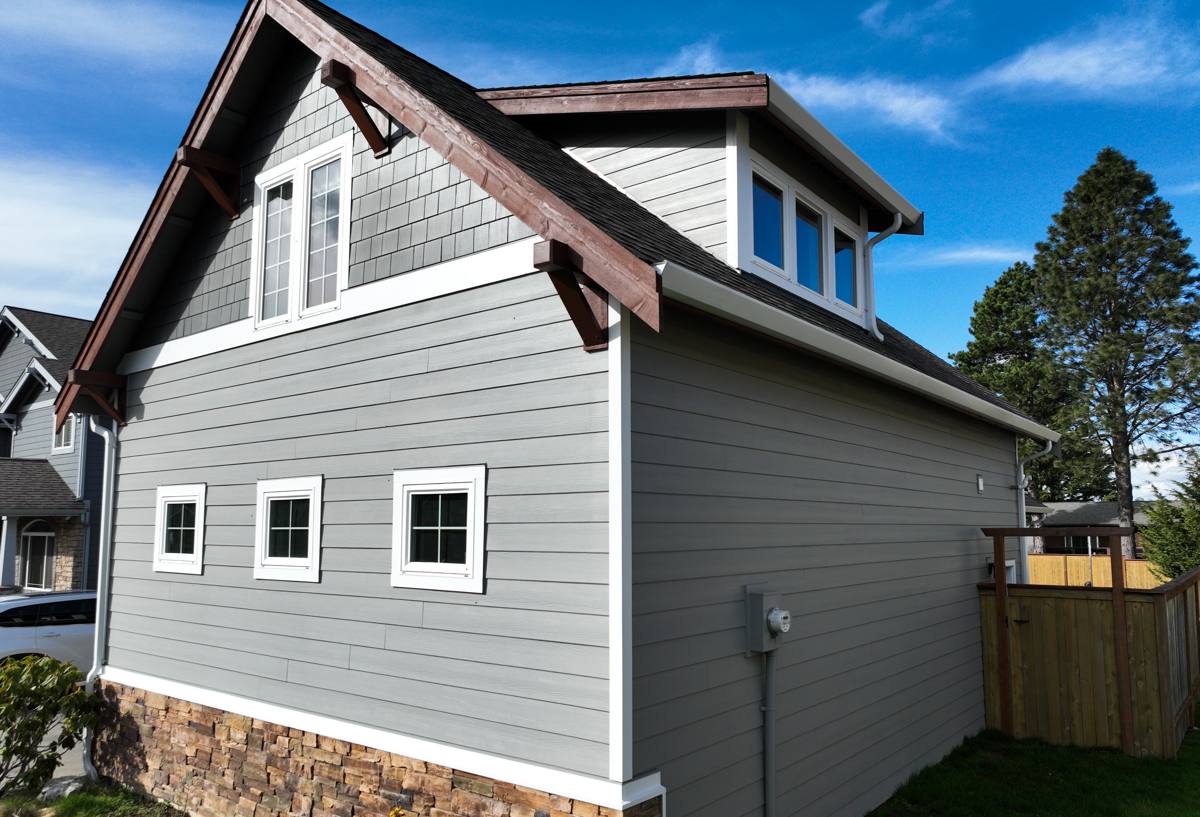
What the Climate Actually Does to a Home in This Area
Sun and Heat
Florida sun is more intense and more constant than most siding products were originally engineered for. UV breaks down pigments and surface coatings, which is why painted wood and lower-grade composite siding tend to chalk, fade unevenly, or need repainting well before a homeowner expects. On older Old Northeast homes, you'll often see this most clearly on south- and west-facing walls, where sun exposure is heaviest.
Wind-Driven Rain and Humidity
Storms here don't just bring rain — they drive it sideways into wall systems under wind pressure. Combined with the shade and humidity from mature tree cover common in this neighborhood, that moisture has more opportunity to linger against exterior walls before it dries out. Siding that swells, delaminates, or absorbs water repeatedly is siding that's on a shorter clock, especially at seams, corners, and butt joints where installation quality matters as much as the material itself.
Salt Air
Proximity to Tampa Bay means salt-laden air is a constant, low-grade stressor on exterior materials and fasteners. Salt accelerates corrosion in poor-quality hardware and can contribute to premature wear on coatings and finishes that weren't formulated with a coastal environment in mind.
Hurricane Wind Loads
Pinellas County sits in a wind-borne debris region, and every exterior product on a home here — siding, trim, soffit, roofing — needs to perform under real wind pressure, not just look good on a calm day. Fastening pattern, product rating, and installation method all matter more here than in most of the country.
Why We Install Only James Hardie Fiber Cement
We made a deliberate decision to install one siding system: James Hardie fiber cement. We don't install vinyl, LP SmartSide, Cemplank, Allura, or primed wood species like spruce or cedar. That's not a marketing position — it's a standard we hold because of what we've seen these products do, and not do, in exactly the climate Old Northeast sits in.
- Vinyl can soften, warp, or crack under sustained heat and impact, and it isn't the strongest performer in high-wind installations compared to a properly fastened fiber cement system.
- LP SmartSide is an engineered wood product — well-regarded in drier climates, but wood-based products carry more risk in a market with this much humidity, wind-driven rain, and moisture exposure.
- Cemplank and Allura are also fiber cement, and reasonable products in their own right — our decision to standardize on Hardie comes down to manufacturing consistency, factory-finish performance, and warranty structure, not a claim that competing fiber cement is unsafe.
- Primed spruce or cedar requires the homeowner to maintain the paint film indefinitely; miss a repaint cycle in this climate and moisture finds its way in fast.
James Hardie fiber cement is non-combustible, dimensionally stable in heat and humidity, and available in HZ5 formulations engineered specifically for high-humidity, storm-prone climates like ours. The ColorPlus factory finish is baked on under controlled conditions rather than field-painted, which gives it far more consistent UV and fade resistance than a job-site paint job — a meaningful advantage on homes that get the kind of sun exposure common throughout St. Petersburg.
Comparing the Options Homeowners in Old Northeast Typically Consider
| Material | Coastal Wind/Salt Resistance | Moisture Behavior | Maintenance | Typical Lifespan Here |
|---|---|---|---|---|
| Vinyl | Moderate; can deform under heat/impact | Doesn't rot, but poor seal performance in wind-driven rain | Low, but limited repair options once damaged | Variable; shorter under intense sun |
| LP SmartSide (engineered wood) | Fair when installed and maintained correctly | Vulnerable to swelling/rot if moisture gets past the coating | Moderate to high; caulking and repainting cycles | Shorter than fiber cement in high-humidity zones |
| Primed wood (spruce/cedar) | Fair; performance depends entirely on upkeep | High risk; wood is moisture-reactive | High; regular repainting required | Shortest of the group without diligent maintenance |
| James Hardie fiber cement | Strong; engineered HZ5 lines built for this climate | Not wood-based; resists moisture-driven swelling and rot | Low; factory finish holds color for years | Longest of the group with correct installation |
Siding Installation on Older Homes
A lot of the housing stock in Old Northeast predates modern building codes, which means every project starts with an honest look at what's underneath the existing siding — sheathing condition, evidence of past moisture intrusion, and how the wall assembly was originally built. Fiber cement is not a wrap-over-and-forget product; it depends on correct house-wrap, flashing at every penetration and butt joint, proper fastening for our wind zone, and the right clearances at grade and roofline. On a historic home, we also pay attention to trim profiles, reveal widths, and lap sizing so the finished product respects the look of the house rather than flattening its character into something generic.
What Correct Installation Looks Like
- Inspection and repair of sheathing before any new material goes up
- Weather-resistant barrier installed and lapped correctly, with attention to any existing moisture damage found during tear-off
- Flashing at windows, doors, and every horizontal joint — the single most common failure point on poorly installed fiber cement
- Fastener pattern and type matched to Hardie's specifications and our regional wind requirements
- Proper clearance from grade, roofing, and decking to keep water from wicking into the bottom course
- Trim, corners, and reveal sizing selected to suit the home's existing architectural style
Roofing, Windows, and Decks — The Rest of the Envelope
Siding doesn't work in isolation. We also handle roofing, windows, and decks, because a home's exterior only performs as well as its weakest component. A new siding job paired with an aging roof, worn window seals, or a deck that's trapping moisture against the house doesn't solve the underlying problem — it just moves it. When we evaluate a home in Old Northeast, we're looking at how water moves across the whole envelope: roofline, wall plane, window openings, and any attached deck or porch structure, since those are common places where old and new work meet and details get missed.
Roofing in this area needs the same wind-rating discipline as siding. Windows need proper flashing integration with the new wall cladding, not just a caulk bead at the edge. Decks attached to the home need flashing where they meet the wall so runoff doesn't sit against the siding's bottom edge. We look at all of it together rather than treating each trade as a separate, disconnected job.
Why a Local Crew Matters Here
Pinellas County work has its own permitting requirements, wind-load standards, and inspection process, and a neighborhood like Old Northeast adds another layer: homes old enough that surprises behind the wall are common, and a streetscape where the finished product should look like it belongs. A crew that works this area regularly knows what to expect when the old siding comes off, understands the wind and moisture pressures specific to a home this close to the bay, and can talk through material and trim choices that fit a historic-character home rather than defaulting to whatever's fastest to install.
That local familiarity also shows up in smaller ways — knowing which older St. Petersburg homes tend to have sheathing issues under the original siding, understanding how tree canopy and shade affect drying time after a rain event, and being realistic with homeowners about what a project will actually involve before work starts.
What Homeowners Should Budget and Plan For
| Factor | Why It Affects Cost or Timeline |
|---|---|
| Sheathing/substrate condition | Older homes may need repair or replacement discovered only after tear-off |
| Home size and wall complexity | More corners, gables, and trim detail add labor time |
| Siding profile and reveal | Matching an existing architectural style may cost more than a standard lap |
| Access and tree canopy | Mature trees common in this neighborhood can add setup and protection time |
| Scope beyond siding | Bundling roofing, window, or deck work can affect sequencing and total project cost |
Getting Started
If you're weighing a siding replacement — or trying to figure out whether roofing, windows, or a deck should be part of the same project — a no-pressure, in-person look at the house is the fastest way to get real answers instead of guesses. We'll walk the exterior, talk through what we see, and explain the options in plain terms specific to your home and this part of St. Petersburg. Use the form below to request a free estimate.