 St. Petersburg Siding
 Why Two "Siding Quotes" Rarely Mean the Same Thing
Ask three contractors to price a siding replacement in St. Petersburg and you can end up with three very different numbers attached to what looks, on paper, like the same job. That's not necessarily anyone padding the bid. Siding pricing is driven by a stack of variables — material, home condition, wall complexity, and how much prep and correction the job actually needs — and two contractors can walk the same house and see a different scope entirely. One quote might include a full tear-off and new house wrap; another might quote installing over the existing siding with minimal prep. Both are "siding replacement," but they are not the same project.
This page walks through the factors that genuinely move the price, in the order they usually matter, so you can read a quote and understand what you're actually paying for — not just compare bottom-line numbers.
The Biggest Factor: What Material You're Putting Up
Material is usually the single largest line item, and it's also where homeowners get the most conflicting advice. The honest way to think about it isn't "which is cheapest" but "which is cheapest over the life of the siding," because low upfront cost and low lifetime cost are often two different products.
| Material | Upfront Cost Tier | Installation Sensitivity | Coastal Climate Fit |
|---|---|---|---|
| Vinyl | Lower | Moderate — expands/contracts, can warp near heat/UV | Weak — brittle in wind-driven debris, fades in strong sun |
| Engineered wood (LP-type) | Lower to mid | High — edges and seams must stay sealed against moisture | Weak in humid, wet climates if seals fail |
| Fiber cement (James Hardie) | Mid to higher | High — requires correct fastening, flashing, and clearances | Strong — engineered for humidity, wind, and salt exposure |
We install only James Hardie fiber cement, and this table is exactly why. It isn't the cheapest material to buy, but it's the one that holds up to what Pinellas County actually throws at a house — and the installation-sensitivity column matters as much as the material itself, which is a point we'll come back to.
Why "Cheaper Material" Can Cost More Later
A lower-cost material that needs repainting every few years, or that fails at the seams and lets moisture into the wall assembly, can easily cost more over 15 years than a higher-cost material installed once and left alone. When you're comparing quotes, ask what the material is expected to need from you in year 5, year 10, and year 15 — not just what it costs to hang today.
Home Size and Wall Complexity
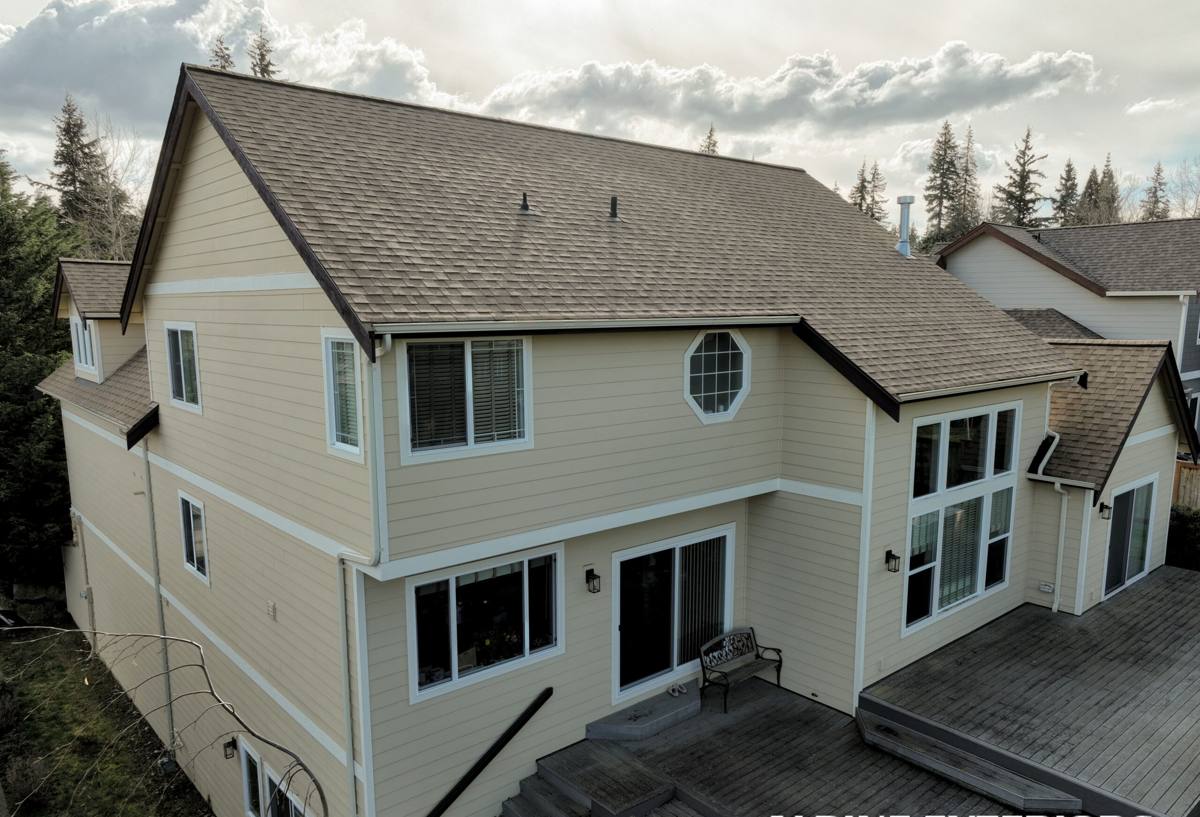
Square footage sets the baseline, but complexity is what actually drives labor hours. A simple rectangular ranch home with few corners is faster and cheaper to side than a home with:
- Multiple gables, dormers, and roof-to-wall intersections
- Bump-outs, bay windows, or varied wall heights
- Extensive trim, corner boards, or decorative detailing
- Second-story sections requiring staging or lift equipment
- Tight lot lines that limit material staging and access
Two 2,000-square-foot homes can carry very different labor costs if one has clean, simple walls and the other has a dozen transitions that each need custom cuts, flashing, and trim work.
What's Under the Old Siding Matters More Than People Expect
This is the factor that surprises homeowners most, and it's the reason a "final price" often can't be locked in until the old siding actually comes off. St. Petersburg's combination of humidity, heavy summer rain, and older housing stock means it's common to find something underneath that wasn't visible from the outside:
- Rotted or delaminated sheathing behind failed seams or caulk joints
- Missing or degraded house wrap
- Old flashing that was never properly integrated around windows and doors
- Insect damage in wood-based sheathing
A responsible contractor prices the visible scope up front and is upfront that hidden sheathing or moisture damage — if found — is a separate, itemized add. Be wary of a quote that promises a fixed final price before the old siding is off the wall on an older home; that's a sign the estimator either isn't planning for it or isn't going to flag it when they find it.
Tear-Off vs. Install-Over
Some contractors will install new siding directly over old siding to save labor cost. We don't do this, and it's worth understanding why it affects price. Installing over existing material:
- Traps whatever moisture or damage is already in the wall
- Prevents installing new house wrap and flashing correctly
- Adds thickness that complicates window and door trim details
- Voids or limits manufacturer warranties on the new siding
A full tear-off costs more in labor and disposal, but it's the only way to actually inspect and correct what's behind the old siding — which matters most in a climate where wall moisture problems don't announce themselves until they're expensive.
Local Climate: Why St. Petersburg Changes the Installation, Not Just the Material
Pinellas County sits in a wind-borne debris region, gets some of the most intense year-round UV in the continental U.S., and takes wind-driven rain and salt air off both the Gulf and Tampa Bay. Those conditions don't just argue for a tougher material — they change how that material has to go up.
Fastening and Wind Resistance
Fastener pattern, type, and spacing are specified for a reason, and cutting corners here is invisible until a storm tests it. Hurricane-force wind events put real uplift and lateral load on siding, and correct fastening is what keeps panels attached rather than becoming debris themselves.
Flashing and Water Management
Wind-driven rain doesn't fall straight down — it gets pushed sideways and up under laps, around windows, and behind trim. Correct flashing detail at every penetration and horizontal surface is what keeps that water moving out instead of into the wall assembly.
UV and Salt Air
Constant sun exposure breaks down unstable finishes over time — fading, chalking, and coating failure show up faster here than in milder climates. Salt air accelerates corrosion on fasteners and trim components that aren't rated for coastal exposure. A factory-applied, climate-engineered finish system holds color and integrity far longer under this kind of exposure than field-applied paint reapplied every few years.
Installation Quality: The Factor That Determines Whether Any of the Above Actually Works
Material and design only deliver on their promise if installation matches the spec. Fiber cement in particular is installation-sensitive — clearances from grade and roofing, fastener placement, joint treatment, and caulking all have to be done correctly or the product underperforms regardless of its rating. This is a large part of why labor and crew experience is a real cost factor, not a place to shop purely on price. A lower bid that skips proper clearances or flashing detail isn't actually a lower cost — it's a deferred cost that shows up as a callback or a premature repair.
Trim, Accessories, and Finish Choices
Beyond the flat wall area, several add-on decisions affect the final number:
| Item | Cost Impact | Why It Matters |
|---|---|---|
| Corner boards and trim style | Moderate | More detailed trim = more labor and material |
| Soffit and fascia work | Variable | Often bundled in if damaged or outdated |
| Color and finish system | Low to moderate | Factory finish costs more upfront, less to maintain |
| House wrap and flashing upgrades | Moderate | Directly affects long-term moisture protection |
Permitting and Code Requirements
Siding replacement in St. Petersburg and Pinellas County generally requires a permit, and the work has to meet Florida Building Code wind-load and water-resistive barrier requirements for the area. This isn't optional paperwork — it affects both the materials that can be used and how they're installed. A contractor's bid should already have permitting and code compliance built in; if it's not mentioned, ask directly.
How to Read a Siding Quote Like a Pro
- Does it specify tear-off, or install-over the existing siding?
- Is house wrap and flashing replacement included, not just the visible siding panels?
- Is fastening pattern specified, or left to "standard practice"?
- Does it name the exact product line and finish, not just "fiber cement" or "Hardie-style"?
- Is hidden sheathing damage addressed as a defined process, not a vague allowance?
- Is the warranty manufacturer-backed and transferable, or installer-only?
- Does the price include permitting, or is that a separate line you'll owe later?
A quote that answers all of these clearly is worth more than a quote that's simply lower.
The Bottom Line
Siding cost in St. Petersburg isn't one number — it's the sum of material choice, what's found once the old siding comes off, how complex the walls are, and whether the installation is built for the wind, rain, and sun this area actually sees. The lowest bid on paper is only a good deal if it accounts for all of that; if it doesn't, the difference tends to show up later as a repair bill instead of a line item.
If you'd like a straight answer on what your home's siding project actually involves, we're happy to walk it with you and put together a free, no-pressure estimate — no obligation, just a clear look at the scope and the real cost drivers before you decide anything.