 St. Petersburg Siding
 Why We Get Asked About Vinyl So Often
Vinyl siding is the most common siding product installed in the United States, and for good reason in a lot of markets: it's inexpensive, it goes up fast, and in a mild climate it can look fine for years with almost no attention. Homeowners moving to St. Petersburg from other parts of the country often assume it's the default choice here too, and ask us to quote it. We don't install it, and we think you deserve a straight answer about why — not a sales pitch, just the trade-offs as we see them after years of working on homes in this county.
This isn't about vinyl being a "bad" product in the abstract. It works reasonably well in a lot of the country. Our objection is specific to what happens to it on the Pinellas peninsula, where the siding on your house deals with a combination of stresses that most of the country never sees at the same time: sustained high heat, intense UV exposure nearly year-round, wind-driven rain, salt-laden air off the Gulf and Tampa Bay, and the real possibility of hurricane-force winds during storm season.
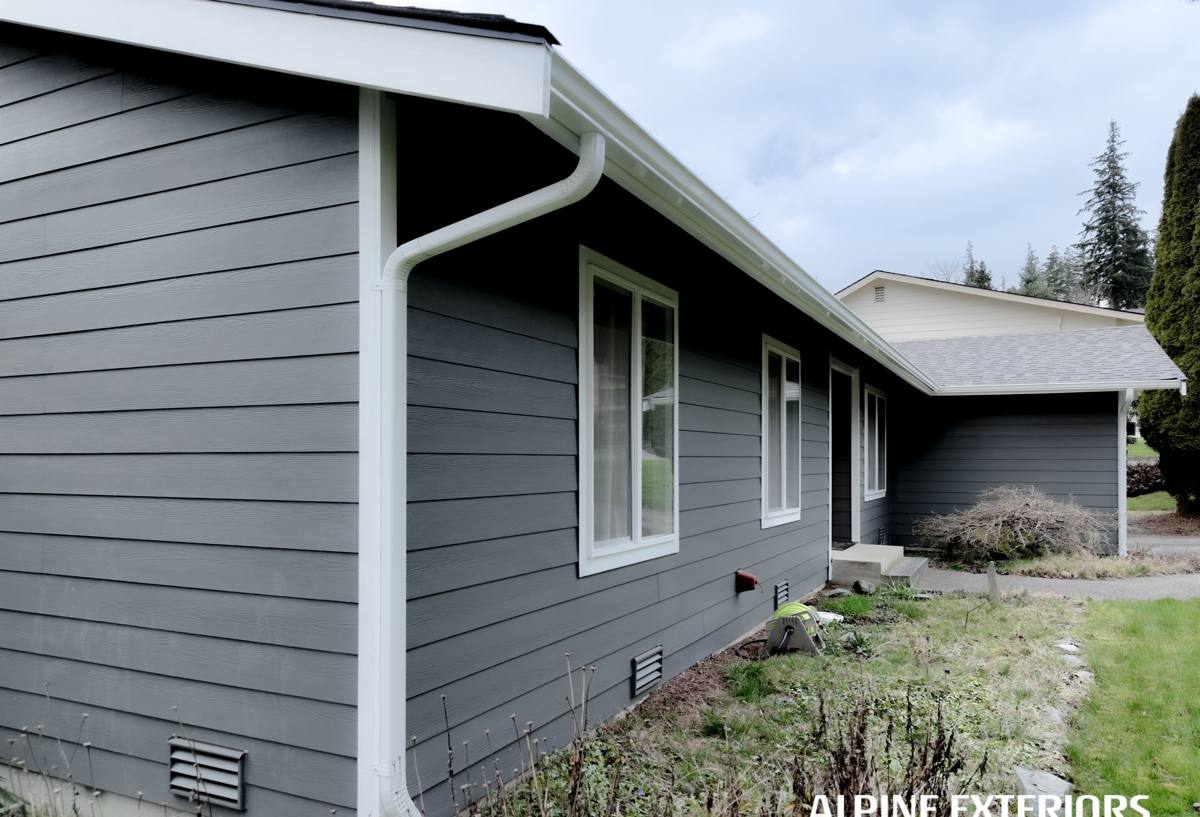
What Vinyl Siding Actually Gets Right
Fair is fair. Vinyl has real advantages that explain its popularity:
- Low upfront material and installation cost compared to most alternatives
- No painting required — color is mixed through the material, not applied as a surface coating
- Lightweight, which makes it easy and fast to install
- Widely available in a large range of colors and profiles
- Reasonably water-resistant on its own surface — the panel itself doesn't rot
If you lived somewhere with moderate summers, infrequent wind events, and no salt air, a lot of our concerns below would matter a lot less. That's not the environment St. Petersburg sits in.
The Heat and UV Problem
Vinyl is a thermoplastic — it's manufactured from PVC resin, and like most plastics, it softens as it heats up and becomes brittle as it ages under UV light. Pinellas County gets direct, intense sun for most of the year, and a south- or west-facing wall can reach surface temperatures well above the surrounding air temperature on a summer afternoon.
Warping and Buckling
Vinyl panels are designed to expand and contract with temperature swings, which is why they're hung on a loose nailing system rather than fastened tight. In our experience, panels on hot-exposed walls or near reflective surfaces like windows and grills are the ones most likely to warp, buckle, or pull away from the nailing hem over time — problems that are difficult to fully correct once they start.
Fading and Chalking
Darker vinyl colors absorb more heat and tend to fade faster under sustained UV exposure. Faded or chalked vinyl can't be refinished the way paint can be reapplied to fiber cement or wood — once the color has degraded, the only real fix is replacing the affected panels, and matching old vinyl to new is often impossible because manufacturers change color runs and discontinue profiles.
Wind Performance in a Storm-Exposed County
St. Petersburg sits on a peninsula that takes wind-driven rain and tropical-system exposure seriously, and every siding product on your home should be rated with that in mind. Vinyl siding is rated for wind resistance, but those ratings assume correct installation — proper nailing pattern, correct panel overlap, and matching starter strips and accessories. In the field, even well-installed vinyl is a lighter, thinner product than fiber cement, and it's simply more prone to lifting, cracking at fastener points, or being torn off the wall when wind loads spike during a storm.
When panels do fail during wind events, they often fail in a way that exposes the house wrap or sheathing behind them, which turns a siding problem into a water-intrusion problem within the same storm.
What Happens Behind the Panel Matters More Than the Panel Itself
Vinyl siding is installed as a "rain screen" system — it's designed to let some water get behind it and rely on the drainage plane (house wrap, flashing, and weep points at the bottom of each course) to manage that moisture and let it drain back out. That's a sound design principle in theory. In practice, it depends entirely on installation quality and on that drainage plane staying intact for the life of the siding.
Wind-Driven Rain Changes the Math
In a climate with frequent wind-driven rain — rain that's being pushed sideways into the wall rather than falling straight down — vinyl systems see more water intrusion behind the panel than they would in a calmer climate. If the underlying weather barrier has any gaps, if flashing at windows and penetrations wasn't done correctly, or if the wall assembly wasn't detailed with coastal wind-driven rain in mind, that moisture has to go somewhere. Too often it ends up in the sheathing, where it doesn't show up as a visible problem until there's already rot or mold developing behind the wall.
Why This Is an Installation Story as Much as a Product Story
We want to be fair here: a lot of vinyl's real-world moisture problems trace back to installation practices, not the panel material itself. But that's exactly our concern — vinyl siding gives installers very little margin for error in a high-wind-driven-rain climate, and it's difficult for a homeowner to verify after the fact whether that margin was respected.
Salt Air and Coastal Corrosion
Living close to Tampa Bay and the Gulf means salt-laden air settling on every exterior surface of your home, not just the siding. Vinyl panels themselves don't corrode, but the exposed fasteners, trim pieces, and any metal flashing or accessories used with a vinyl system are subject to the same corrosion pressure as anything else on a coastal-adjacent home. Corroded fasteners can loosen their grip on panels over time, which compounds the wind-resistance concerns above — a panel held by a weakening fastener is more likely to work loose in the next storm.
Repair, Matching, and Long-Term Appearance
Vinyl siding ages as a system, not as individual panels. When a panel cracks, fades, or gets damaged by wind-blown debris — which happens more often here than in calmer inland climates — replacing just that section rarely looks seamless, because sun exposure fades the surrounding panels unevenly and manufacturers discontinue specific colors and profiles within a few years. Homeowners are often stuck choosing between a visibly mismatched patch or re-siding the whole elevation earlier than they planned.
Fiber cement doesn't solve this issue by being immune to all damage, but a factory-applied finish system like the one we install holds color more consistently over a longer service life, and repairs are more forgiving because the material isn't fighting the same expansion, contraction, and UV-brittleness cycle vinyl goes through.
Side-by-Side: Vinyl vs. the Fiber Cement System We Install
| Factor | Standard Vinyl Siding | James Hardie Fiber Cement |
|---|---|---|
| Base material | PVC plastic (thermoplastic) | Cement, sand, and cellulose fiber |
| Heat/UV behavior | Can warp, buckle, or fade under sustained heat and sun | Dimensionally stable; ColorPlus finish is baked on and UV-cured |
| Wind performance | Rated, but thin and light — more prone to lifting/cracking in extreme wind | Engineered HZ product lines rated for high-wind zones |
| Fire behavior | Combustible plastic | Non-combustible |
| Moisture handling | Rain-screen design; performance depends heavily on installation quality | Engineered for wet climates; less sensitive to installation margin |
| Repairability | Hard to color-match after fading; discontinued profiles common | Factory finish holds color longer; more forgiving repairs |
| Warranty structure | Varies widely by manufacturer and often prorated | Strong transferable warranty backing the product and finish |
Building Codes and Insurance Considerations
Pinellas County falls within Florida's High-Velocity Hurricane Zone influence area for wind design, and local permitting reflects that. Any siding product installed here needs to meet wind-load requirements tied to your specific wind zone and building height — this isn't unique to vinyl, but it's worth knowing that not every vinyl product or installation method on the market is rated for the wind speeds your home may need to withstand. It's also worth asking your insurance agent how your exterior cladding choice factors into wind-mitigation inspections and premium calculations, since some insurers do take siding type and installation documentation into account.
If You're Still Considering Vinyl, Ask These Questions First
- What wind-speed rating is this specific product and profile certified for, and does that match my home's wind zone?
- Will the installer follow the manufacturer's exact nailing pattern and fastener spacing, or a generalized approach?
- What house wrap and flashing details will be used behind the panels, and can I see that before it's covered up?
- What's the manufacturer's warranty for fading, and is it prorated over time?
- How will future repairs be color-matched if this exact product line is discontinued?
- Does my insurance carrier treat this product differently in a wind-mitigation inspection?
Why We Standardized on James Hardie Instead
We made a decision as a company to install James Hardie fiber cement siding exclusively, rather than offering a menu of products including vinyl, LP SmartSide, or other fiber cement brands. Fiber cement is non-combustible, holds up to sustained coastal heat and UV without the warping and brittleness issues plastic siding faces, and Hardie's ColorPlus factory finish is engineered to resist fading longer than field-applied paint or the through-color pigmentation used in vinyl. Their HZ5 product line is specifically engineered for the kind of humidity, heat, and moisture cycling that defines a Gulf Coast climate like ours. Combined with a strong transferable warranty, it's the system we're comfortable putting our name behind on a St. Petersburg roofline for the next several decades, not just the next few years.
We're not going to tell you vinyl siding will fail on your house — plenty of vinyl-clad homes get by fine, especially with careful installation and a bit of luck with storm exposure. What we will tell you is that after weighing how it performs against Pinellas County's heat, wind, wind-driven rain, and salt air, we don't think it's the product we want to stand behind, and we'd rather turn away that work than install something we're not confident in.
If you're weighing siding options for your home, we're happy to walk your property, talk through what we see, and give you a free, no-pressure estimate on a fiber cement system built for this climate.