 St. Petersburg Siding
 Kenneth City: A Small Town With a Big Weather Problem
Kenneth City is one of the smallest incorporated towns in Pinellas County, tucked between St. Petersburg and Pinellas Park just a few miles inland from Tampa Bay. It's a quiet, mostly residential community of modest single-family homes, many of them built decades ago during Pinellas County's mid-century growth boom. That building stock is part of what makes exterior work here interesting: a lot of these homes have already been through 40, 50, or 60 years of Florida weather, and in many cases the siding, trim, and roofing have been patched, repainted, or replaced piecemeal along the way rather than addressed as a system.
Being close to the bay but not directly on it doesn't spare Kenneth City from the coastal climate that defines exterior construction all along the Pinellas peninsula. Hurricane-force winds, intense year-round UV, wind-driven rain, and salt air all take their toll on a home here, whether it sits three blocks from the water or three miles inland. Salt-laden humidity moves with the wind, and Kenneth City sits well within that reach.
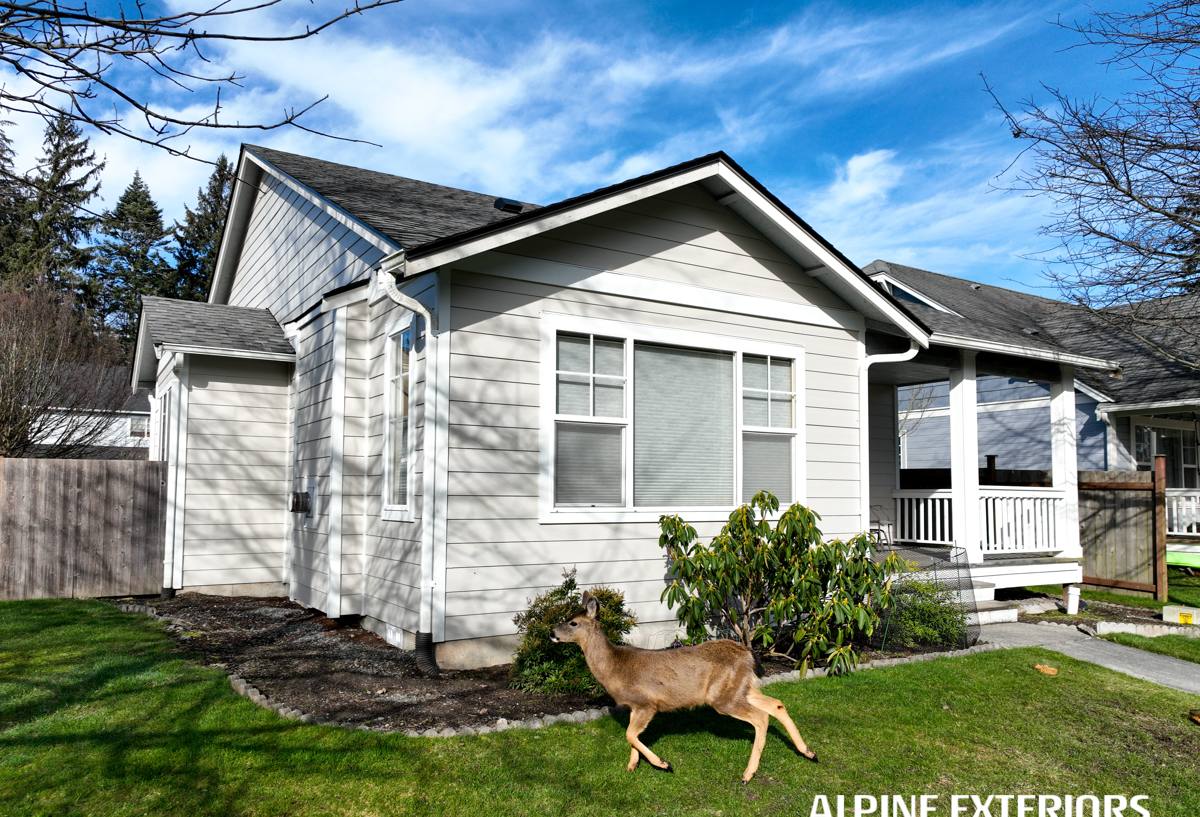
What the Local Climate Actually Does to a House
Wind Load
Pinellas County homes are built to a wind-rated code for a reason. Even outside of a named storm, this part of Florida sees regular strong thunderstorm gusts, squall lines, and the occasional tropical system that pushes sustained high winds through neighborhoods like Kenneth City. Siding that isn't rated for the loads involved, or that was installed with the wrong fastening pattern, can start to lift, crack, or blow off at the corners and eaves long before a hurricane ever makes landfall.
UV Exposure
Florida gets more sun hours per year than almost anywhere else in the country, and that sun is intense. UV breaks down pigments and resins in exterior materials over time. On painted wood or lower-grade composite products, this shows up as chalking, fading, and eventually cracking of the paint film, which then exposes the substrate underneath to moisture.
Wind-Driven Rain
Rain in Pinellas County rarely falls straight down. Afternoon storms roll in with wind behind them, driving water sideways into wall assemblies, around window and door openings, and up under lap siding edges. A siding system's water-shedding detail — how each course overlaps the one below it, how it's flashed at penetrations — matters more here than in drier, calmer climates.
Salt Air
Even a few miles from open water, airborne salt corrodes exposed metal fasteners, accelerates the breakdown of certain coatings, and contributes to the general humidity load a home's exterior has to manage year-round. Combined with Florida's heat and moisture, it's a tough environment for any material that isn't built to handle it.
Why Material Choice Is the Real Decision
Most exterior failures we see in Pinellas County homes trace back to a material or installation choice made years earlier that didn't account for what this climate actually does over time. That's why, as a company, we made a decision to install one siding product: James Hardie fiber cement. We don't install vinyl siding, LP SmartSide, Cemplank, Allura, or primed wood products like spruce or cedar. That's not a marketing position — it's a standard we hold because of what we've seen these materials do, and not do, in Florida conditions over the long run.
Where Other Products Fall Short Here
- Vinyl siding can soften, warp, or distort in sustained high heat, and is more vulnerable to cracking and blow-off in high wind events than fiber cement rated for the same exposure.
- LP SmartSide and other engineered wood products use wood strand cores that depend entirely on an intact protective coating. Once that coating is breached — from a nail hole, a scratch, or a poorly sealed cut edge — moisture intrusion can lead to swelling and rot, which is a real concern in a humid coastal climate with heavy seasonal rain.
- Cemplank and Allura are also fiber cement products, and fiber cement as a category is sound. Our reasoning for standardizing on Hardie specifically comes down to the factory-applied ColorPlus finish, the climate-specific HZ formulations engineered for humid regions, and the depth of Hardie's installer network and warranty backing, which we've found to be the strongest and most consistently honored in the field.
- Primed spruce or cedar is a traditional look that some homeowners still ask for, and we understand the appeal. But field-primed wood siding requires an aggressive, ongoing repainting and caulking schedule to survive Florida's UV and moisture cycle, and even with diligent maintenance it's more prone to rot, insect damage, and cupping than a fiber cement product engineered for this exact climate.
None of this means these products are without merit in the right application. It means that, for what a Kenneth City home has to withstand over 20, 30, or 40 years of Gulf Coast weather, we don't think they're the right long-term bet, and we'd rather be honest about that than install something we don't stand behind.
James Hardie: What We Actually Install
James Hardie fiber cement siding is a cement, sand, and cellulose fiber composite that doesn't burn, doesn't attract termites, and doesn't rely on a surface coating to keep water out of its core the way engineered wood does. For Florida specifically, Hardie makes an HZ5 formulation engineered for high-humidity, high-moisture climates — which is the product line we specify for Kenneth City and the surrounding Pinellas County area.
The ColorPlus finish is a factory-applied, baked-on coating that's more UV- and fade-resistant than field-applied paint, and it comes with its own finish warranty separate from the product warranty. That matters in a climate where UV is working against a painted surface twelve months a year. Hardie also backs its siding with a strong transferable limited warranty, which carries real value if you sell the home down the road — a Florida buyer's inspector or agent will often ask directly what the siding is and whether the warranty transfers.
Hardie Product Lines We Work With
| Product | Common Use | Why It Fits This Climate |
|---|---|---|
| HardiePlank lap siding | Primary wall cladding, most common style | Classic lap profile, HZ5 formulation resists moisture and humidity swings |
| HardiePanel vertical siding | Accent walls, gables, modern facades | Clean vertical lines, same non-combustible core |
| HardieTrim boards | Corners, fascia, window and door trim | Won't rot or attract insects like wood trim |
| HardieSoffit panels | Eaves and overhangs | Resists the humidity that collects under overhangs |
How the Installation Process Works
Fiber cement is less forgiving of shortcuts than vinyl or wood, so correct installation matters as much as the product itself. Our process on a Kenneth City home generally includes:
- Inspection and tear-off: removing existing siding and checking the sheathing and wall assembly underneath for hidden moisture damage, which is common on older Pinellas County homes that have never had a full re-side.
- Moisture barrier installation: a weather-resistant barrier goes over the sheathing before any siding goes up, giving the wall a second line of defense against wind-driven rain.
- Proper flashing: windows, doors, and any wall penetrations get flashed correctly so water is directed out and away from the structure, not trapped behind the siding.
- Fastening to Hardie spec: correct nail type, spacing, and placement — this is one of the most common places we see prior installations cut corners, and it's directly tied to wind performance.
- Caulking and finish work: seams, corners, and trim get sealed and finished so the whole system sheds water as designed.
We also carry manufacturer training on Hardie installation, which matters for warranty coverage — Hardie's product warranty can be affected by installation that doesn't follow their published specifications, so doing it right the first time protects you twice: once physically, and once on paper.
More Than Siding: The Full Exterior Envelope
Siding doesn't work in isolation. On most Kenneth City homes, siding, roofing, windows, and decking all interact at the same joints and transitions — a roof that's shedding water improperly, or windows that aren't flashed correctly, will undermine even a well-installed siding job. We handle all four because we'd rather look at your home's exterior as one connected system than hand you off to three other contractors and hope everyone's work lines up.
- Roofing: your first line of defense against wind uplift and wind-driven rain, and the component most directly tested by hurricane season.
- Windows: impact-rated and properly flashed windows reduce both storm risk and the water intrusion that damages siding and framing from the inside out.
- Decks: exposed to the same UV and humidity cycle as siding, and built from materials chosen to hold up outdoors in Florida rather than just look good on install day.
What Affects Cost on a Project Like This
| Factor | Why It Matters |
|---|---|
| Home size and wall area | More square footage means more material and labor |
| Existing wall condition | Hidden rot or damaged sheathing found during tear-off adds repair work |
| Siding profile and trim complexity | Multiple accents, gables, or trim details take more time than a simple flat wall |
| Number of stories | Access and staging costs more on two-story homes |
| Scope: siding only vs. full exterior | Bundling roofing, windows, or decks with siding can improve overall efficiency |
We give every homeowner a firm, itemized estimate after an in-person inspection — we don't quote sight unseen, because the condition behind the existing siding is often the biggest cost variable on an older home.
Choosing a Contractor in Pinellas County
Exterior work in a hurricane-exposed county isn't a place to cut corners on who does the work. A few things worth checking before you hire anyone for siding, roofing, window, or deck work in Kenneth City or the surrounding area:
- Florida state contractor license, verifiable through the state licensing board
- General liability and workers' compensation insurance, current and in writing
- Manufacturer training or certification for the specific product being installed
- A written, itemized estimate — not a vague lump-sum number
- A physical presence and track record in Pinellas County, not just a regional or national franchise with no local crew
- Willingness to explain their material choice and walk you through the actual installation process, not just show you a color sample
A local crew that works this specific stretch of the Gulf Coast day in and day out understands things a traveling storm-chasing outfit doesn't: how the wind actually moves through a neighborhood like Kenneth City, what wind zone the permitting office is going to require, and what a home here needs to hold up through a normal Florida summer, let alone a named storm.
What to Expect Long Term
A correctly installed James Hardie system on a Kenneth City home is largely low-maintenance: no repainting cycle every few years, no caulk failures from a coating breaking down under UV, and a factory finish designed to hold its color far longer than field-applied paint. That doesn't mean zero maintenance — periodic rinsing to remove salt and grime buildup, and prompt attention to any impact damage, are still good practice in this climate. But it's a materially different maintenance burden than what wood or vinyl siding demands over the same time period, which is a big part of why we standardized on it.
Ready to Talk About Your Home
If you're in Kenneth City and dealing with aging siding, storm damage, or just planning ahead before your next Florida summer, we'd be glad to take a look. We offer free, no-pressure estimates — walk the property with you, point out anything we see, and give you a straight answer about what your home actually needs. Use the form below to get started.