 St. Petersburg Siding
 Fiber Cement Siding for Kenneth City Homes
Kenneth City sits in the middle of Pinellas County, a few miles inland from Tampa Bay and the Gulf — close enough that salt-laden air, near-constant humidity, and the same hurricane risk that defines the whole St. Petersburg area still reach every exterior wall in town. Homes here run the gamut from older concrete block ranch houses with wood or aluminum siding tacked on decades ago to newer builds that went up with vinyl because it was cheap and fast. Whichever category your house falls into, the siding you have on it right now was almost certainly not engineered for this climate. Fiber cement was.
We install James Hardie fiber cement siding exclusively in Kenneth City and the surrounding St. Petersburg market. This page walks through what that actually means for a Kenneth City property — what the climate does to siding here, what a correct fiber cement installation involves, and how our process works from the first call to the final walkthrough.
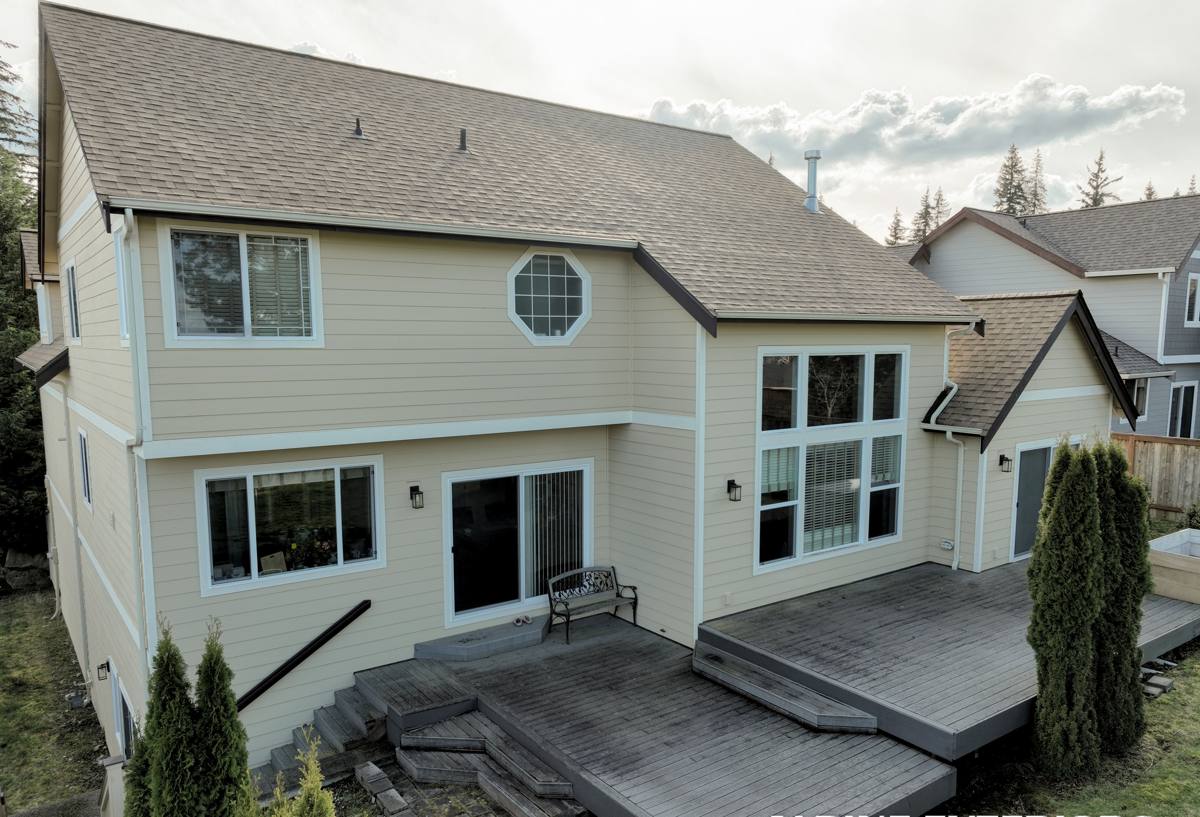
What Pinellas County Weather Does to Siding
It's worth being specific about the stresses a Kenneth City exterior deals with year-round, because they compound in ways a lot of homeowners don't expect until they're dealing with a failed siding job.
Heat and UV
Central Florida gets intense, direct sun for most of the year. Cheap or low-grade siding finishes chalk, fade, and become brittle under sustained UV exposure. Painted wood needs recoating far more often than it would in a milder climate. Vinyl can warp or sag once surface temperatures climb, especially on south- and west-facing walls.
Wind-Driven Rain and Humidity
Rain in this part of Florida rarely falls straight down — afternoon storms push it sideways, and that wind-driven rain finds every gap, seam, and fastener hole in a siding system. Combined with the area's high ambient humidity, any siding material that isn't dimensionally stable or that traps moisture behind it becomes a long-term rot and mold risk.
Salt Air
Kenneth City isn't beachfront, but Pinellas County as a whole sits in a salt-air envelope carried in off Tampa Bay and the Gulf. Salt accelerates corrosion of fasteners and metal trim, and it degrades certain siding coatings faster than a purely inland climate would.
Hurricane-Force Wind
Every few years this area gets a real test — sustained high wind plus flying debris. Siding that isn't rated and fastened for wind resistance is one of the first things to peel off a house in a storm, and once it's gone, the underlying wall assembly is exposed to everything else on this list.
None of these stresses is unusual for St. Petersburg — but Kenneth City homes take all four at once, continuously, which is exactly the environment fiber cement was engineered to handle.
Why Fiber Cement Fits This Specific Climate
James Hardie fiber cement is a blend of cement, sand, and cellulose fiber, factory-cured into boards that are dimensionally stable, non-combustible, and resistant to moisture-driven warping. For a Kenneth City house, that translates into a few concrete advantages:
- It doesn't warp in heat. Fiber cement holds its shape across Florida's temperature swings, so seams stay tight and paint lines stay straight.
- It's engineered for humid climates. James Hardie makes an HZ5 product line specifically formulated for high-humidity, high-moisture regions like the Gulf Coast — Pinellas County falls squarely in that zone.
- The factory finish resists fading. ColorPlus finish is baked on and UV-cured at the factory, which holds color far longer under constant Florida sun than field-applied paint.
- It's non-combustible. Not a factor unique to hurricanes, but it's part of why we standardized on Hardie for every climate we work in.
- It stands up to wind-driven debris. Properly fastened fiber cement is significantly more impact- and wind-resistant than vinyl, and it won't melt, crack, or deform the way lower-grade materials can in sustained heat and storm conditions.
What a Correct Installation Actually Involves
Fiber cement's long-term performance depends almost entirely on installation quality. A rushed or generic install can undercut every advantage the material offers. In Kenneth City specifically, here's what we treat as non-negotiable:
Water Management Behind the Siding
Given how much wind-driven rain this area sees, the water-resistive barrier and flashing details behind the siding matter as much as the siding itself. We install a proper weather barrier, flash every window, door, and penetration correctly, and make sure water that does get behind the cladding has somewhere to drain rather than sitting against the wall assembly.
Fastening for Wind Zones
Pinellas County falls within Florida's high-velocity wind zones for building code purposes. Fastener type, spacing, and placement all follow James Hardie's published specifications for the local wind exposure — not a generic nailing pattern. This is the detail that determines whether siding stays on the house in a bad storm.
Clearances and Gaps
Fiber cement needs proper clearance from the roofline, deck surfaces, and grade, plus correctly sized gaps at butt joints and trim to allow for expansion and to keep water from wicking into the board ends. Skipping these clearances is one of the most common causes of premature siding failure, and it's invisible to a homeowner until moisture damage shows up years later.
Cut-Edge Sealing
Every field-cut edge of a Hardie board needs to be primed and sealed before installation. Raw, unsealed cut edges are vulnerable to moisture intrusion — a detail that's easy to skip and impossible to catch without knowing to look for it.
Corrosion-Resistant Fasteners
Because of the salt air carried through this part of the county, we use fasteners rated for coastal-adjacent exposure rather than standard interior-grade hardware. Standard fasteners can corrode well before the siding itself shows any wear, leading to streaking and loose boards.
Our Process for Kenneth City Projects
- On-site assessment. We look at your current siding, the condition of the sheathing underneath, drainage around the foundation, and any problem areas — rot, prior water intrusion, past storm damage.
- Product and profile selection. We walk through James Hardie's plank, shingle, and panel options and ColorPlus finish palette, and talk through what fits the house and the neighborhood.
- Detailed written estimate. Scope, materials, and timeline in writing before any work starts — no verbal-only agreements.
- Tear-off and prep. Removal of the old siding, inspection and repair of any damaged sheathing found underneath, and installation of the water-resistive barrier.
- Installation to manufacturer spec. Fastening, flashing, clearances, and cut-edge sealing all done to James Hardie's published installation requirements for this wind and climate zone.
- Final walkthrough. We go over the finished job with you before considering the project complete.
Why Local Installation Experience Matters Here
Fiber cement installation isn't uniform across the country — what's correct in a dry inland climate is not automatically correct in coastal Pinellas County. A crew that already works Kenneth City and the surrounding St. Petersburg area knows the local wind exposure requirements, has already dealt with the sheathing conditions common in this area's housing stock, and understands how the salt-air and humidity combination behaves over years, not just at the moment of installation. That local track record is what keeps a siding job performing correctly a decade in, not just on the day it's finished.
Comparing Siding Options for a Kenneth City Home
| Factor | James Hardie Fiber Cement | Vinyl | Untreated Wood |
|---|---|---|---|
| UV/fade resistance | Factory-cured ColorPlus finish, long color retention | Fades and can chalk under sustained sun | Requires frequent repainting |
| Heat stability | Dimensionally stable, won't warp | Can warp or sag in high heat | Prone to cupping and cracking |
| Moisture/humidity performance | HZ5 line engineered for humid climates | Doesn't rot, but seams can trap moisture | Highly susceptible to rot |
| Wind/impact resistance | Strong when fastened to spec | Can crack or blow off in high wind | Variable, depends on install and material grade |
| Combustibility | Non-combustible | Combustible | Combustible |
| Typical lifespan with correct install | Decades, with strong transferable warranty | Shorter, especially in intense sun | Shortest without ongoing maintenance |
Signs Your Kenneth City Home May Need Siding Attention
- Visible warping, bubbling, or buckling on wall surfaces
- Soft spots or discoloration around window and door trim
- Paint that's peeling or blistering faster than expected
- Gaps or loose panels after a windstorm
- Musty odors near exterior walls, which can indicate moisture intrusion behind the siding
- Visible fading or chalking on sun-exposed elevations
Cost Factors to Understand Before You Budget
Every Kenneth City project is priced individually after an on-site assessment, but the factors that move the number are consistent:
| Factor | Why It Matters |
|---|---|
| Home size and wall complexity | More square footage, corners, and trim details mean more labor and material |
| Condition of existing sheathing | Rot or water damage found during tear-off adds repair work before new siding can go up |
| Product line and profile | Lap plank, shingle, and panel styles carry different material costs |
| ColorPlus finish selection | Standard vs. premium color options can affect pricing |
| Site access and prep | Landscaping, fencing, or tight lot lines can affect labor time |
We put all of this in writing as part of the estimate, so there's no guessing at what's driving the final price.
Why We Only Install James Hardie
We don't install LP SmartSide, vinyl, Cemplank, Allura, or untreated wood siding. That's a deliberate standard, not an oversight. James Hardie's fiber cement is non-combustible, holds up to the humidity and UV load this region delivers year after year, and comes with a strong transferable warranty backed by a manufacturer that engineers specific product lines for climates like ours. When we put our name on an installation, we want it built on a material and a spec we're confident will still be performing correctly on this house a decade from now, in this exact climate. For Kenneth City homes taking on Florida sun, salt air, and hurricane season every year, that's the standard we hold ourselves to.
If you're weighing a siding project for a Kenneth City home, we're happy to take a look and give you a straight, no-pressure estimate — just fill out the form below.