 St. Petersburg Siding
 Roser Park sits among St. Petersburg's older, established neighborhoods, and homes here carry a lot of character: mature tree canopy, older construction styles, and decades of Florida weather already absorbed into their exterior materials. That combination means an exterior contractor working in this part of Pinellas County needs to understand both the age of the housing stock and the punishment the climate keeps dishing out. We handle siding, roofing, windows, and decks for homeowners in and around Roser Park, and we approach every one of those categories with the same standard: install the right material, install it correctly, and build something that holds up.
What St. Petersburg's Climate Actually Does to a Home's Exterior
It's easy to think of Florida weather as just "hot and rainy," but the exterior of a house experiences something more specific and more corrosive over time. Four factors matter most for homes in the St. Petersburg and Pinellas County area:
- Hurricane-force wind exposure. Even homes that never take a direct hit endure repeated tropical-storm-force wind events every season, which stress fasteners, flashing, and trim long before a major storm ever arrives.
- Intense, near year-round UV. Florida's sun angle and clear-sky days bake painted and unpainted surfaces alike, breaking down pigments, caulk, and adhesives faster than in most of the country.
- Wind-driven rain. Storms here don't just drop water — they push it sideways into seams, laps, and penetrations that were never designed to shed water horizontally.
- Salt air. Being close to Tampa Bay and the Gulf means airborne salt settles on every exterior surface, accelerating corrosion of fasteners, hardware, and metal components.
Individually, any one of these is manageable. Combined — and repeated year after year — they're why exterior materials that perform fine in milder climates often underperform here, and why installation detail matters as much as material choice.
Why Older Neighborhoods Face This Differently
In a neighborhood with a mix of older and updated homes, you'll often find several generations of siding, roofing, and trim work layered onto the same structure. Older wood-based sidings and trim that were never rated for this climate tend to show the wear first: soft spots, peeling paint, and swelling at the joints. When we're called out to a home in this kind of neighborhood, the first job is figuring out what's actually underneath the surface — not just what needs to be repainted, but what's already compromised and needs to be replaced outright.
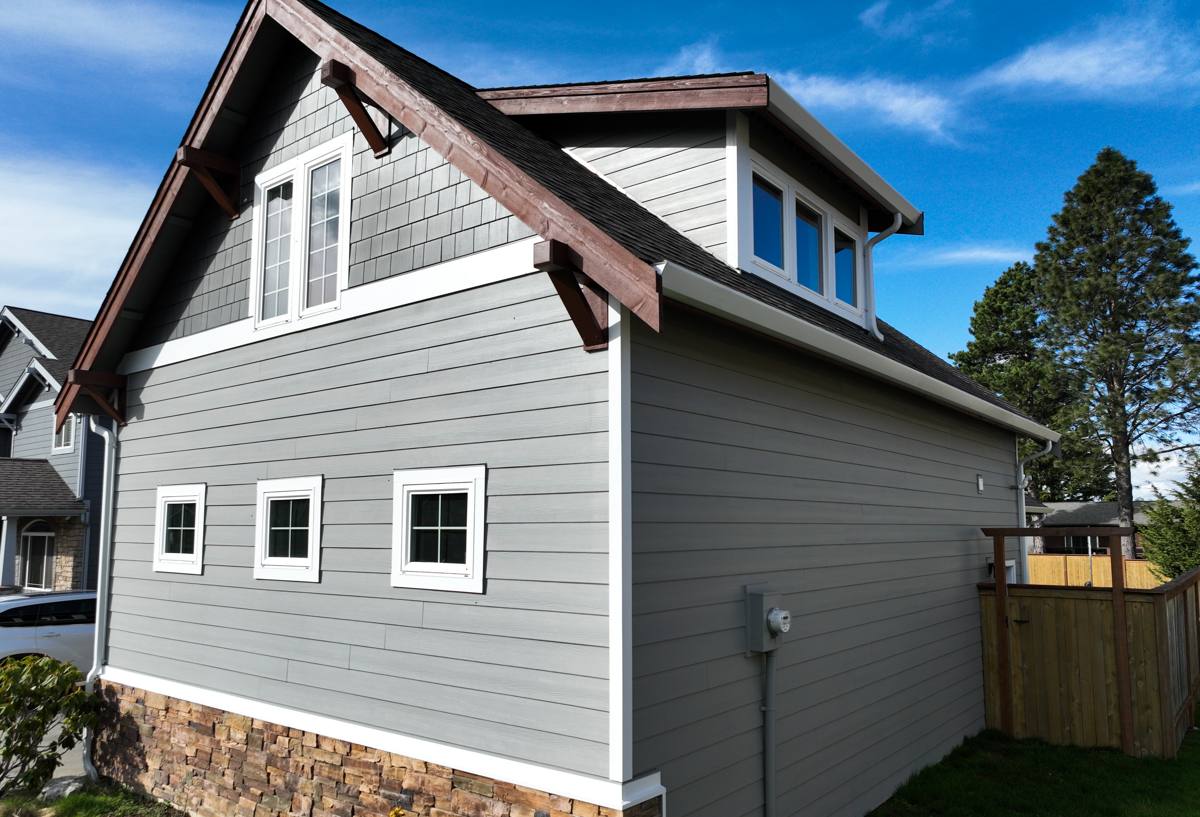
Siding: Why We Only Install James Hardie
We install James Hardie fiber cement siding exclusively. We don't install vinyl, LP SmartSide, Cemplank, Allura, or primed wood products like spruce or cedar siding. That's a deliberate standard, not a sales preference, and it's worth explaining honestly.
What the Alternatives Get Right — and Where They Fall Short Here
Vinyl siding is inexpensive and easy to install, and in milder climates it can be a reasonable budget option. In a coastal, high-UV, high-wind environment like ours, vinyl tends to fade and become brittle faster, and it can deform or blow off in sustained high wind unless installed with extra care most crews skip. Engineered wood products like LP SmartSide use a wood-strand core with a resin coating — a real improvement over old-school wood siding — but any breach in that coating exposes the wood substrate to Florida's humidity and wind-driven rain, and repairs can be harder to blend invisibly. Primed wood siding (spruce, cedar) simply requires more maintenance than most homeowners want to sign up for: repainting cycles, caulk maintenance, and vigilance against rot in a climate that gives wood every opportunity to fail.
Why Hardie Is the Standard We Install
James Hardie fiber cement is non-combustible, doesn't support pest activity, and is engineered specifically for high-humidity, storm-exposed climates through its HZ10 product line, which is built for exactly the wind and moisture conditions the Gulf Coast produces. The factory-applied ColorPlus finish is baked on under controlled conditions, so it resists the fading and peeling that field-applied paint struggles with under intense Florida UV. Hardie backs its siding with a strong, transferable limited warranty — meaningful for homeowners who may sell within a decade or two, which is common in a neighborhood with a lot of long-term single-family ownership.
| Factor | Vinyl | Engineered Wood (LP SmartSide) | James Hardie Fiber Cement |
|---|---|---|---|
| UV/fade resistance | Fades and becomes brittle over time | Coating can wear; substrate then exposed | Factory ColorPlus finish resists fading |
| Moisture/rot risk | Low rot risk, but can warp | Vulnerable if coating is breached | Engineered for humid, wet climates |
| High-wind performance | Can deform or detach in sustained wind | Performs adequately when sealed correctly | Rated for high-wind coastal exposure |
| Fire/pest resistance | Combustible | Wood-based, treated | Non-combustible, not a pest food source |
| Maintenance burden | Low, but limited lifespan | Moderate — coating inspection needed | Low — no repainting cycle required |
Roofing That Matches the Siding Standard
A roof and the siding beneath it work as one system — flashing, drip edges, and the transitions between roof and wall are where most water intrusion actually starts. We install roofing systems selected for wind rating and moisture performance appropriate to Pinellas County's exposure, and we pay close attention to the details that get skipped on rushed jobs: proper underlayment, correctly lapped flashing, and fastening patterns that hold up to sustained coastal wind rather than the manufacturer's bare minimum.
Signs an Older Roof Needs Attention
- Granule loss showing up in gutters or at downspouts
- Soft spots or sagging in the roof deck
- Curling, cracked, or missing shingles after storm season
- Staining on interior ceilings near exterior walls
- Rusted or lifted flashing around chimneys, vents, or wall intersections
Windows: Sealing the Building Envelope
Windows are one of the most common failure points in older homes in this area. Original single-pane or early replacement windows often lack the impact resistance and sealing performance that current wind-borne debris codes call for. Replacing windows at the same time as siding gives us a chance to correctly integrate the window flashing with the new siding's water management system — something that can't be done properly if the two are handled separately by different crews years apart.
Decks: Built for Humidity and Sun, Not Just Looks
Outdoor living spaces in St. Petersburg take a beating from sun exposure and humidity year-round. A deck built with the wrong fastener hardware, insufficient ventilation underneath, or materials not rated for ground or near-ground moisture exposure will show problems within a few seasons — cupping boards, corroded fasteners, or soft framing. We build decks with corrosion-resistant hardware and materials chosen for long-term performance in this climate, not just for how they look on installation day.
Why a Local Crew Matters in a Neighborhood Like This
Working in an established neighborhood means dealing with homes that have irregular framing, older construction methods, and sometimes surprises once a wall or roof deck is opened up. A crew that regularly works in St. Petersburg and greater Pinellas County knows what to expect from these homes and how to plan around it — permitting quirks, typical wall assemblies from different eras of construction, and how the site conditions in a mature, tree-lined neighborhood (shade, drainage, tighter lots) affect the work. That local familiarity translates into fewer surprises and fewer change orders once a project is underway.
What a Project Typically Involves
Before Work Starts
- An on-site inspection of the current siding, roofing, windows, or deck condition
- An honest assessment of what's failing versus what's cosmetic
- A clear scope and material plan before any demolition begins
During the Project
- Removal of compromised material and inspection of the substrate underneath
- Correct flashing and water-management detailing at every seam, corner, and penetration
- Manufacturer-specified fastening patterns, especially important for wind performance
After Completion
- A final walkthrough covering what was done and why
- Manufacturer warranty registration where applicable
- Straightforward guidance on any ongoing maintenance the homeowner should expect
Cost Factors Homeowners Should Understand
Every home and project is different, but a few factors consistently drive cost on exterior work in this area:
| Factor | Why It Matters |
|---|---|
| Extent of hidden damage | Rot or water damage found once old material is removed adds scope that can't be quoted sight-unseen |
| Home size and complexity | Roofline angles, dormers, and wall articulation all add labor time |
| Material selection | Product lines within Hardie's system vary in price based on plank profile and finish |
| Access and site conditions | Mature landscaping, tight lots, or limited driveway access can affect staging and labor |
| Scope bundling | Combining siding, roofing, and window work can reduce redundant setup and disruption costs versus separate projects |
If your home in Roser Park or elsewhere in St. Petersburg is showing wear from sun, storms, or salt air — or you're just planning ahead — we're happy to take a look and give you a straightforward, no-pressure estimate. There's no obligation, just an honest read on where things stand and what your options are.