 St. Petersburg Siding
 Why This Comparison Matters on the Gulf Coast
Every siding material sold in the United States can be installed in St. Petersburg. That doesn't mean every material is a good fit here. Pinellas County sits on a peninsula, which means your home's exterior deals with a combination most inland markets never see: sustained tropical humidity, wind-driven rain during summer storms, intense UV exposure nearly year-round, salt-laden air near the bay and Gulf, and the real possibility of hurricane-force wind gusts. Siding that performs fine in a mild climate can age very differently here.
We get asked constantly why we install only James Hardie fiber cement siding and don't offer vinyl. It's a fair question, and homeowners deserve a straight answer rather than a sales pitch. This page lays out what each material actually does well, where it struggles, and why we made the call we did. Vinyl siding is not a bad product — it's a reasonable, budget-friendly choice in a lot of the country. We just don't think it's the right long-term investment for exteriors that face what St. Petersburg exteriors face.
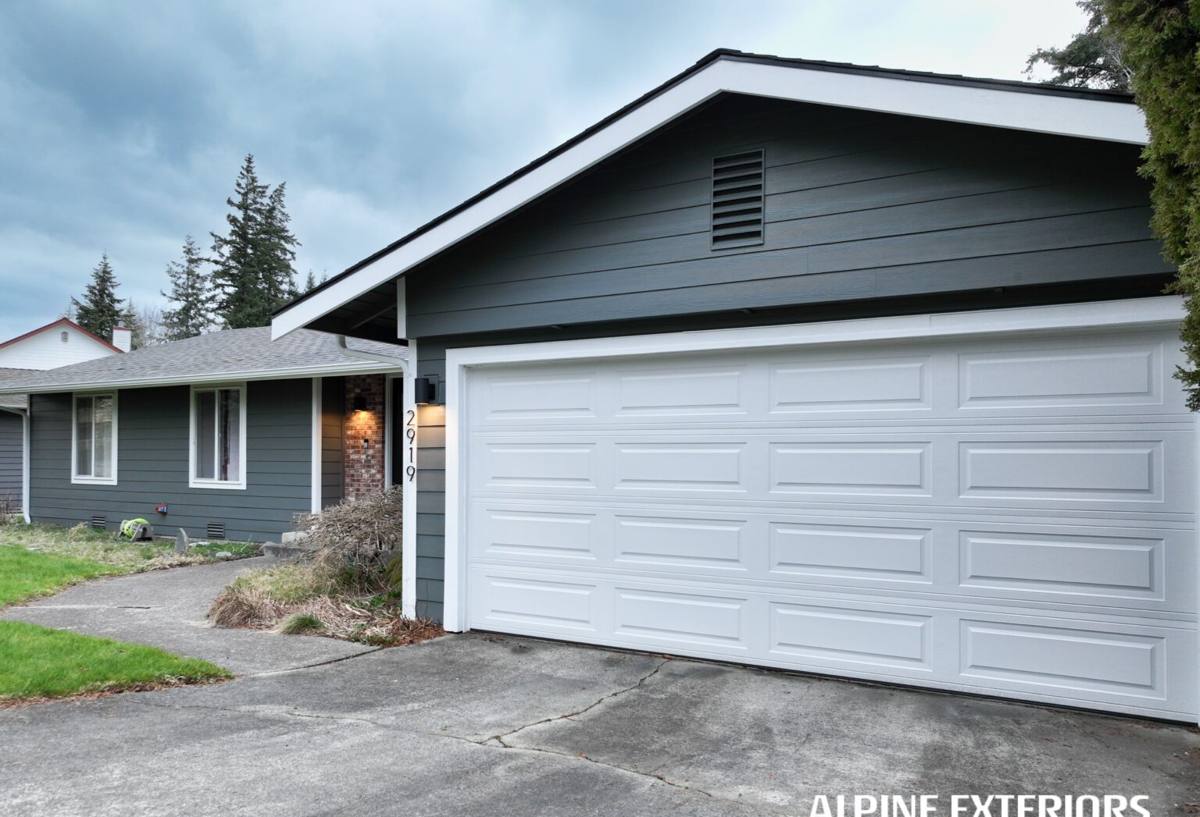
What Vinyl Siding Gets Right
Vinyl has been a mainstream siding choice for decades for good reasons. It's worth naming those reasons honestly before getting into the trade-offs.
- Lower upfront material cost — vinyl is generally the least expensive siding option per square foot.
- Low field maintenance — no painting required, and occasional washing keeps it presentable.
- Lightweight and fast to install — panels go up quickly, which keeps labor costs down.
- Wide color and profile selection — including many styles meant to mimic wood lap or shake.
- Won't rot — it's a plastic product, so it doesn't absorb water and decay the way untreated wood does.
For a homeowner on a tight budget in a low-wind, low-UV climate, vinyl can be a perfectly sensible choice. The issues show up specifically when you put it in a coastal, hurricane-exposed, high-UV environment like ours.
Where Vinyl Struggles in a Coastal Florida Climate
Heat and UV
Vinyl is a petroleum-based plastic, and plastic softens and expands with heat. On a west- or south-facing wall that bakes in Florida sun for a full afternoon, vinyl panels can warp, buckle, or "oil-can" (develop a wavy, rippled surface) over time. UV exposure also breaks down the pigment in vinyl over years, which is why older vinyl siding often looks chalky or faded compared to when it was installed — and unlike paint, you can't simply refinish it. Replacement is the only fix.
Wind Resistance
Vinyl siding is rated for wind resistance, but those ratings assume correct installation with proper fastening and can vary significantly by manufacturer and panel gauge. In a hurricane-force wind event, vinyl panels are more prone to being pulled loose or torn off the wall than a heavier, mechanically fastened fiber cement product installed to spec. Losing siding during a storm isn't just cosmetic — it exposes the weather barrier and sheathing underneath to wind-driven rain.
Impact and Debris
Vinyl is a thin plastic shell. Wind-blown debris — a common feature of tropical storms and hurricanes — can crack or puncture it more easily than it damages fiber cement.
Heat Buildup Behind the Panel
Darker vinyl colors absorb more heat, and manufacturers often restrict which dark shades can be used in high-heat climates because of the expansion issue. That limits your color choices right when you might want a bolder look.
Moisture Behind the Panel
Vinyl siding isn't watertight — it's a rain-screen system designed to let some moisture through to a drainage plane behind it. That's fine when installed correctly, but any gaps, poor flashing, or settling over time can let wind-driven rain track behind the panels, and in our humidity that moisture doesn't evaporate as quickly as it would in a dry climate.
What James Hardie Fiber Cement Brings to a Coastal Home
Fiber cement is a composite of Portland cement, sand, and cellulose fibers, engineered to be dimensionally stable — it doesn't expand and contract with heat the way plastic does, and it doesn't rot the way wood does. James Hardie specifically engineers HZ5 product lines for high-humidity, high-wind climates like ours, which is a meaningful distinction from a generic fiber cement board.
- Non-combustible — fiber cement doesn't ignite or contribute fuel to a fire.
- Dimensionally stable — resists warping, buckling, and expansion in extreme heat.
- Factory-applied ColorPlus finish — a baked-on finish that resists fading and chipping far better than field-applied paint, with touch-up product available for the rare nick.
- Engineered for climate — HZ5 formulations are built specifically for high-moisture, coastal-adjacent regions.
- Heavier, more rigid panels — harder for wind and debris to tear loose or puncture when installed to code.
- Strong transferable warranty — backed by the manufacturer, which matters if you sell the home before the siding's service life is up.
None of that means fiber cement is maintenance-free forever — caulking, paint touch-ups on cut edges, and periodic inspection are still part of ownership. But the baseline behavior of the material under sun, wind, and moisture is fundamentally more stable than vinyl's.
Side-by-Side: How the Two Materials Actually Compare
| Factor | Vinyl Siding | James Hardie Fiber Cement |
|---|---|---|
| Upfront material cost | Lower | Higher |
| Heat/UV stability | Can warp, fade, oil-can over time | Dimensionally stable, color-retentive finish |
| Wind performance | Rated, but thinner and lighter panels | Heavier, more rigid; HZ5 lines engineered for wind zones |
| Fire behavior | Combustible plastic | Non-combustible |
| Impact/debris resistance | Prone to cracking or puncture | Significantly more resistant |
| Color options in dark shades | Often limited by heat-absorption rules | Full ColorPlus palette available |
| Typical service life | Shorter in high-heat, coastal exposure | Longer, when installed and maintained to spec |
| Refinishing if faded/damaged | Not repaintable in practice; panel replacement | Field-touchable ColorPlus, or repaintable |
Installation Quality Matters More Than the Brochure
Here's something that applies to both materials equally: a poorly installed product of either type will underperform a well-installed one. Fiber cement in particular is installation-sensitive — it needs correct fastener placement, proper clearances at grade and roof lines, correctly lapped and sealed joints, and manufacturer-spec flashing details. Cut edges need to be primed and painted, gaps need proper caulking, and panels need to be hung with the right nail pattern for our wind zone. Skip those details and you undercut the material's real-world performance and can jeopardize the warranty.
This is part of why we standardized on one product installed one correct way, rather than offering multiple siding lines. It lets our crews master the installation details that actually determine how the siding performs in year 10 and year 20, not just how it looks on installation day.
Questions Worth Asking Before You Choose a Siding Contractor
- Is the installer factory-trained or certified on the specific product they're proposing?
- What fastening pattern and clearances will they use for our wind zone?
- Who backs the warranty — the manufacturer, the installer, or both — and what voids it?
- How are seams, corners, and penetrations (vents, pipes, fixtures) flashed and sealed?
- What does the manufacturer's own literature say about performance in coastal/high-humidity zones?
Cost Over the Life of the Siding, Not Just Day One
Vinyl will almost always win on the initial invoice. But the honest comparison isn't installed cost — it's cost per year of service life, plus how the home looks and holds value in year 15. If vinyl on a sun-exposed wall needs early replacement due to warping or fading, or if panels are lost in a storm and need emergency repair, the "savings" narrow or disappear. Fiber cement's higher upfront cost is offset by a longer realistic service life in this climate, a factory finish that doesn't need repainting on the same cycle as field-painted materials, and a warranty structure built around long-term performance. We won't quote you a specific payback period — that depends on your home, your wall exposure, and market conditions — but it's the right lens to compare through rather than sticker price alone.
Where We Landed, and Why
We install James Hardie exclusively because we don't want to hand a St. Petersburg homeowner a product that we know statistically struggles with the exact conditions their home will face for the next fifteen-plus years: sun, salt, humidity, and wind. That's not a knock on vinyl as a product category — it's a reflection of what we've chosen to stand behind with our own crews and our own name on the work. If a different material genuinely made more sense for a specific project, we'd say so. For most homes in Pinellas County, we believe fiber cement is the more durable, better-performing long-term choice.
If you're weighing your options for an upcoming siding project, we're glad to walk your home with you, look at sun exposure and wall conditions specific to your property, and give you a straightforward, no-pressure estimate — no hard sell, just an honest read on what your home needs.