 St. Petersburg Siding
 A Standard We Don't Bend On
Every siding contractor gets asked, at some point, to quote something other than what they normally install. Vinyl because a homeowner saw a low price online. LP SmartSide because a neighbor liked theirs. Cedar because someone wants the old Florida cracker-house look. We turn all of those jobs down. St. Petersburg Siding Company installs James Hardie fiber cement siding and nothing else, and we think homeowners deserve to know exactly why before they hire anyone for a re-side in St. Petersburg or anywhere else in Pinellas County.
This isn't a marketing gimmick. It's a decision built around what actually survives a Gulf Coast climate: hurricane-force wind events, sideways rain that drives water into every seam and lap, UV exposure that runs nearly twelve months a year, and salt air rolling in off Tampa Bay and the Gulf that corrodes fasteners and degrades cheaper materials faster than most manufacturers' warranties admit. We've installed enough siding in this county to know which products hold up to that combination and which ones don't, and we'd rather say no to a job than install something we don't believe in.
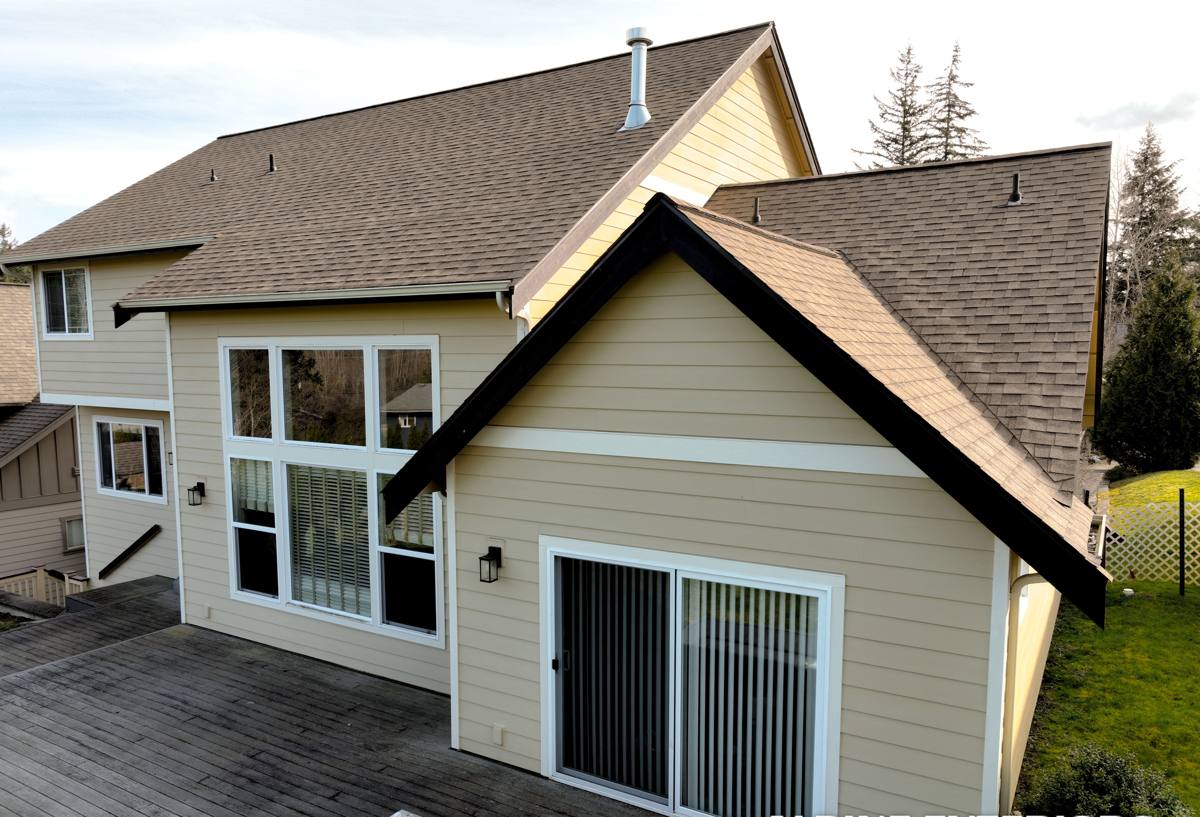
What Fiber Cement Actually Is
James Hardie siding is fiber cement — a blend of Portland cement, sand, cellulose fiber, and water, cured into rigid boards and panels. It is not plastic (like vinyl), not a wood composite (like LP SmartSide), and not solid wood (like cedar or primed spruce). That distinction matters more than most homeowners realize, because it changes how the material behaves in heat, moisture, wind, and fire.
Why the Composition Matters Here
Fiber cement doesn't expand and contract with heat the way vinyl does, so it doesn't warp or buckle in a St. Petersburg summer when siding surface temperatures climb well past the air temperature. It doesn't have wood fiber at its core the way engineered wood siding does, so there's no organic material for moisture to feed on if a seal fails. And it's non-combustible, which is worth something in a state where wildfire risk is climbing in certain inland areas and insurance carriers are paying closer attention to exterior materials.
The HZ5 Engineering Behind Every Install
James Hardie doesn't make one product for the whole country. The company engineers its formulations by climate zone, and Florida falls into HZ5 — the zone built specifically for high humidity, heavy rain, and moisture-driven decay pressure. That's not a marketing label; it's a different manufacturing formulation designed to resist moisture intrusion and cracking in exactly the conditions Pinellas County deals with nine months of the year.
When we say we only install Hardie, we mean we only install the HZ5 product line for this climate — not a generic version shipped to every region in the country. That regional engineering is one of the clearest reasons we won't substitute a different brand just because it's cheaper or more available.
ColorPlus Finish vs. Field-Painted Siding
Most of what we install carries Hardie's ColorPlus Technology — a factory-applied, baked-on finish rather than paint rolled or sprayed on-site after installation. The difference shows up years down the road, not on install day.
- Factory finishing is cured under controlled conditions, producing a more uniform, durable bond than field application, which is at the mercy of weather, humidity, and dry time.
- ColorPlus finishes carry their own dedicated finish warranty separate from the substrate warranty, covering fading and peeling under the specific terms of that product.
- Touch-up paint is formulated to match ColorPlus colors precisely, which matters if a board ever needs a repair years later.
- Primed boards that get painted on-site put the finish quality in the hands of whichever painter shows up next, on whatever schedule and budget the homeowner sets — that's an extra variable and an extra cost most homeowners don't factor into a "cheaper" siding quote.
We're not saying field-applied paint never holds up. We're saying we don't want a callback in year four because a paint job failed on siding we installed correctly. Sticking to ColorPlus removes that variable entirely.
How the Hardie Product Lines Break Down
"James Hardie siding" isn't one product — it's a system of several board and panel styles, and matching the right one to a home is part of doing this job correctly.
| Product | What It Looks Like | Typical Use |
|---|---|---|
| HardiePlank lap siding | Traditional horizontal lap, multiple textures (smooth, cedarmill, beaded) | Most common choice, full-home siding |
| HardiePanel vertical siding | Vertical panel with battens | Board-and-batten look, accent walls, gables |
| HardieShingle siding | Staggered or straight-edge shingle profile | Coastal cottage and craftsman-style homes |
| HardieTrim boards | Smooth or woodgrain trim stock | Corners, window and door surrounds, fascia |
| HardieSoffit panels | Vented or non-vented flat panel | Eaves and overhangs, moisture and pest resistance |
A full siding job usually mixes several of these — lap siding on the main walls, trim boards at corners and openings, soffit panels under the eaves. Getting that system to work together, with the right flashing and clearances at every transition, is where installation quality separates a siding job that lasts twenty-plus years from one that fails at the seams in five.
Why Installation Quality Matters as Much as the Product
Fiber cement is a forgiving, durable material — until it's installed wrong. Most of the fiber cement failures we get called out to inspect trace back to installation shortcuts, not the product itself.
Common Installation Mistakes We Won't Make
- Face-nailing without proper clearance, which restricts the board's ability to handle moisture cycling
- Butt joints without flashing or sealant behind the seam, creating a direct path for wind-driven rain
- Insufficient clearance between the bottom edge of the siding and roof lines, decks, or grade — a common source of wicking moisture damage in Florida
- Skipping or shortcutting the water-resistive barrier behind the siding
- Using the wrong fastener spacing or type for our wind zone
James Hardie publishes detailed installation specifications for exactly this reason, and following them to the letter — not "close enough" — is what keeps a warranty valid and a home dry through the next tropical storm. We install to that spec on every job, full stop.
The Warranty Structure
James Hardie backs its fiber cement products with a transferable limited warranty on the substrate, and ColorPlus finishes carry a separate finish warranty. Transferability matters in a market like St. Petersburg, where homes change hands regularly — a documented, transferable warranty is a real selling point when it's time to list the house, not just a piece of paper in a drawer.
That warranty is also conditional on proper installation. This is another reason we don't cut corners or install products outside our expertise: an improperly installed product, whatever the brand, tends to void the very warranty that was supposed to protect the homeowner.
What This Costs Compared to Alternatives
James Hardie siding sits above vinyl and generally in a comparable-to-slightly-higher range than engineered wood siding installed to the same standard, once you account for the ColorPlus finish and the labor of correct installation. It costs less over the life of the product than either option once you factor in repainting cycles, moisture repairs, and earlier replacement. We're not going to quote a fake number here — every home's square footage, trim detail, and tear-off scope changes the estimate — but we're happy to walk through real numbers for your specific home.
Before You Sign With Any Siding Contractor
- Ask exactly which product line and HZ climate rating they're quoting — not just "Hardie" or "fiber cement" generically
- Confirm whether the finish is factory ColorPlus or will be field-painted after install
- Ask to see their fastening and flashing plan at seams, corners, and clearances
- Get the warranty terms in writing, including what voids it
- Verify they're a licensed, insured Florida contractor — not just a subcontractor crew with no license on file
Why We Hold This Line
We could quote more jobs if we installed whatever a homeowner requested. We don't, because our name goes on every job we finish, and callbacks on a product we knew wasn't right for this climate aren't worth a short-term sale. Hurricane season, salt air, and relentless UV don't make exceptions for the cheapest material on the shelf, and we don't either.
If you're weighing siding options for a home in St. Petersburg or elsewhere in Pinellas County, we're glad to walk your property, look at your current siding condition, and give you a straight answer on what James Hardie would involve for your home — no pressure, no inflated claims. Reach out for a free estimate and we'll show you exactly what correct installation looks like.