 St. Petersburg Siding
 Why This Decision Is Different in St. Petersburg
Every siding contractor gets some version of the same call: a homeowner has a cracked panel, a soft spot near a window, or storm damage from the last squall that blew through Tampa Bay, and they want to know whether it's a patch job or a full tear-off. In most of the country that's a simple question of budget. In Pinellas County it's more complicated, because our siding doesn't age the way siding does in Ohio or even in inland Florida.
St. Petersburg sits on a peninsula surrounded by saltwater, which means airborne salt is constantly landing on exterior walls and accelerating corrosion of fasteners and trim. Add to that hurricane-force wind events that test every seam and lap joint, near-constant UV exposure that breaks down paint film and caulk faster than almost anywhere else in the country, and wind-driven rain that finds any gap in the water-resistive barrier. Siding here doesn't fail gracefully and evenly — it fails at the weak points first, while the rest of the wall still looks fine from the street. That's exactly what makes the repair-or-replace call tricky.
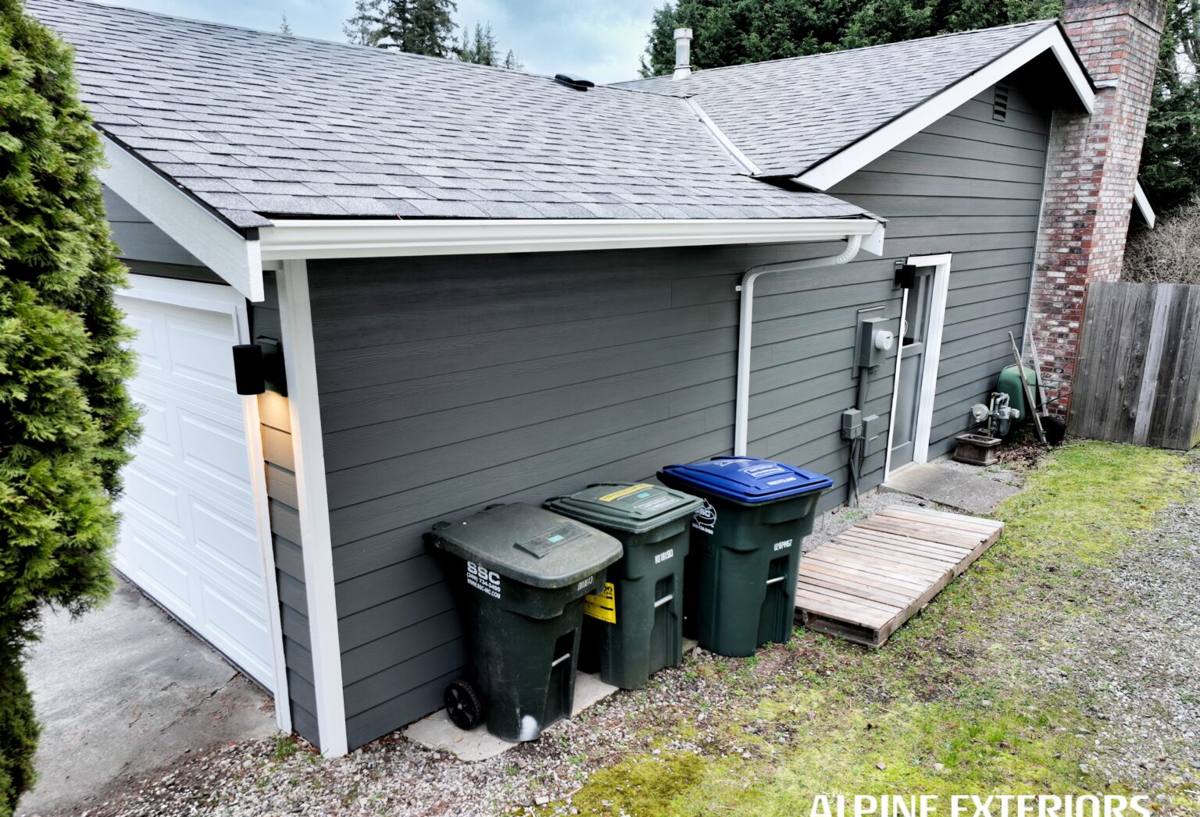
When Repair Is the Right Call
Not every problem means a new house's worth of siding. Repair makes sense when the damage is isolated, the underlying wall assembly is dry, and the siding material itself is still structurally sound. Good candidates for repair include:
- A single cracked or impact-damaged panel from a falling branch or lawn debris, with no water intrusion behind it
- Loose or popped fasteners on an otherwise healthy wall
- Failed caulking at trim joints, window returns, or butt seams that's letting water in but hasn't yet caused rot
- Minor color fading or chalking on a wall that's otherwise intact
- One or two boards showing early moisture staining, with sound wood or board underneath once opened up
The key test we apply on a repair call is whether the damage is a symptom of a localized event or a symptom of the whole system aging out. A tree limb through one panel is an event. Soft, spongy siding on three different walls at three different heights is a system telling you it's done.
What a Proper Repair Actually Involves
A repair done right isn't just swapping the damaged piece. It means checking the water-resistive barrier and flashing behind the removed section, confirming the sheathing underneath is dry and sound, matching the replacement material and profile so it doesn't stick out visually, and re-sealing every penetration correctly. A repair that skips those steps just delays the next call — often at a worse point in the wall's life.
When Replacement Is the Honest Answer
Replacement becomes the right recommendation, not the upsell, when the damage is systemic rather than isolated. Signs that point toward a full re-side include:
- Soft or spongy siding in multiple locations, especially near the bottom of walls, below windows, or around old deck ledgers
- Visible rot, delamination, or swelling in more than a couple of boards
- Widespread cracking or warping consistent with age and sun exposure rather than a single impact
- Siding that's been painted repeatedly to hide problems, with peeling returning within a year or two each time
- A wall assembly where mold or a musty smell shows up on the interior side near exterior walls
- Siding installed more than 20-25 years ago on a home that's never had it replaced
The math changes once damage is widespread. Chasing repairs across a wall that's failing everywhere costs more in labor over a few years than one properly sequenced replacement, and every reopened section is another chance to miss hidden water damage in the sheathing.
Material Matters More Than People Expect
How a wall got into trouble — and how much it costs to fix — depends heavily on what's on it. We work almost exclusively with James Hardie fiber cement, but we still get called out to inspect homes with vinyl, wood, and other fiber cement products, and the failure patterns are genuinely different.
| Material | Common Failure Pattern in This Climate | Repairability |
|---|---|---|
| Vinyl | Cracking and brittleness from UV over time; warping near grills or reflected heat; panels blow off in high wind because they rely on interlocking clips rather than direct fastening | Individual panels replace easily if the pattern is still made; whole-wall UV damage means color-matched panels are hard to find |
| Wood or primed spruce | Moisture absorption at butt joints and bottom edges; rot that spreads inside the board before it's visible outside; repeated repainting needed to hold the line | Spot repair is possible early; once rot sets in it usually spreads faster than repair budgets can keep up with |
| Older fiber cement (non-Hardie or early generation) | Edge swelling if factory sealing was inconsistent; caulk-dependent joints that fail as caulk ages in UV | Panel replacement is straightforward if matching profile and finish are available |
| James Hardie HZ5/ColorPlus | Engineered for high-wind, high-moisture climates; failures we see are almost always installation-related (bad flashing, wrong gaps) rather than material-related | Individual board swaps are simple; factory finish means better long-term color match than field-painted repairs |
We're not going to pretend every non-Hardie product is a disaster — plenty of vinyl and wood siding jobs hold up fine for years when installed correctly and maintained. But when we're standing in front of a wall trying to decide whether it's worth saving, the material in front of us changes both what's possible and what's worth doing.
What Storm Damage Changes About the Decision
Pinellas County homeowners have a wrinkle most of the country doesn't: named storms and tropical systems that can turn a "someday" repair into an urgent one overnight. A few things worth knowing before you decide:
- Wind-driven rain during a tropical storm or hurricane can push water behind siding through gaps that never leaked in a normal rain — even siding that looked fine before the storm can have wet sheathing after it
- If your homeowner's insurance is involved, get a written inspection and photos before any repair work starts, and understand whether your policy treats storm damage as repair-eligible or requires matching across an entire elevation
- Insurance carriers sometimes require full-wall or full-house replacement if the original material or color is no longer available and a "reasonable match" can't be made — this is worth confirming with your adjuster before assuming a small patch will satisfy a claim
- Emergency tarping or temporary sealing after a storm is not a substitute for a proper repair — it buys time, it doesn't fix the wall
Cost Factors Worth Understanding
We won't quote prices in an article like this — every wall and every home is different, and anyone who gives you a number without seeing the house is guessing. But the factors that drive the repair-versus-replace math are worth knowing going in.
| Factor | Pushes Toward Repair | Pushes Toward Replacement |
|---|---|---|
| Extent of damage | Isolated to one or two areas | Present on multiple walls or elevations |
| Age of existing siding | Under 10-15 years old | Original siding on a home 20+ years old |
| Underlying wall condition | Sheathing dry and sound when opened up | Rot, mold, or soft sheathing found during inspection |
| Material availability | Matching panels or boards still manufactured | Discontinued product, no reasonable color/profile match |
| Insurance involvement | Isolated, documented single-event damage | Storm claim requiring full-elevation matching |
| Maintenance history | Well-maintained, caulked and painted on schedule | Deferred maintenance, repeated patch jobs |
The Risk of DIY or Bargain Patch Jobs
We understand the instinct to keep a repair small and cheap, especially on a rental property or a home you're not planning to stay in forever. But a few corners get cut more often than they should, and they tend to cause bigger problems down the line:
- Caulking over a gap instead of correcting the flashing or water-resistive barrier behind it — this traps moisture rather than keeping it out
- Using the wrong fastener type or spacing, which matters more here than in drier, calmer climates because of wind uplift ratings
- Painting over swollen or damaged material instead of removing and replacing it, which hides the problem until it reappears somewhere else on the same board
- Mismatched replacement panels that technically seal the wall but leave an obvious patchwork appearance
None of these mistakes show up on day one. They show up twelve to twenty-four months later, usually after the next round of summer heat and storm season, and by then the repair has often gotten more expensive, not less.
A Practical Checklist Before You Decide
If you're standing in your yard trying to figure out which category your siding falls into, walk the exterior and check for these:
- Press gently on siding near the bottom of walls, below windows, and around any deck or porch attachment — does it feel soft or give under light pressure?
- Look at how many separate areas show visible damage — one spot, or a pattern across the house?
- Check the interior walls that back up to the damaged exterior areas for staining, bubbling paint, or a musty smell
- Note the age of the siding, or when the home was built if it's original
- Look at caulk lines at trim and joints — are they cracked, pulling away, or missing in multiple places?
- Consider your maintenance history honestly — has this siding been painted or patched more than once in the last five years?
If most of your answers point to "isolated" and "recent," a repair is likely a reasonable, honest choice. If you're checking boxes across several of these, it's worth getting a full inspection rather than another round of patching.
When Replacement Is the Call, Here's Where We Land
When an inspection does point toward replacement, we install James Hardie fiber cement exclusively, and we're upfront about why. It's non-combustible, which matters in a state where wildfire and lightning-driven brush fires are a real if lower-profile risk. Its ColorPlus factory finish holds color better under Florida's UV load than field-applied paint, which means fewer repaint cycles over the life of the siding. Hardie's HZ product lines are engineered specifically for high-wind, high-moisture climates like ours, and the company backs it with a strong transferable warranty. None of that is marketing — it's the reason we standardized on one product instead of offering several, and it's what we'd put on our own homes here in Pinellas County.
Whether your home needs a small repair or a full re-side, an honest inspection is the only way to know for sure. If you're dealing with damaged, aging, or storm-affected siding in St. Petersburg, we're happy to take a look and give you a straight answer — no pressure, no upsell, just what the wall actually needs. Reach out for a free estimate and we'll walk the exterior with you.