 St. Petersburg Siding
 New-Construction Windows, Done Right, in Bartlett Park
Bartlett Park is one of St. Petersburg's older, established neighborhoods, and like most of the city it's now a mix of original bungalows, additions, and newer infill homes going up on smaller lots close to downtown. Any time a home is framed from scratch, gets a room addition, or has a wall opened down to the studs for a remodel, the windows going into that rough opening are "new-construction" windows — not replacement units. That distinction matters more than most homeowners realize, and it matters even more here because of what Pinellas County weather does to a house over the years.
This page covers what a correct new-construction window install looks like specifically for Bartlett Park, why our local crew handles it differently than a general contractor treats windows as an afterthought, and what you should expect from the process start to finish.
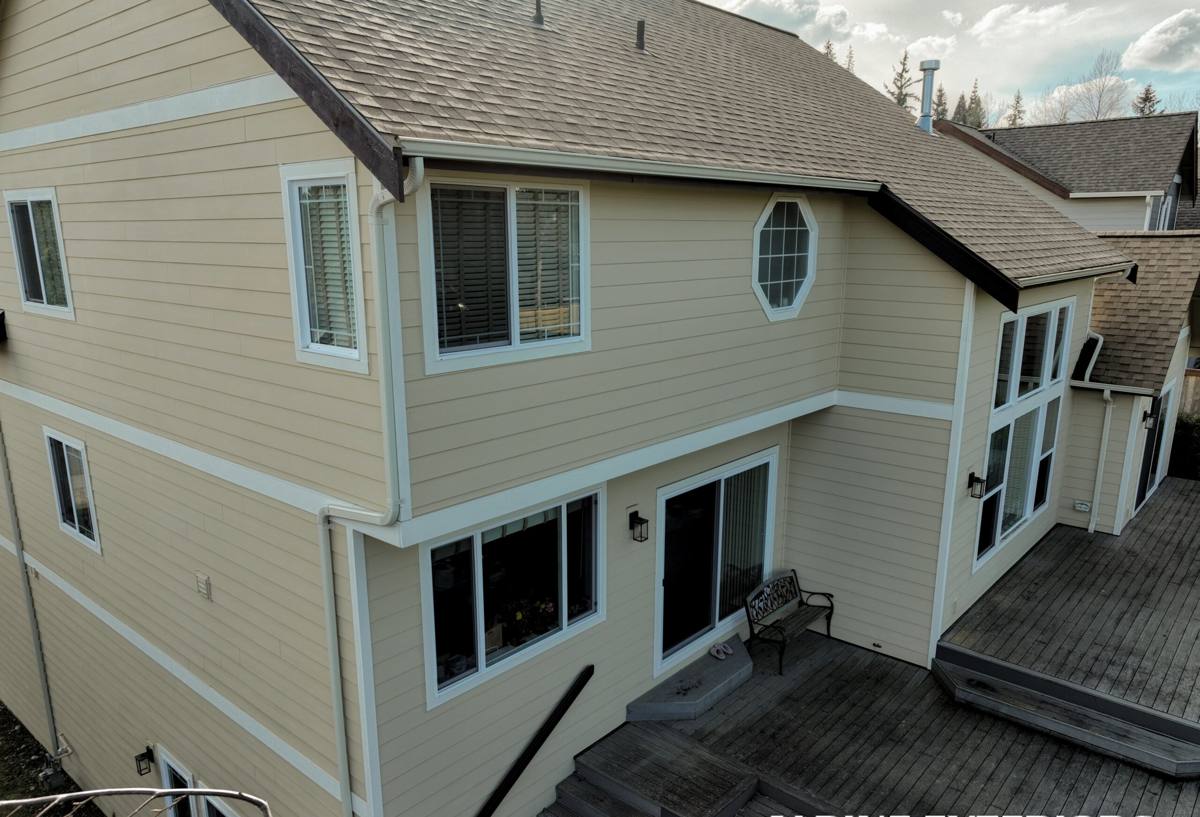
New Construction vs. Replacement — Why It's Not the Same Job
A replacement window (sometimes called a "pocket" or "insert" unit) slides into an existing frame that's already flashed and sealed into the wall. A new-construction window is a completely different animal: it has a nailing fin around the perimeter that gets fastened directly to the sheathing, and the entire opening — flashing, weather barrier, sill pan, sealant — has to be built around it from bare studs outward.
That means new-construction windows are only the right product when:
- The home is being built new, or an addition is being framed
- An exterior wall is opened to the studs for a remodel or window resizing
- Structural or opening-size changes make an insert unit impossible
If your Bartlett Park home just needs a straight window swap in an existing opening, that's a replacement job, not this one — and using the wrong window type in the wrong scenario is one of the most common ways water finds its way into a wall.
Why Pinellas County Weather Changes the Spec
St. Petersburg sits on a peninsula, which means every home here deals with a combination most inland markets don't see all at once: hurricane-force wind loads, wind-driven rain that gets pushed sideways into wall assemblies, intense year-round UV that degrades sealants and finishes faster than up north, and salt-laden air that accelerates corrosion on hardware and fasteners. A new-construction window opening that's flashed and sealed like it would be in a drier, milder climate will eventually leak or fail here — usually not on day one, but a few storm seasons in.
What that means in practice
For Bartlett Park specifically — a neighborhood of older lots close to downtown with a lot of infill and addition work happening — we plan for:
- Wind-borne debris protection, since Pinellas County falls in Florida's wind-borne debris region under the Florida Building Code
- Sill pan flashing that sheds water outward even under wind-driven rain, not just gravity-fed drainage
- Sealants and flashing tapes rated for sustained UV exposure, not general-purpose products that chalk and crack within a few years
- Corrosion-resistant fasteners and hardware given the salt air this close to the bay and Gulf
Florida Code Requirements You Should Know About
Pinellas County is not in Florida's High-Velocity Hurricane Zone (that's Miami-Dade and Broward), but it is squarely in the wind-borne debris region, which triggers real requirements for new construction windows here:
- Design pressure (DP) rating — every window has to be rated to withstand the wind loads calculated for its position on the house (corners and higher elevations typically need higher ratings than a sheltered wall)
- Impact resistance or opening protection — the window itself must be impact-rated, or the opening must have code-compliant shutters, unless it falls under a specific exemption
- Product approval — every unit installed needs a valid Florida Product Approval or Miami-Dade Notice of Acceptance (NOA) number tied to the specific window, not just the brand in general
- Permitting and inspection — new-construction window installs on a permitted job get inspected, and the flashing and fastening details are exactly what inspectors are checking
None of this is optional paperwork — it's the difference between a window that performs in a real storm and one that doesn't, and between a house that closes cleanly on inspection and one that gets red-tagged.
What a Correct Installation Actually Involves
The window unit itself is maybe a third of what determines whether this job holds up. The rest is installation detail, and it happens in a specific order:
- Rough opening check — squared, correctly sized, and structurally sound before anything else happens
- Sill pan flashing — a sloped, sealed pan at the bottom of the opening so any water that gets past the window drains back outside instead of into the wall cavity
- Weather-resistive barrier integration — the house wrap or building paper has to be shingle-lapped correctly around the opening so water is always directed downward and outward
- Window set and fastened — nailing fin secured per the manufacturer's and product approval's fastening schedule, which is more specific than "however many nails look right"
- Flashing tape over the fin — sealing the fin to the WRB on the sides and top, in the correct sequence, so water sheds over every layer
- Sealant and backer rod — exterior sealant joints sized and backed correctly, not just a bead of caulk smeared over a gap
- Interior air sealing and insulation — closing the gap between frame and framing without over-compressing the window frame
Skip or shortcut any one of those steps and the window can look perfect for years before a leak shows up — usually after the sealant has taken enough UV and salt-air exposure to start failing, or after the first hurricane-force wind event really tests it.
Frame and Glass Options for This Climate
We install a range of new-construction window products, and the right choice depends on budget, exposure, and the look of the home. Here's how the common options actually compare for a Bartlett Park install:
| Option | How it holds up here | Trade-offs |
|---|---|---|
| Impact-rated vinyl | Good balance of cost and performance; laminated glass handles debris impact and UV degrades vinyl slower than it used to | Frame color and finish options are more limited than aluminum |
| Impact-rated aluminum | Strong, thinner sightlines, holds up well to wind loads | Conducts heat more, and needs a good thermal break to avoid condensation issues |
| Laminated (impact) glass | The interlayer keeps glass in the frame under impact — this is what actually satisfies wind-borne debris protection in most cases | Heavier units, so opening and hardware sizing has to account for the extra weight |
| Non-impact glass + shutters | Lower upfront window cost | Requires code-compliant shutters on every opening and someone has to deploy them before every storm |
We don't push one option on every job — we'll walk through what makes sense for your specific opening sizes, elevation exposure, and budget, and explain the honest trade-offs rather than the sales pitch.
Our Process for a Bartlett Park Job
New-construction window work in this neighborhood usually comes up in one of three situations: a full new build, a room addition, or a remodel where an exterior wall gets opened up. Our process is the same core sequence either way:
- On-site opening measurements and review of the framing plan before ordering anything
- Window selection walk-through covering DP rating, impact protection, and frame material for each opening's exposure
- Product approval documentation confirmed for every unit before it ships
- Install following the flashing and fastening sequence above, coordinated with your GC's schedule if this is part of a larger build
- Final sealant, cleanup, and walkthrough, with everything ready for the permit inspection
What Drives the Cost
New-construction window pricing varies a lot job to job, but the same handful of factors move the number most:
| Factor | Why it matters |
|---|---|
| Opening size and quantity | Larger units and more openings mean more material and labor |
| Impact rating | Impact-rated glass costs more than standard glass plus shutters, but removes the ongoing hassle of deploying protection |
| Frame material | Vinyl generally costs less than aluminum for a comparable performance level |
| Opening condition | Framing that needs correction before the window can be set adds labor |
| Access and elevation | Second-story or hard-to-reach openings take longer to flash and set correctly |
We'll give you a written, itemized number before any work starts — there's no reason a homeowner should be guessing at what's driving the price.
Why a Crew That Already Works Bartlett Park Matters
Every neighborhood in St. Petersburg has its own quirks — lot sizes, typical setback rules, common framing ages, and how the permitting office likes to see things detailed. A crew that's already pulled permits and passed inspections on this kind of work in Bartlett Park and the surrounding parts of the city isn't guessing at what the inspector will want to see on the flashing, or how a particular opening size and exposure should be rated. That familiarity shows up in fewer surprises, fewer inspection callbacks, and a window install that's actually built for what Pinellas County weather does to a house — not a generic install detail copied from a different climate.
Quick Checklist Before You Hire Anyone for This
- Ask for the product approval number on the specific window model, not just the brand name
- Confirm the DP rating matches the opening's location and elevation on the house
- Ask what sill pan flashing method they use and why
- Confirm the job will be permitted and inspected, not done off the books
- Get the fastener and sealant specs in writing, not just "we use good stuff"
If you're planning a new build, addition, or remodel in Bartlett Park and need new-construction windows done to hold up against real Gulf Coast weather, we're happy to take a look at your plans or framed opening and put together a straightforward, no-pressure estimate using the form below.