 St. Petersburg Siding
 Kenneth City sits in the middle of Pinellas County, close enough to Tampa Bay and the Gulf that every home here deals with the same exterior stress: salt-laden air, intense sun nearly year-round, sideways rain during summer storms, and the real possibility of hurricane-force wind gusts. None of that is unique to one street or subdivision in town — it's the baseline every exterior surface in this part of Florida has to survive. Siding is often the first material to show the wear, and it's usually the last thing homeowners think about until a section is cracking, bowing, or letting water behind it.
This page is about one job done right in one place: full siding installation for Kenneth City homes, using James Hardie fiber cement exclusively. We don't install vinyl, LP SmartSide, or other fiber cement brands, and we'll explain why that matters below — but the short version is that we've standardized on one product system because it holds up to this climate better than the alternatives, and because we'd rather install one thing correctly than several things adequately.
What Kenneth City's Climate Actually Does to Siding
Homeowners tend to think of siding failure as something that happens suddenly — storm damage, a fallen branch, an obvious crack. In reality, most siding problems in this area build slowly, from a combination of factors that are easy to underestimate:
Heat and UV Exposure
Pinellas County gets sun exposure most of the year, and siding on south- and west-facing walls takes the brunt of it. Cheaper composite materials and some vinyl products soften, warp, or fade under sustained UV and heat cycling. Repeated expansion and contraction as siding heats up during the day and cools at night stresses seams, fasteners, and caulk joints over time.
Wind-Driven Rain
It's not just how much rain falls — it's how it arrives. Summer storms in this part of Florida frequently drive rain sideways into walls rather than straight down. That means siding, flashing, and house wrap details all have to work together to keep water out from an angle, not just off a roofline. Poor lap spacing, missing flashing, or gaps at trim are minor issues in a mild climate; here, they're a fast track to moisture intrusion.
Salt Air
Even inland from the immediate coastline, Kenneth City is close enough to Tampa Bay and the Gulf that airborne salt reaches homes regularly. Salt accelerates corrosion of fasteners and metal flashing, and it degrades some coatings faster than manufacturers' standard warranty testing accounts for. Material choice and hardware matter more here than they would a hundred miles inland.
Wind Load
Pinellas County's building code reflects its hurricane exposure, and siding installation has to meet wind-load requirements that some manufacturers' basic installation guidance doesn't fully address. Fastener spacing, starter strip attachment, and butt-joint treatment all affect whether siding actually stays attached in a major wind event — not just whether it looks finished on a calm day.
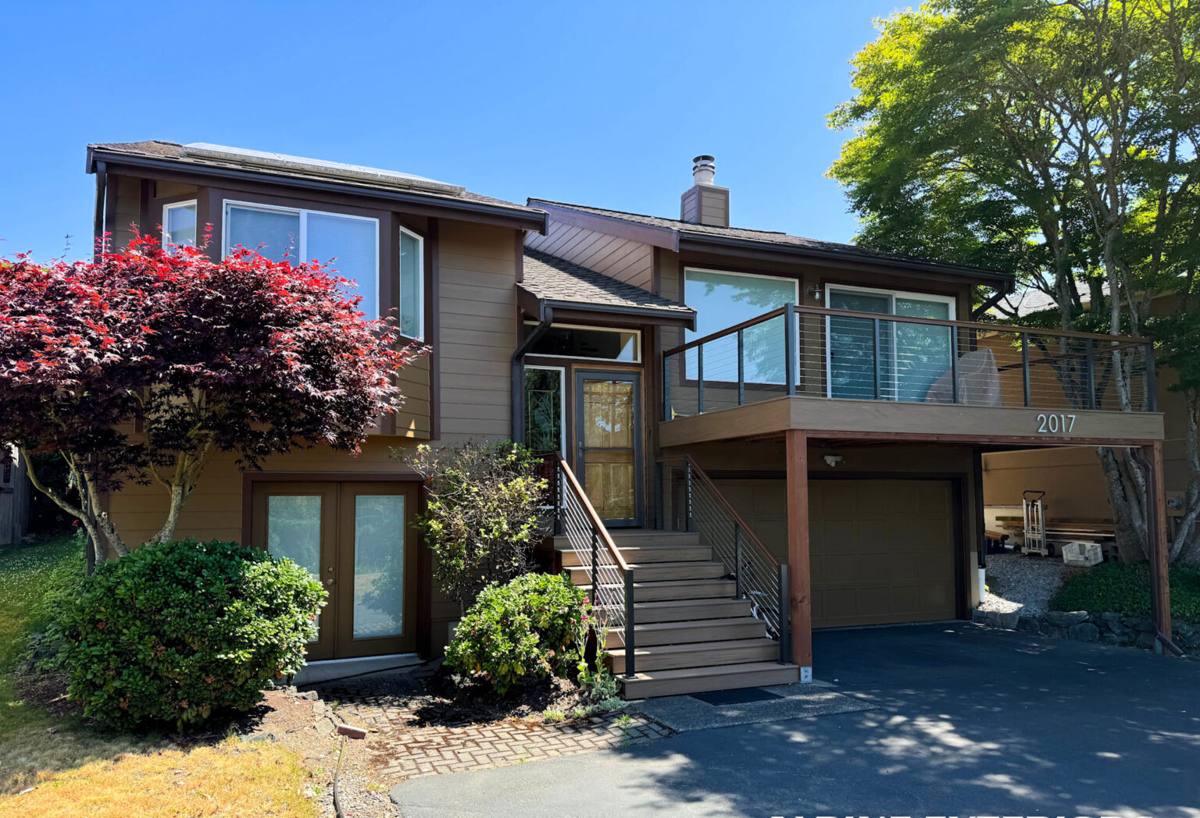
Why We Install Only James Hardie Fiber Cement
We get asked regularly why we don't offer vinyl or other fiber cement brands as a lower-cost option. It's a fair question, and the honest answer is that we made a deliberate call to specialize rather than offer everything.
Vinyl siding is inexpensive and easy to install, and for some climates it performs fine. In a market with this much heat, UV, and wind, we've seen it soften, warp at the edges, and become brittle enough that hurricane-force gusts can crack or peel it loose. It also can't be painted a dark color in intense sun without risking distortion, which limits design options for homeowners who want deeper, richer tones.
Other fiber cement brands and engineered wood products like LP SmartSide have real strengths — LP SmartSide in particular is a capable product in many parts of the country. But it's a wood-strand composite with an OSB-like core, which means its long-term moisture performance depends heavily on maintaining a perfect paint seal at every cut edge and joint — a tall order in a climate with this much wind-driven rain and salt air working against it continuously. Primed spruce and cedar carry similar moisture and maintenance burdens, plus ongoing repainting costs that add up over a home's life.
James Hardie's fiber cement is cement, sand, and cellulose fiber — non-combustible, dimensionally stable, and engineered specifically for high-moisture, high-UV climates through its HZ5 product line, which is formulated for exactly the humidity and moisture exposure Florida delivers. The factory-applied ColorPlus finish is baked on under controlled conditions, which holds color and resists fading far better than field-applied paint, and it comes with a meaningful transferable warranty. We install it because when it's done to spec, it's the product we're most confident stands up to what Kenneth City throws at it — not because it's the cheapest option on the table.
What Correct Installation Involves
Fiber cement siding is only as good as its installation. James Hardie publishes detailed installation requirements, and skipping or shortcutting them is the single biggest reason fiber cement siding underperforms in this climate. A correct job includes:
- Proper water-resistive barrier and house wrap installation before any siding goes up, with all seams and penetrations sealed
- Correct flashing at windows, doors, and any wall penetrations to direct water away from the structure
- Minimum clearance between siding and roofing, decking, and grade, per manufacturer specs, so moisture isn't trapped against the bottom edge
- Proper fastener type, spacing, and penetration depth — matched to Pinellas County's wind-load requirements, not just generic guidance
- Correct panel and lap spacing to allow for expansion without buckling or gapping
- Factory-primed or ColorPlus-finished cut edges sealed in the field to prevent moisture wicking
- Caulking only where Hardie specifies it — over-caulking can trap moisture just as easily as under-caulking lets it in
None of this is exotic, but all of it is easy to shortcut when a crew is moving fast or unfamiliar with the product. We install according to manufacturer specification every time, because that's also what keeps the warranty intact if you ever need it.
Our Installation Process for Kenneth City Homes
1. On-Site Assessment
We look at the home's current siding condition, the substrate underneath, existing moisture damage if any, window and door flashing condition, and wall orientation relative to sun and prevailing wind. This tells us what needs to happen before new siding goes up, not just what color it'll be.
2. Tear-Off and Substrate Check
Old siding comes off and we inspect the sheathing underneath for rot, soft spots, or prior water damage — issues that are common on homes that have had water intrusion behind older or improperly installed siding. Any compromised sheathing gets addressed before we move forward; installing new siding over a damaged substrate just hides a problem, it doesn't fix it.
3. Weather Barrier and Flashing
We install or verify house wrap and flashing at every penetration — windows, doors, hose bibs, vents — before a single piece of siding goes up. This step matters more here than almost anywhere else in the state given how often rain arrives wind-driven rather than straight down.
4. Siding Installation
Panels, planks, or boards go up to Hardie's specifications for fastener pattern, spacing, and clearance, with attention to the wind-load requirements that apply in this part of Pinellas County.
5. Trim, Caulk, and Touch-Up
Trim work, corner details, and factory-finish touch-up at cut edges happen last, followed by a final walk-through so you know exactly what was done and why.
Cost Factors for Kenneth City Siding Projects
Every home is different, but a few factors consistently move the price on a fiber cement installation in this area:
| Factor | Why It Matters |
|---|---|
| Home size and wall complexity | More corners, gables, and dormers mean more cutting, flashing, and labor time |
| Current siding condition | Rotted sheathing or existing moisture damage found during tear-off adds repair work |
| Siding profile chosen | Lap siding, shingle-style panels, and vertical board-and-batten carry different material and labor costs |
| Trim and accent detail | Extensive trim, soffit, or fascia work adds scope beyond the field siding itself |
| Access and site conditions | Tight lots, fencing, or landscaping can affect staging and labor time |
We give you a real number after seeing the home, not a generic estimate pulled from a national average — Kenneth City homes vary enough in age and construction that a one-size number isn't useful to you.
Why Local Installation Experience Matters
A crew that regularly works in Pinellas County already knows the wind-load requirements that apply here, has a working relationship with local permitting, and has seen firsthand how homes in this specific climate age over years — which details fail first, which don't. That's different from a crew installing siding to a generic national spec and hoping it holds up locally. Kenneth City's mix of home ages and construction styles means there's no substitute for having actually worked on homes like yours, in this weather, before.
Signs Your Kenneth City Home May Need New Siding
- Visible cracking, warping, or bowing in siding panels
- Soft spots or discoloration on interior walls near exterior walls (possible moisture intrusion)
- Paint that's peeling or blistering repeatedly despite repainting
- Gaps opening up at seams, corners, or trim
- Rising energy bills that suggest declining wall insulation performance
- Siding that's more than 20-25 years old, especially if it's never been fully inspected
If you're seeing any of these signs, or you're simply due for an honest assessment of what your current siding can handle through another Florida storm season, we'll come take a look. There's no pressure and no cost for the estimate — just a straight answer about what your home needs.