 St. Petersburg Siding
 Building a Deck That Actually Holds Up in Crescent Lake
Crescent Lake is one of St. Petersburg's older, established neighborhoods, with mature tree canopy, a mix of vintage and updated homes, and lots left too small for a pool but plenty big enough for a deck that turns a backyard into usable living space. The problem is that a deck built with generic, big-box specs doesn't last long here. Pinellas County sits right on the water, and that means hurricane-force wind events, intense UV exposure nearly every day of the year, wind-driven rain that finds every gap in flashing, and salt-laden air that eats through the wrong hardware in a few seasons. A deck built for a landlocked climate will show fastener rust, board cupping, and connection failures well before a properly specified one does.
This page covers what a deck actually needs to survive in Crescent Lake specifically, what a correct build looks like top to bottom, and how we approach the job when we build here.
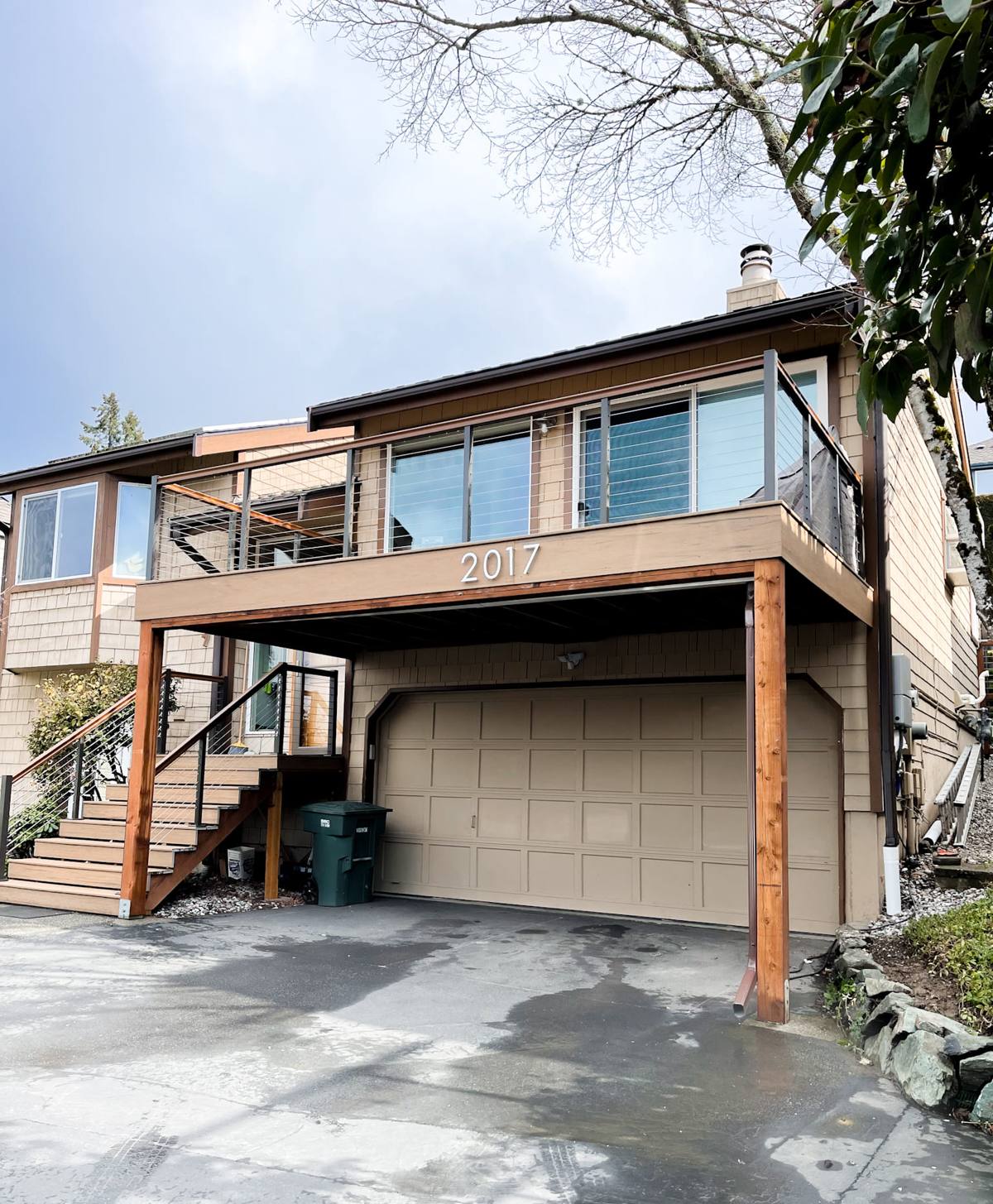
What This Neighborhood's Conditions Mean for a Deck
Shade and moisture from mature tree canopy
Lots in Crescent Lake often sit under established oaks and other mature trees, which is a great feature for comfort but a real factor for a deck. Heavy shade keeps decking wet longer after rain, slows drying between storms, and encourages mold, algae, and mildew growth on the board surface — especially on the north side of a house or under a dense canopy. It also means falling debris and organic buildup between boards, which holds moisture against the frame if the substructure isn't ventilated and gapped correctly.
Salt air and humidity
Even a few miles inland from Tampa Bay, salt-laden air accelerates corrosion on anything that isn't rated for it. Standard zinc-coated screws and joist hangers will show rust bleed into the decking within a couple of years in this climate. Florida's year-round humidity also means wood framing that isn't treated or sealed correctly will hold moisture, invite rot at connections, and eventually lose structural integrity at the exact points — ledger boards, post bases, joist hangers — where the deck depends on that connection most.
Wind and structural loading
St. Petersburg is built to a hurricane-region wind code for a reason. A deck is an exterior structure attached to your house, and in a wind event it's subject to uplift and lateral loads just like your roof. Ledger attachment, post-to-beam connections, and joist hangers all need to be specified for wind uplift, not just gravity load. This is where a lot of older or budget decks fail first — not the decking surface, but the hidden connections that were never rated for the wind this area actually sees.
UV exposure
Even under a tree canopy, Florida sun is intense for most of the day for most of the year. Decking material that isn't UV-stabilized will fade, chalk, and become brittle faster here than the manufacturer's "typical" climate rating would suggest. This matters most when choosing between wood, composite, and PVC decking, covered below.
Choosing the Right Decking Material
There's no single "best" decking material — there's a best fit for your budget, your sun/shade exposure, and how much upkeep you're willing to do. Here's how the common options actually compare for a Crescent Lake yard:
| Material | Upfront Cost | Maintenance | Heat/UV Behavior | Expected Lifespan Here |
|---|---|---|---|---|
| Pressure-treated pine | Lowest | Needs sealing/staining every 1-2 years in this climate | Can warp/check with sun-shade cycling under tree canopy | 10-15 years with upkeep |
| Tropical hardwood (e.g. ipe) | High | Periodic oiling to maintain color; low rot risk | Handles UV and moisture well; very dense | 25+ years |
| Composite decking | Mid-high | Occasional washing; no staining/sealing | UV-stable colors resist fading; can retain surface heat in full sun | 25-30 years |
| PVC/capped polymer decking | Highest | Lowest — resists mold/algae growth on the surface | Best UV and moisture resistance of the group | 25-30+ years |
In heavily shaded Crescent Lake lots, mold and algae resistance often matters more than heat management, which shifts the calculus toward composite or PVC over bare wood. In full-sun backyards, a lighter composite or wood-grain PVC color keeps surface temperatures more reasonable underfoot. We'll walk your specific lot's sun and shade pattern with you before recommending a material — it's genuinely different yard to yard in this neighborhood.
What's Underneath Matters More Than What You Walk On
The decking boards are the part everyone looks at, but the framing and fasteners are what determine whether the deck is still safe in ten years. For coastal Pinellas County builds, our standard is:
- Stainless steel or coated fasteners rated for coastal/marine-grade exposure — not standard zinc screws
- Joist hangers and structural connectors rated for the applicable wind uplift, not just gravity load
- Properly flashed ledger board attachment where the deck meets the house, to keep wind-driven rain from getting behind the siding or into the rim joist
- Post bases that keep wood off direct ground/concrete contact to reduce standing moisture
- Adequate gapping and airflow beneath the decking surface, especially important on shaded lots where things dry slower
- Concrete footings sized and set to the depth Florida Building Code and local soil conditions require
None of this is visible once the deck is finished, which is exactly why it's the part worth asking a contractor about directly before you hire them.
Permits and Code in St. Petersburg
Deck construction in St. Petersburg requires a building permit, and the structure has to meet Florida Building Code wind and structural requirements for our region — this isn't optional paperwork, it's what determines whether your ledger, framing, and footings are actually adequate for a wind event. Permitted work also gets inspected at the framing stage before decking goes down, which is your check that the hidden structural work was done correctly. We handle the permit submission and inspection scheduling as part of the job, so you're not chasing city requirements yourself.
Our Process
- On-site assessment — we look at your lot's sun/shade exposure, existing structure (if replacing a deck), drainage, and how the deck will attach to the house
- Design and material selection — sized to your space and budget, with a decking material matched to your yard's actual conditions
- Permit submission — plans drawn to meet St. Petersburg and Florida Building Code wind and structural requirements
- Framing — footings, posts, beams, and joists built with coastal-rated hardware and correct ledger flashing
- Framing inspection — before decking goes down, so the structural work is verified
- Decking, railing, and finish work — installed per manufacturer spec for warranty coverage
- Final walkthrough — we go over care and maintenance specific to the material you chose
Why It Matters to Hire a Crew That Already Works Crescent Lake
A deck contractor who mostly builds inland or in a different climate zone will often default to specs that are fine elsewhere but undersized for what St. Petersburg actually sees — standard fasteners instead of coastal-rated ones, ledger flashing details that don't account for wind-driven rain, or decking choices that don't hold up under heavy shade and humidity. A crew that regularly works this neighborhood already knows the tree canopy and drainage patterns common to Crescent Lake lots, has a working relationship with the local permitting and inspection process, and isn't guessing at wind-load requirements for the first time on your project. That familiarity shows up in fewer surprises during inspection and a deck that's still solid a decade from now.
Maintaining Your Deck After It's Built
- Rinse off leaf litter and organic debris regularly, especially under heavy tree canopy — it holds moisture against the boards
- Check railing and stair connections for looseness once or twice a year
- If you chose wood, plan on resealing or staining on the schedule your contractor recommends — skipping it shortens the lifespan significantly in this climate
- Keep gutters and downspouts near the deck clear so runoff isn't dumping extra water onto or under the structure
- Watch for soft spots, discoloration at fastener heads, or rust bleed — early signs worth a quick inspection
Signs an Existing Deck Needs Attention
If you already have a deck in Crescent Lake, watch for soft or spongy boards, visible rust streaking from fasteners, a ledger board that looks separated or stained where it meets the house, or railing posts that wobble. Any of these can indicate the underlying structure — not just the surface — has been compromised by moisture or corrosion, and it's worth having it looked at before it becomes a safety issue rather than a repair.
If you're planning a new deck or need an existing one assessed, we're happy to come take a look and give you a straightforward, no-pressure estimate. Just fill out the form below and we'll get in touch.