 St. Petersburg Siding
 Why Pinellas Park Homes Need a Different Siding Standard
Pinellas Park sits inland enough to feel removed from the Gulf, but it isn't removed from what the Gulf does to a house. Salt-laden air moves across the whole Pinellas County peninsula regardless of how many miles separate a street from open water, and it settles into siding seams, fastener heads, and trim joints year-round. Add in the summer heat that keeps west- and south-facing walls at high temperatures for months at a time, the intense UV load Florida is known for, and the wind-driven rain that shows up with every strong afternoon storm or tropical system, and you have a climate that is genuinely hard on exterior materials. Siding here isn't just a look — it's a weather system for the house, and it needs to be treated that way from the first estimate to the last piece of trim.
This is exactly why our crews only install James Hardie fiber cement siding. We've made a professional decision not to install vinyl, LP SmartSide, or other composite and wood-based products, because we don't think they hold up to Pinellas Park's combination of heat, humidity, salt, and storm exposure the way a correctly installed Hardie system does. This page walks through what that means specifically for a Pinellas Park home.
What Pinellas County Climate Actually Does to Siding
Heat and UV
Florida sun is not the same stress as sun in a milder climate. Walls facing south and west can sit at high surface temperatures for hours on end during summer, and that heat cycles daily — expanding and contracting whatever material is on the wall. Materials that aren't dimensionally stable under heat cycling tend to show it over time: warping, bowing, or finish breakdown. James Hardie fiber cement is engineered to be dimensionally stable under exactly this kind of thermal cycling, which is one of the main reasons it holds a straight, tight reveal line for decades instead of just the first few years.
Salt Air
Pinellas Park doesn't sit directly on the coast, but salt aerosol travels well inland across the whole peninsula, especially with onshore wind patterns common to this part of the Gulf coast. Salt is corrosive to fasteners and accelerates the breakdown of finishes that aren't formulated for it. It's a slow, quiet process — you don't see the damage happening, you just eventually see chalking, fading, or corrosion streaks where a lesser system would have held.
Wind-Driven Rain and Storm Exposure
Pinellas County sees regular heavy rain events and is squarely in Florida's hurricane exposure zone. Wind-driven rain doesn't just fall on a wall — it drives sideways and upward into laps, seams, and penetrations. A siding system's real test isn't a calm afternoon; it's rain moving horizontally at 40+ mph looking for any gap in the water management behind the cladding.
Humidity
Year-round humidity means any siding product with a weakness for moisture absorption is fighting a losing battle in this market. Materials that swell, delaminate, or trap moisture behind the surface will show problems here faster than almost anywhere else in the country.
Why James Hardie Is Built for This
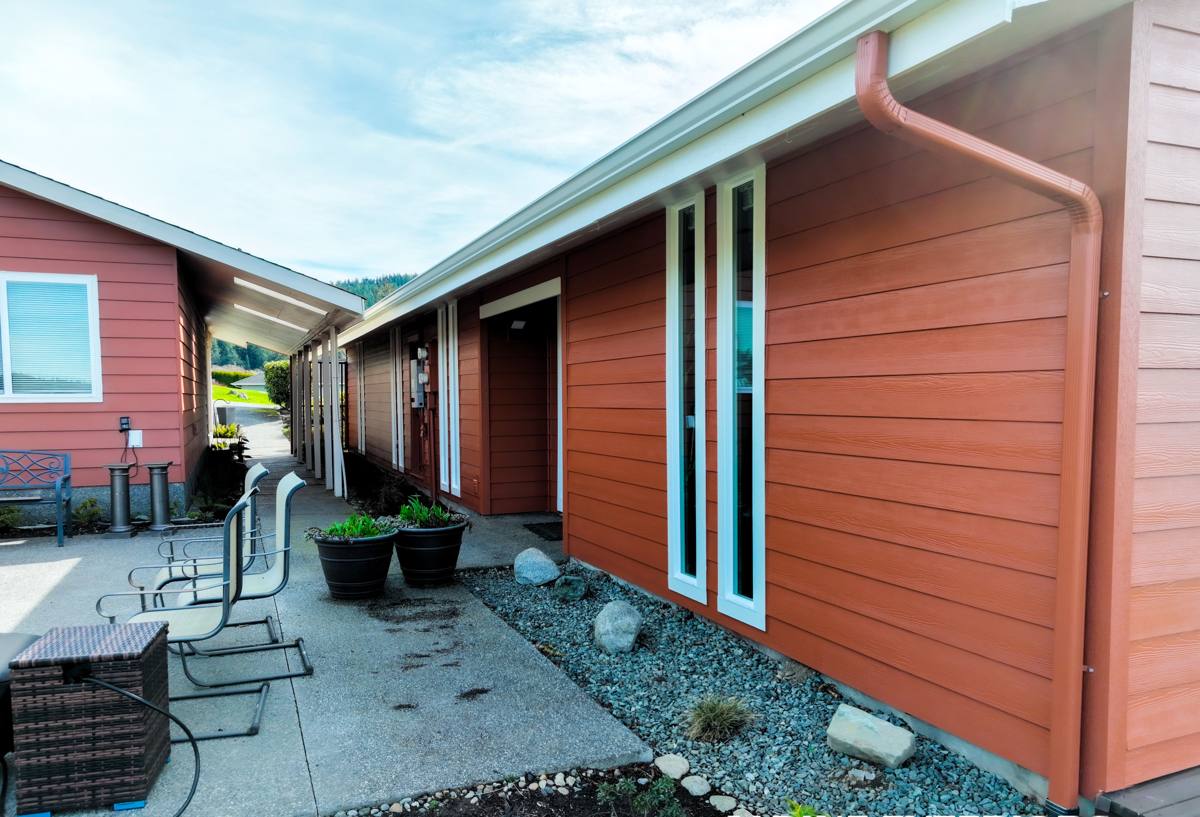
James Hardie fiber cement is a cement, sand, and cellulose fiber composite — it is non-combustible, doesn't rot, and doesn't provide a food source for termites or wood-boring insects, all of which matter in a warm, humid Gulf coast climate. James Hardie also makes an HZ5 product line specifically engineered for hot, humid climate zones like ours, with moisture and climate performance tuned for exactly the conditions Pinellas Park deals with every summer.
The factory-applied ColorPlus finish is the other half of the equation. It's baked on in a controlled factory environment rather than sprayed or rolled on-site, which gives it more consistent UV and fade resistance than field-applied paint typically achieves — important on walls that face direct Florida sun for a large part of the day. James Hardie backs its products with a strong, transferable limited warranty, which matters to homeowners who may sell within the product's lifespan.
What We Deliberately Don't Install — and Why
We get asked fairly often about vinyl and about LP SmartSide, since both are common and generally less expensive up front. Vinyl can soften, warp, or fade under sustained heat exposure, and it has real limits in high-wind events, which matters given Pinellas County's storm exposure. LP SmartSide is a wood-strand product, and any wood-based composite is more sensitive to sustained humidity and moisture intrusion than fiber cement is — a real concern in a climate this wet. Neither product is inherently defective; they're simply products we don't think perform as well, for as long, in this specific climate, and we'd rather turn down that installation than put something on a Pinellas Park home we don't stand behind for the next 20-plus years.
What a Correct James Hardie Installation Involves
The material is only half the job. Fiber cement siding fails prematurely almost exclusively because of installation mistakes, not product defects — and in a climate that punishes any gap in the water management system, correct installation matters even more than usual.
- Proper water-resistive barrier installed and lapped correctly behind the siding, not just stapled up as an afterthought
- Correct flashing at every window, door, and roof-to-wall intersection — the places wind-driven rain actually finds its way in
- Minimum clearance maintained between the bottom edge of the siding and grade, decks, and roof lines, per James Hardie's published specifications
- Fasteners installed at the correct type, spacing, and depth — over- or under-driven nails are one of the most common causes of early failure
- Proper joint treatment and caulking at butt joints and trim intersections, using products compatible with the ColorPlus finish
- Correct panel and lap siding overlap to shed water downward and outward, not trap it
- Ventilation behind the cladding maintained where the wall assembly calls for it
Every one of those items is written into James Hardie's own installation instructions. Skipping any of them can void the manufacturer's warranty — even though the material itself is high quality, an installer who cuts corners on flashing or fastening leaves the homeowner with a warranty claim that gets denied.
Our Process on a Pinellas Park Job
1. On-Site Assessment
We walk the exterior, check the current siding and sheathing condition, look at trim, window, and roofline details, and identify anything — old water damage, prior patch jobs, ventilation issues — that needs to be addressed before new siding goes up, not covered over.
2. Product and Color Selection
We go over the relevant James Hardie product lines and ColorPlus color options for the home, factoring in sun exposure on each elevation and any HOA or neighborhood guidelines that may apply in Pinellas Park.
3. Tear-Off and Substrate Check
Old siding comes off and we inspect the sheathing underneath for rot or moisture damage before anything new goes on. This step gets skipped by crews trying to move fast — we don't skip it, because covering a hidden problem just guarantees it resurfaces later.
4. Water Management and Flashing
House wrap, flashing, and all penetration details go in per code and per James Hardie's specification, before a single piece of siding is hung.
5. Installation
Siding, trim, and fascia go up to manufacturer spec — correct fastening, correct reveal, correct clearances — with attention to the same details that determine whether the system performs in a wind-driven rain event five years from now.
6. Final Walkthrough
We walk the finished job with the homeowner, check caulking and trim lines, and make sure everything matches what was scoped at the start.
Cost Factors for a Pinellas Park Home
Every home is different, but the variables that move the price on a James Hardie project are fairly consistent. We give firm numbers only after seeing the house in person — anyone quoting a full siding job over the phone with no walkthrough is skipping the assessment step above.
| Factor | Why It Matters |
|---|---|
| Home size and elevation count | More wall area and more corners/cutouts mean more material and labor |
| Current substrate condition | Rot or moisture damage found at tear-off adds repair work before siding can go up |
| Product line and profile | Lap, shingle, and panel profiles carry different material and labor costs |
| Trim and detail complexity | Multiple gables, dormers, or architectural trim add labor time |
| Color selection | Standard ColorPlus colors vs. specialty or custom finishes can affect lead time and cost |
| Access and site conditions | Fencing, landscaping, tight lot lines, or multi-story sections affect labor and equipment needs |
Maintenance Once It's Installed
One of the practical advantages of James Hardie in a climate like ours is how little upkeep it asks for compared to wood or vinyl. It doesn't need repainting on the schedule wood siding does, and it won't warp or discolor from heat the way vinyl can. That said, "low maintenance" isn't "zero maintenance" — a periodic rinse to clear salt residue and pollen buildup, an annual look at caulking around windows and trim, and prompt attention to any impact damage will keep the system performing for its full service life. Homeowners who stay on top of those small checks get the most out of the product's long-term durability.
Why Hiring Locally Experienced Installers Matters
James Hardie installation isn't complicated in concept, but it's unforgiving of shortcuts in a climate like Pinellas County's. A crew that regularly works Pinellas Park and the broader St. Petersburg area already understands how local sun exposure, salt air, and storm patterns interact with this specific product — which flashing details matter most on a west-facing wall, how much clearance to leave near irrigation and landscaping, and what kind of joint sealant actually holds up through a full Florida summer. That local, repeated experience is what separates a siding job that looks good at handoff from one that still looks good and performs correctly ten summers later.
If you're weighing a siding replacement or repair in Pinellas Park, we're happy to walk your home, look at what's there now, and give you a straight, no-pressure assessment of what James Hardie would involve for your specific house. Reach out below for a free estimate.