 St. Petersburg Siding
 Why Board & Batten Is Showing Up All Over Pinellas Park
Drive through Pinellas Park's older bungalow streets and newer infill construction alike and you'll notice the same trend: vertical board and batten panels showing up on gables, dormers, porch fronts, and increasingly on entire elevations. Part of that is style — the clean vertical lines read as modern farmhouse or coastal cottage depending on the trim and color choices around it. Part of it is practical: board and batten is one of the few siding profiles that looks equally at home as a full-house treatment or as an accent against horizontal lap siding, which makes it useful for homeowners who want to update a specific section of the house without re-siding everything.
What most homeowners don't realize until they start pricing the job is that board and batten is not simply a style choice bolted onto any siding material. The profile changes how water moves down the wall, how the panels are fastened, and how much long-term maintenance the finished job will require — and in a climate like Pinellas County's, those differences matter more than they would somewhere drier and calmer.
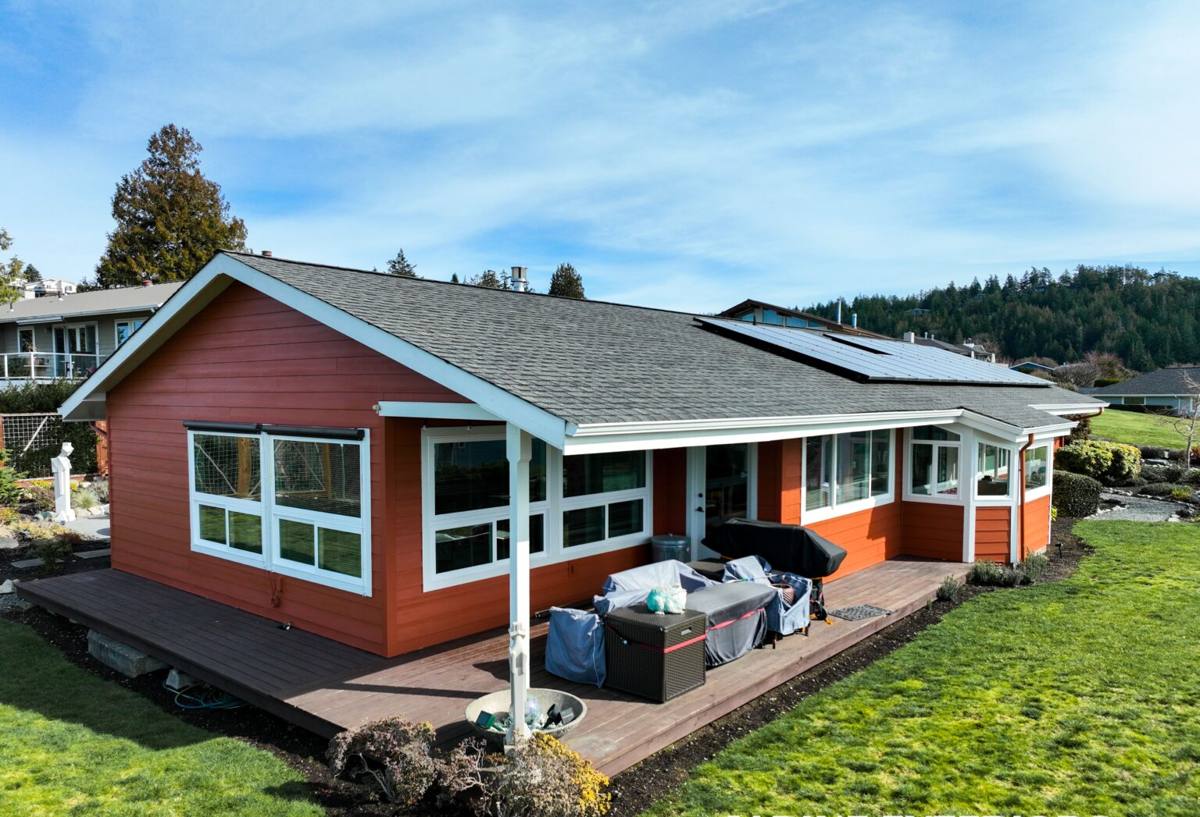
What Pinellas County's Climate Does to Vertical Siding
Pinellas Park sits on a peninsula that gets the full package: hurricane-force wind events during the season, intense UV exposure essentially year-round, wind-driven rain that hits siding at an angle instead of running straight down, and salt-laden air moving in off the Gulf and Tampa Bay. Any exterior product installed here is fighting all four at once, not just one or two.
Board and batten siding is particularly exposed to a few of these:
- UV breakdown — vertical panels catch direct sun differently than horizontal lap siding, and cheaper coatings chalk, fade, or turn brittle faster under sustained Florida sun.
- Wind-driven rain intrusion — vertical seams and batten strips create more joints per square foot than lap siding, and every joint is a potential water entry point if it isn't detailed correctly.
- Wind uplift — vertical panels present a different fastening challenge than horizontal boards, and a panel that isn't nailed to spec can work loose in sustained hurricane-force gusts.
- Salt air corrosion — fasteners, flashing, and trim hardware all need to be rated for coastal exposure, not just general-purpose exterior use.
None of that means board and batten is a bad choice for a Pinellas Park home. It means the material and the installation both have to be built for this specific climate, not a generic one.
Board & Batten Is Not a Lap Siding Job Turned Sideways
Panel Spacing and Batten Placement
On a lap siding job, water management is mostly about overlap — each course covers the top of the one below it and gravity does the rest. Board and batten works differently. Wide panels are installed with a gap between them, and a narrower batten strip is fastened over that gap to cover the seam and shed water off both edges. Batten spacing has to line up with the framing and with the panel width, and it has to be consistent — uneven spacing is one of the fastest ways to make an otherwise good installation look amateurish from the curb.
Moisture Path Behind the Battens
Because the batten sits over a seam rather than an overlap, the water-resistive barrier and flashing details underneath carry more of the load than they do on a lapped wall. If the drainage plane behind the panels isn't continuous, or the panel-to-batten gap is sealed the wrong way, water that gets behind the siding during a wind-driven rain event has nowhere to go. That's a bigger problem in Pinellas Park than in a drier climate, because the wall assembly gets tested by heavy rain multiple times a year, not once or twice.
The Only Board & Batten System We Install: James Hardie Fiber Cement
We install James Hardie fiber cement exclusively — for board and batten and for every other siding profile we offer. For this style specifically, that means Hardie vertical panel siding paired with Hardie fiber cement trim boards as the battens, finished in a factory-applied ColorPlus coating rather than field-applied paint. A few reasons that combination is what goes on Pinellas Park homes instead of the alternatives:
- Fiber cement doesn't rot, swell, or delaminate when it takes on moisture the way engineered wood and some panel products can if a seam fails.
- It's non-combustible, which matters for insurance conversations as much as for safety.
- James Hardie manufactures a formulation (HZ10) specifically engineered for high-humidity, high-UV Gulf Coast climates like ours, rather than a one-size-fits-all product sold nationwide.
- The ColorPlus factory finish is baked on under controlled conditions and carries its own finish warranty — it holds color and resists the chalking and fading that hand-painted or job-site-primed products are more prone to under constant Florida sun.
Why We Don't Install Vinyl, LP, or Real Wood Board & Batten Here
Vinyl board and batten is lightweight and inexpensive, but vinyl panels expand and contract more than fiber cement across Florida's daily temperature swings, and long vertical runs can show that movement at the battens over time. It also softens and can deform under prolonged direct heat, which is a real consideration on south- and west-facing walls in this climate.
Engineered wood products (like LP SmartSide) perform reasonably well when the finish stays intact, but the moment a cut edge, fastener hole, or seam is left unsealed, the wood-strand core is vulnerable to swelling and deterioration — and board and batten has more seams per square foot than lap siding, which means more places for that exposure to happen. Real wood board and batten looks great on day one but demands a repainting and caulking schedule that most homeowners underestimate, especially in a climate this humid.
None of that makes those products worthless — it's why we set the standard we did and only put fiber cement on the homes we work on.
What a Correct Installation Involves
A board and batten job that's going to hold up in Pinellas Park has to get several things right that aren't visible once the project is finished:
| Material | Moisture Behavior | Wind/Impact Resistance | Ongoing Maintenance |
|---|---|---|---|
| James Hardie Fiber Cement | Won't swell or rot; engineered for humid coastal climates | Rated for high-wind installation when fastened to spec | Occasional caulk/paint touch-up at trim joints; no refinishing cycle |
| Vinyl Board & Batten | Doesn't absorb water, but seams can flex and gap over time | Can deform or blow off in sustained high winds if under-fastened | Low, but panels can fade and become brittle with age |
| Engineered Wood (e.g. LP) | Vulnerable at unsealed cuts, seams, and fastener holes | Reasonable when intact and properly finished | Requires prompt sealing of any damage; ongoing finish upkeep |
| Real Wood (cedar/pine) | Absorbs moisture readily; prone to swelling and rot in humidity | Moderate; depends heavily on species and thickness | Repainting/staining on a recurring cycle; regular caulking |
Underneath whichever material is chosen, the fundamentals that make or break the job are the same: a continuous water-resistive barrier, correctly lapped and taped flashing at every window, door, and roofline intersection, batten fastening spaced and driven to the manufacturer's specification, and stainless or coated fasteners rated for coastal salt exposure. Skipping any one of those doesn't show up at the final walkthrough — it shows up two or three storm seasons later.
Our Process for Pinellas Park Board & Batten Projects
We approach every board and batten project in Pinellas Park the same way:
- On-site assessment — we look at the existing wall assembly, sheathing condition, and how much of the house (accent area vs. full elevation) is a good candidate for the profile.
- Tear-off and substrate check — old siding comes off and we inspect the sheathing underneath for hidden moisture damage before anything new goes up.
- Water-resistive barrier and flashing — a continuous barrier goes down first, with flashing detailed at every penetration and transition before a single panel is hung.
- Panel and batten installation — Hardie panels and battens are fastened to manufacturer spacing and fastening specs, not shortcuts.
- Trim and sealant detailing — corners, window and door surrounds, and the base of the wall get sealed with products rated for this climate, not generic caulk.
- Final walkthrough — we go over the finished work with the homeowner before calling the job done.
Before you sign off on a board and batten project — ours or anyone else's — it's worth confirming these:
- Is the fastening pattern and spacing documented against the manufacturer's installation instructions, not just "standard practice"?
- Is there a continuous water-resistive barrier behind the panels, with flashing at every window, door, and roofline?
- Are the fasteners and any exposed hardware rated for coastal/salt-air exposure?
- Is the finish a factory-applied coating with its own warranty, or a job-site paint job that will need recoating?
- Does the written estimate specify board and batten spacing and trim profile, or just "siding replacement" as a line item?
What Affects the Cost of a Board & Batten Project
Board and batten typically costs somewhat more per square foot than plain lap siding on the same wall, mainly because of the extra batten material and the additional labor to fasten and seal each one. A few things move the price up or down on a given Pinellas Park home:
- Scope — an accent treatment on a single gable or dormer costs far less than covering an entire elevation, since it's a small fraction of the material and labor.
- Substrate condition — if tear-off reveals damaged sheathing, that repair is additional work a healthy wall wouldn't need.
- Trim complexity — homes with more windows, corners, and roofline transitions need more flashing and trim detail per square foot of siding.
- Story count and access — second-story and hard-to-access walls take longer to stage and install safely.
We walk every project in person before quoting, because an accurate board and batten estimate has to account for the specific wall it's going on, not a generic per-square-foot number.
Why Hiring a Crew That Already Works Pinellas Park Matters
Board and batten installed to spec in a mild climate can still fail in Pinellas Park if the crew doesn't already understand what this area's wind loads, humidity, and salt exposure demand. A contractor who works this community regularly knows the wind-rated fastening schedules the local building department expects, has already seen how flashing details need to be adjusted for wind-driven rain rather than straight-down rain, and understands that coastal-rated hardware isn't optional this close to the Gulf and Tampa Bay. That local track record also matters for permitting — inspections tend to move faster when the contractor in front of the inspector has already built a working relationship with that office.
It's also worth asking any contractor, ours included, how many board and batten — not just lap siding — projects they've actually installed. The two profiles share a material but not an installation method, and experience with one doesn't automatically transfer to the other.
Caring for Your Board & Batten Siding After Installation
A correctly installed James Hardie board and batten system is low-maintenance, not no-maintenance. After installation, plan on:
- A visual check after major storms for any loosened battens, dented panels, or damaged trim — catching it early is a small fix; ignoring it isn't.
- Periodic inspection of caulking at trim joints, corners, and penetrations, since sealant is the one component that wears out well before the siding itself.
- Rinsing off accumulated salt spray and grime a few times a year if the home is close to the water, which helps the ColorPlus finish hold its color longer.
James Hardie's ColorPlus finish carries its own warranty coverage against fading and peeling, separate from the product warranty on the fiber cement itself — ask us for the specifics that apply to the color and product line you're considering.
If you're weighing board and batten for a Pinellas Park home — whether as a full re-side or an accent on one section of the house — we're glad to walk the property, look at what's there now, and put together a straightforward, no-pressure estimate using the form below.