 St. Petersburg Siding
 Why Shore Acres Decks Wear Out Faster Than You'd Expect
Shore Acres sits close to the water, and that proximity is exactly why decks here age differently than decks a few miles inland. Salt-laden air moves off the canals and bay year-round, and it doesn't take a direct flood or storm surge to do damage — the moisture and salt content in the everyday breeze is enough to corrode fasteners, pit metal brackets, and slowly break down wood fibers and finishes. Add in Pinellas County's intense, nearly constant UV exposure, and you get two compounding problems: wood and composite surfaces that gray, crack, or become brittle from sun exposure, and hardware underneath that's quietly rusting away where you can't see it.
Then there's Florida's wet season and hurricane risk. Wind-driven rain gets forced sideways into joints, ledger boards, and post bases that were never designed to handle water from that angle. A deck that looks fine on top can have a compromised structure underneath simply because water has been finding its way into end grain and fastener holes for a few seasons. In a neighborhood like Shore Acres, where many homes back up to canals and outdoor living space gets used year-round, that combination of salt, sun, and storm exposure means deck repair isn't a cosmetic afterthought — it's part of keeping the structure safe.
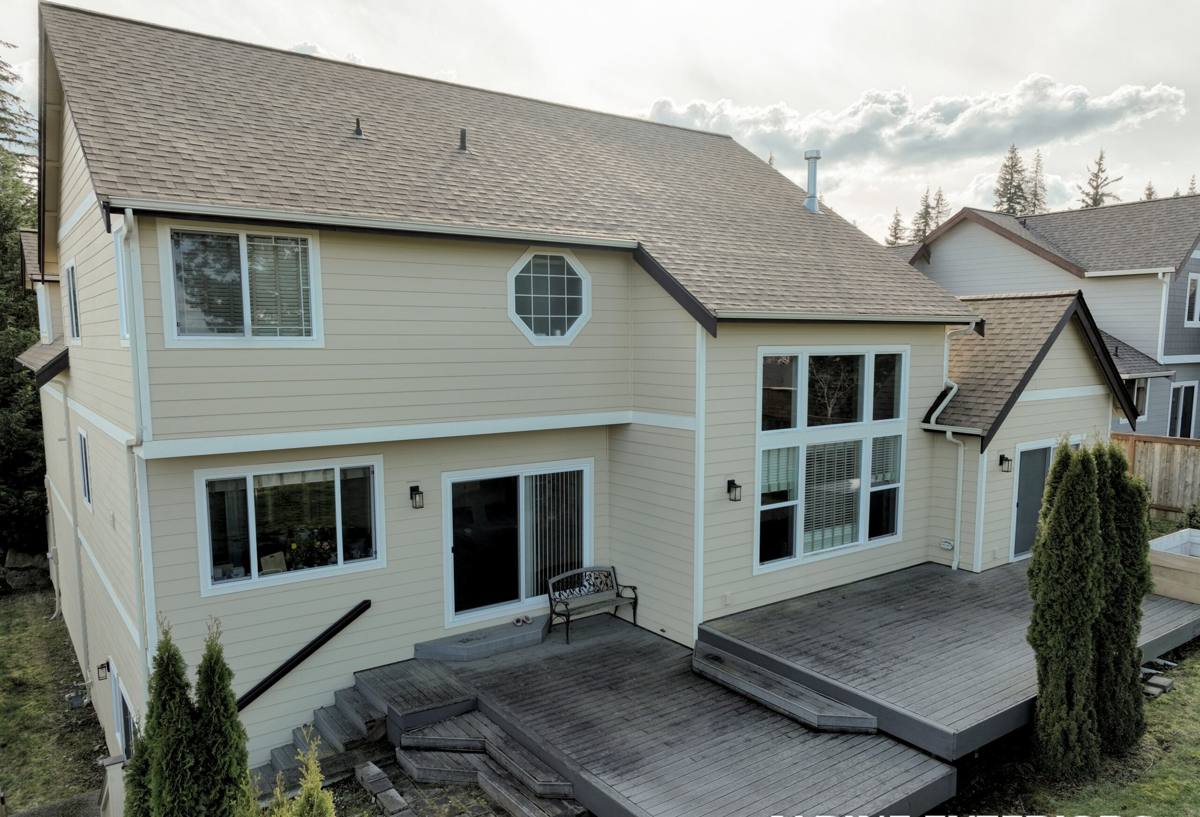
Warning Signs It's Time for Deck Repair
Most deck problems don't show up as a sudden failure. They show up as small signals that get ignored until the deck feels unstable. Here's what we look for, and what you should check for yourself between professional inspections:
- Boards that feel spongy, bouncy, or noticeably softer underfoot than they used to
- Visible rust streaks running down from screw heads, joist hangers, or bolts
- Gaps opening up where the deck attaches to the house (the ledger board connection)
- Railings or posts that wiggle more than a firm push should allow
- Cracked, splintering, or cupped boards, especially on sections that get full afternoon sun
- Stairs that feel uneven or where the stringers show visible cracking
- A musty smell or dark staining underneath the deck, which usually means trapped moisture
- Nails or screws backing out on their own (called "popping"), which often means the wood underneath has swelled and shrunk repeatedly
Any one of these on its own might be a minor fix. Several at once usually means the deck needs a real structural look, not just a board swap.
What a Proper Deck Repair Actually Involves
Structural Framing and the Ledger Board
The framing underneath — joists, beams, posts, and especially the ledger board where the deck bolts to the house — is where deck failures actually start. A repair that only replaces surface boards while ignoring soft or corroded framing is a repair that will need to be redone. We check the ledger connection, joist hangers, and post bases first, because that's the part homeowners can't see and the part that matters most for safety.
Fasteners and Hardware
In a salt-air environment, the fasteners matter as much as the wood. Standard zinc-coated screws and brackets corrode faster near the water than they would a few miles inland, which is why so many "mystery" deck problems trace back to hardware that quietly failed years before the boards showed any sign of trouble. Proper repair means matching fasteners and connectors to the coastal exposure, not just to whatever matches the existing hardware.
Decking Boards and Railings
Once the structure underneath is sound, the visible boards and railings get addressed — replacing what's cracked, warped, or UV-damaged, and resetting anything that's come loose. We also look at railing post attachment specifically, since loose railings are one of the more common safety issues we find on older decks in this area.
Repair or Replace? What Decides It
Not every deck problem calls for a full rebuild, and not every deck is worth patching indefinitely. The honest answer depends on where the damage is and how much of the structure it's reached.
| Factor | Leans Toward Repair | Leans Toward Replacement |
|---|---|---|
| Framing condition | Solid, dry, no soft spots | Soft, rotted, or corroded joists/beams |
| Ledger board | Tight, no gapping or water staining | Separating from the house or water-damaged |
| Extent of damage | Isolated boards or hardware | Damage spread across most of the deck |
| Age of the deck | Newer, well-built structure | Older deck already past a typical service life |
| Original build quality | Built to code with proper spacing/hardware | Undersized framing or non-coastal-rated hardware |
Cost is the other honest factor. Straightforward repairs — replacing a section of boards, tightening or rebuilding a railing, swapping corroded hardware — generally run in the low hundreds to low thousands of dollars depending on scope. A full rebuild is a bigger investment, but it's often the more cost-effective path once the framing itself is compromised, since patching around bad structure tends to cost more in the long run through repeat repairs.
Material Choices That Make Sense Near the Water
Pressure-Treated Wood
Pressure-treated lumber is the most common decking material because it's affordable and familiar, but it still needs sealing or staining on a regular schedule in this climate. Skip that maintenance for a season or two near the canals and you'll see graying, checking, and faster fastener corrosion than the same wood would show inland.
Composite Decking
Composite boards trade a higher upfront cost for lower ongoing maintenance — no staining or sealing, and better resistance to the UV fading that hits Pinellas County decks hard. The trade-off is that composite is less forgiving of poor substructure work, since it doesn't flex or vent moisture the way wood does, so the framing and fastener choices underneath matter even more.
Hardware and Fasteners
Whatever decking material you choose, we treat fastener and connector selection as a coastal-specific decision rather than a default. Stainless steel or marine-rated coated fasteners cost more than standard hardware, but on a canal-adjacent property the difference in corrosion resistance is the difference between a repair that lasts and one you're redoing in a few years.
Our Deck Repair Process in Shore Acres
- On-site inspection of the full structure — framing, ledger, posts, hardware, and surface boards — not just the parts that look worn
- A written scope explaining exactly what's failing, why, and what repair or replacement options make sense
- An honest, itemized estimate before any work starts, with no pressure to upsell beyond what the deck actually needs
- Repair or rebuild work using fasteners and materials matched to the coastal exposure, not generic inland specs
- A final walkthrough so you can see and test the repaired sections — railings, stairs, and decking — before we consider the job done
Permits, Codes, and Waterfront Considerations
Deck work in St. Petersburg and Pinellas County generally falls under local building permit requirements, and that's especially true for structural repairs involving framing, ledger boards, or railings rather than simple cosmetic board replacement. Coastal Florida's building code also accounts for wind load in ways inland jurisdictions don't, which affects how railings, posts, and connections are supposed to be fastened. On canal-front lots specifically, proximity to the water can bring additional considerations around setbacks or elevation that are worth confirming with the local permitting office before major work begins. We handle the permitting conversation as part of the job rather than leaving homeowners to sort it out on their own.
Why It Matters to Hire a Crew That Already Works This Neighborhood
Canal-front neighborhoods like Shore Acres have their own quirks — narrow side-yard access for equipment, decks built close to seawalls, and structures that have been quietly absorbing salt air for years longer than the same design would inland. A crew that's already worked in this part of St. Petersburg knows to check for corrosion patterns that wouldn't show up on a deck a few miles from the water, and knows not to spec hardware or finishes that are fine inland but undersized for a canal lot. That familiarity shortens the inspection, sharpens the estimate, and avoids the trial-and-error of a contractor learning the local conditions on your project.
Keeping Your Repaired Deck Ready for the Next Storm Season
A repair holds up longer with a little regular attention, especially in this climate. Rinse off salt residue periodically, especially after dry windy stretches when it accumulates fastest. Reseal or restain wood decking on the schedule the product calls for — skipping a cycle in Florida sun costs more ground than it would in a milder climate. Walk the deck a couple of times a year and check railings, stair connections, and any boards near ground contact, since those are the spots that fail first. Keep gutters and downspouts directing water away from the deck structure rather than onto it, and clear debris from underneath so moisture doesn't sit trapped against the framing.
If you're noticing any of the warning signs above, or it's simply been a while since anyone looked at the structure underneath your deck, we're happy to take a look. Estimates are free, there's no pressure to move forward, and you'll get a straight answer about whether you're looking at a repair or something bigger — just fill out the form below.