 St. Petersburg Siding
 Siding That Has to Work in Crescent Lake's Climate, Not Just Look Good
Crescent Lake is one of St. Petersburg's older, established neighborhoods, with a mix of home ages and styles under a heavy tree canopy just a short distance from Tampa Bay. That combination — mature trees, close proximity to open water, and a housing stock that in many cases predates modern wind-load codes — means the siding on these homes is doing more work than most homeowners realize. It isn't just a design layer. It's the first line of defense against hurricane-force wind gusts, wind-driven rain that gets pushed sideways into wall assemblies, salt-laden air drifting in off the bay, and some of the most intense, sustained UV exposure in the continental United States.
Any one of those stresses will eventually find a weak siding product or a sloppy installation. In Pinellas County, all four hit the same wall, year after year. That's why we treat siding installation in Crescent Lake as a systems problem — material, water management, and fastening all have to be right together — rather than a cosmetic upgrade.
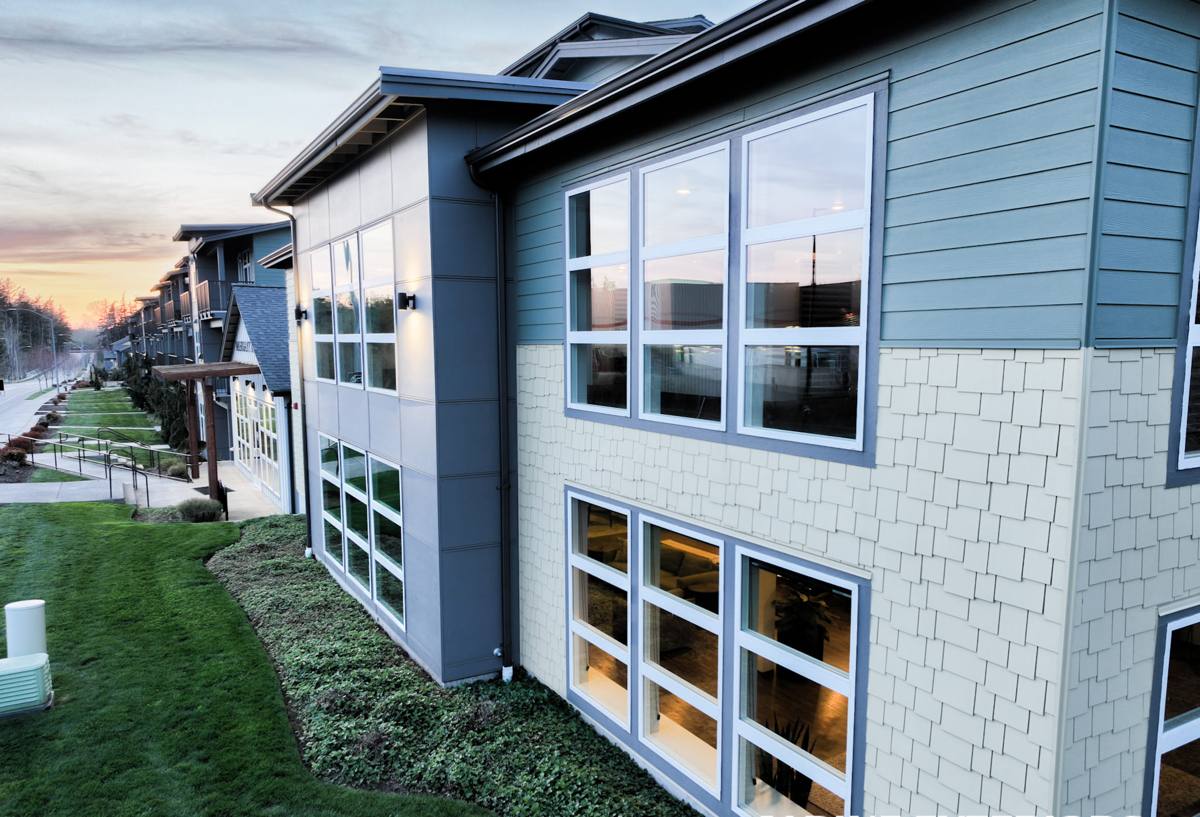
What Local Homes Actually Need From Their Siding
Wind Resistance That Matches the Real Exposure
Homes in this part of St. Petersburg sit in a hurricane-prone wind zone under the Florida Building Code, and siding has to be installed to a fastening schedule that accounts for that — not the generic schedule printed for a low-wind region. Gaps here show up as blown-off panels or lifted courses during the first serious storm.
Moisture Management, Not Just Water Resistance
Wind-driven rain in a coastal storm doesn't fall straight down — it gets forced up and under laps, around trim, and into any unsealed penetration. Correct installation assumes water will reach the wall and gives it a way out: a continuous weather-resistive barrier, properly lapped flashing, and a drainage plane behind the siding.
UV and Salt-Air Stability
Florida sun is harder on exterior materials than most of the country sees. Combine that with salt air drifting inland from the bay, and any siding product prone to fading, chalking, or surface corrosion will show it early. Color and coating stability matter as much as the substrate underneath.
What Correct Siding Installation Actually Involves
A siding job can look identical to a homeowner on day one and behave completely differently five years later, depending on what's happening underneath. The visible panel is maybe 20% of the job. The rest is sequencing and detail work most people never see:
- A continuous, correctly lapped weather-resistive barrier installed over sound sheathing — not over old siding or damaged substrate
- Flashing at every window, door, and roof-to-wall intersection, integrated with the barrier so water sheds outward, not inward
- A fastening pattern and fastener type matched to the local wind exposure category, not just the manufacturer's minimum
- Correct clearances from grade, roof lines, and decks so the bottom edge of the siding never sits in standing water or gets buried in mulch
- Factory-finished panels installed with the gaps, joints, and caulking the manufacturer specifies — not field-painted after the fact
- A final inspection of every seam, corner, and penetration before the job is called done
Skip any one of these steps and the siding may still look fine for a while. The failures that follow — trapped moisture, blown panels, premature fading — usually show up long after the crew that cut corners has moved on.
Why We Install Only James Hardie Fiber Cement
We don't install vinyl, LP SmartSide, Cemplank, Allura, or primed wood siding, and we're upfront about why. Every one of those products has legitimate use cases and reasonable people choose them for cost or aesthetic reasons. But for a coastal Florida climate specifically — sustained UV, salt air, wind-driven rain, and hurricane wind loads all at once — we've standardized on James Hardie fiber cement because it holds up to that specific combination better than the alternatives, and because it's what we're willing to stand behind with our own labor warranty.
Hardie's fiber cement is non-combustible, doesn't swell or rot from moisture the way engineered wood products can, and its ColorPlus factory finish is baked on and warrantied against fading and chalking — which matters directly in a market with this much year-round sun. Hardie also engineers its product by climate zone. Homes here fall into the HZ5 zone, formulated for hot, humid, moisture-heavy climates like the Gulf Coast, rather than the freeze-thaw-focused HZ10 line used farther north.
How It Compares on the Factors That Matter Here
| Factor | James Hardie Fiber Cement (HZ5) | Vinyl Siding | Engineered Wood (LP-Style) |
|---|---|---|---|
| Moisture/humidity tolerance | Engineered for hot-humid climates; won't rot | Doesn't absorb water, but seams can trap it | Vulnerable if coating or seals fail |
| Wind performance | Rated for high wind loads when installed to spec | Prone to cracking/blow-off in sustained high wind | Adequate when new; degrades installation sensitivity over time |
| UV and color stability | Factory ColorPlus finish, warrantied against fading | Can fade and become brittle over years of sun | Field-painted finish fades on its own schedule |
| Salt air/coastal exposure | No metal corrosion concern; stable substrate | Generally stable but can chalk faster near coast | Moisture-sensitive substrate is the main risk |
| Combustibility | Non-combustible | Combustible | Combustible |
| Warranty structure | Long-term, transferable manufacturer warranty | Varies widely by product tier | Often shorter or more conditional |
None of this means the alternatives are junk — it means that for this specific climate, we think the trade-offs tilt clearly toward fiber cement, and we'd rather install one product well than several products with compromises we'd have to explain to homeowners later.
Our Process for Crescent Lake Projects
- On-site assessment — We look at existing siding condition, sheathing underneath (where accessible), trim, soffit, and any past water intrusion before quoting anything.
- Scope and material plan — We spec the Hardie product line, plank width or panel style, and color, and lay out the fastening and flashing plan for the specific exposure of the house.
- Tear-off and substrate check — Old siding comes off down to the sheathing so we can actually see what's there, not guess at it. Any damaged wood gets addressed before new siding goes up.
- Barrier, flashing, and installation — Weather-resistive barrier, flashing at every penetration, then the Hardie siding installed to manufacturer spec and the local wind-load fastening schedule.
- Final walkthrough — We check seams, corners, clearances, and caulking against manufacturer standards before we consider the job complete.
What Siding Replacement Typically Costs Here
Every home is different, and we don't quote sight-unseen, but these are the factors that actually move the number on a Crescent Lake project:
| Cost Factor | Why It Matters |
|---|---|
| House size and wall complexity | More linear footage, dormers, and corners mean more material and labor |
| Condition of existing sheathing | Rot or water damage found during tear-off adds repair scope before new siding goes on |
| Hardie product line and profile | Lap siding, shingle-style panels, and board-and-batten carry different material costs |
| Trim and accent work | Window trim, fascia, and accent bands add labor time even on a straightforward wall |
| Access and site conditions | Mature trees, tight lot lines, and multi-story sections affect staging and labor time |
We'd rather give you an honest range after seeing the house than a number that changes once we start tearing off the old siding.
Signs a Crescent Lake Home May Need New Siding
- Visible cracking, warping, or buckling in the siding panels
- Paint that keeps failing faster than a normal repaint cycle would suggest
- Soft spots or discoloration near the bottom edge of walls, close to grade
- Staining or streaking around window and door trim after heavy rain
- Rising energy bills with no other explanation, which can point to a compromised wall assembly
- Siding that's simply reached the end of its practical service life and is being patched instead of replaced
Why It Matters That We Already Work in This Neighborhood
A crew that regularly works in St. Petersburg and Pinellas County already knows the local wind exposure category, what the Florida Building Code requires for permitting a siding job here, and how older Crescent Lake homes are typically built underneath their existing siding. That's not something you can fully learn from a manual — it comes from having pulled siding off enough houses in this specific area to know what's usually waiting underneath, and from having installed enough Hardie siding in coastal wind zones to get the fastening and flashing details right the first time. It also means we're not learning the permitting process on your project.
After Installation: What Upkeep Actually Looks Like
One of the practical advantages of Hardie fiber cement with a factory ColorPlus finish is how little upkeep it asks for. There's no repainting on a short cycle the way there is with field-finished wood siding — an occasional rinse to clear off salt residue and pollen, and a visual check after major storms for any dislodged trim or caulking, is generally what's needed. That's a meaningful difference over a 20- or 30-year ownership horizon in a climate this demanding.
If your Crescent Lake home has siding that's aging out, showing storm damage, or you're simply planning ahead of a future hurricane season, we're happy to take a look and give you a straightforward, no-pressure estimate — just fill out the form below.