 St. Petersburg Siding
 Why Decks in Euclid-St. Paul Take More Punishment Than Most
Euclid-St. Paul sits inside St. Petersburg, which means every deck we build or replace here deals with the same three-part beating that hits the rest of Pinellas County: strong UV exposure almost every day of the year, wind that ranges from steady onshore gusts to hurricane-force events, and salt-laden air drifting in off the surrounding water. None of those three things is unique to this neighborhood, but together they narrow down what actually holds up outdoors here, and they change how a deck needs to be framed, fastened, and finished compared to a deck built somewhere inland and dry.
Sun and heat load
Florida sun is direct and nearly year-round. On an uncovered deck, surface temperatures on dark decking boards can climb well above the surrounding air temperature on a summer afternoon. That heat cycles the material — expanding boards during the day, contracting them at night — and it's the main driver behind gapping, warping, and fastener pull-through on lower-grade decking that wasn't engineered for this kind of thermal swing.
Wind and storm exposure
Pinellas County isn't in Florida's High-Velocity Hurricane Zone, but it's still built to Florida Building Code wind provisions, and St. Petersburg sees real tropical systems most seasons. A deck's structure — the ledger connection, the joist hangers, the railing posts — has to be able to take uplift and lateral load, not just support foot traffic. Decking boards themselves also need to stay fastened down tight enough that they don't become debris in a storm.
Salt air and moisture
Even a few miles from open water, salt air accelerates corrosion on unprotected metal fasteners and hardware, and it works alongside humidity to encourage mold and mildew growth on porous wood surfaces. This is one of the biggest reasons composite decking gets specified so often in this part of the county — it doesn't absorb moisture the way real wood does, and it doesn't need to be sealed or stained to keep salt and water out of the material.
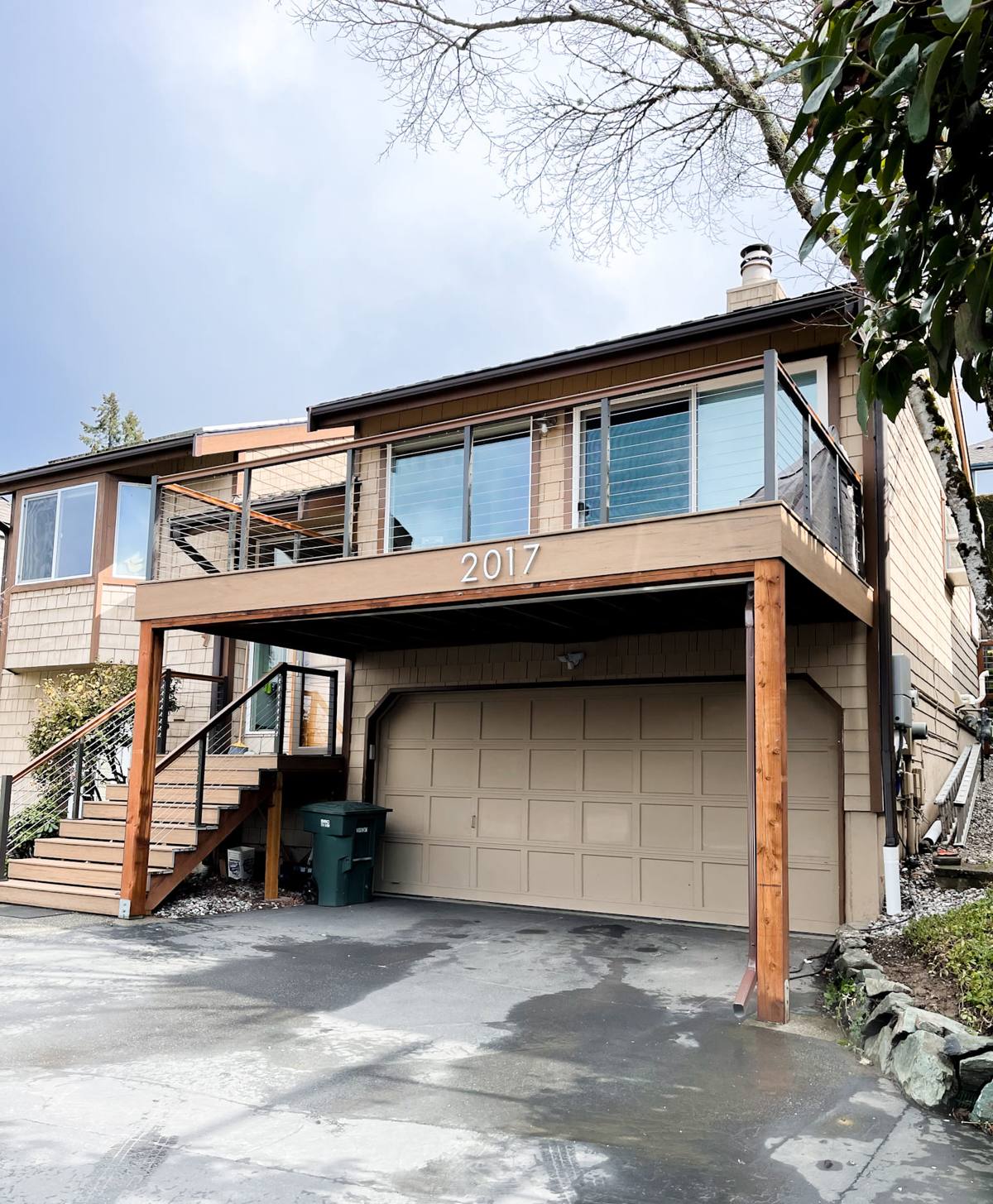
Composite Decking Compared to the Alternatives
Homeowners in Euclid-St. Paul usually end up choosing between three deck surface options. Each one behaves differently once it's exposed to Florida sun, humidity, and salt air for a few years.
| Material | Upfront Cost | Maintenance in This Climate | Typical Lifespan Here |
|---|---|---|---|
| Pressure-treated wood | Lowest | Annual cleaning, periodic sealing/staining; prone to splintering and graying from UV | 10–15 years with upkeep |
| Composite decking | Mid to upper-mid | Occasional wash; no sealing or staining | 25–30+ years, backed by manufacturer warranty |
| PVC/vinyl decking | Highest | Occasional wash; no sealing or staining | 25–30+ years, lighter weight, can feel less wood-like underfoot |
We install composite decking as our standard recommendation for exposed, sun-heavy, salt-air locations like this one because it holds a middle ground: it doesn't need the ongoing sealing and staining that wood does, it resists moisture and rot at the core, and the better product lines carry cap-stock layers designed specifically to resist UV fading and staining. That's an honest trade-off, not a claim that wood decking is unusable — a well-maintained wood deck can still serve a homeowner fine, it just asks for more upkeep than most people actually keep up with once the newness wears off.
What a Correct Composite Deck Installation Actually Involves
The decking boards get most of the attention, but the majority of what determines whether a deck lasts is underneath them.
Framing and ledger attachment
Where the deck attaches to the house, the ledger board needs proper flashing so wind-driven rain — which is routine here — doesn't work its way behind the siding or into the rim joist. This is one of the most common failure points we find on older decks we're asked to replace: a ledger that was never flashed correctly, with years of moisture damage hidden behind it.
Joist spacing and fasteners
Composite boards typically need tighter joist spacing than solid wood decking to prevent sagging between supports, and most manufacturers specify exact spacing requirements to keep the warranty valid. We use hidden fastener systems on the visible boards where the product allows it, and corrosion-resistant, coated fasteners throughout the structure — plain steel hardware doesn't hold up long in salt air.
Railings and guards
Railing posts need to be through-bolted into the framing, not just screwed to the rim joist, to meet code load requirements and to actually hold up under real lateral force. Composite or aluminum railing systems pair well with composite decking because neither one needs painting or sealing to keep looking right.
Our Process, Start to Finish
- Site visit and measurement — we look at the existing structure (if there is one), sun exposure, drainage, and how the deck connects to the house.
- Design and material selection — board style, color, railing type, and layout, with honest pricing for each tier.
- Permitting — we pull the required permit and handle the inspection scheduling so it's not on the homeowner to navigate.
- Demolition (if replacing an existing deck) — including an inspection of the ledger and framing underneath, since that's often where hidden damage shows up.
- Framing — joists, ledger flashing, and structural connections built to current wind-load requirements.
- Decking and railing installation — boards, fascia, and railing set per manufacturer spacing and fastening specs.
- Final walkthrough — we go over care basics and warranty paperwork before we consider the job done.
Maintenance Composite Decking Still Needs Here
Composite decking is low-maintenance, not no-maintenance — especially in a climate that layers salt, pollen, humidity, and intense sun on top of a deck year-round.
- Sweep off leaves, pollen, and debris regularly so organic material doesn't sit and stain the surface
- Rinse the deck a few times a year to clear salt residue, especially on boards closer to open water or exposed to onshore wind
- Wash with mild soap and water (or a manufacturer-approved cleaner) rather than a high-pressure setting that can damage the cap-stock surface
- Check railing posts and fasteners annually for looseness after storm season
- Keep planters, grills, and furniture feet from trapping moisture or heat against the boards in one spot
- Confirm gutters and downspouts near the deck are directing water away rather than onto the structure
Permits and Code in St. Petersburg and Pinellas County
Most new decks and full deck replacements in St. Petersburg require a building permit and inspection, particularly when the deck attaches to the house structurally or sits above a certain height off grade. This isn't paperwork for its own sake — the inspection is what confirms the ledger flashing, footings, and railing connections were actually built to hold up under Florida Building Code wind provisions rather than just look finished. We handle the permit application and inspection scheduling as part of the job so homeowners aren't stuck figuring out county and city requirements on their own.
Why a Crew That Already Works Euclid-St. Paul Matters
A lot of the older homes in this part of St. Petersburg were built with framing methods, foundation heights, and setback patterns typical of established mid-century Florida neighborhoods, which is different from what you'll find on a newer build on the edge of the county. A crew that regularly works this specific area already has a feel for what's usually hiding behind an old ledger board, how existing homes here tend to be framed at the point a deck ties in, and what the city's inspectors are going to want to see before they sign off. That familiarity shows up as fewer surprises mid-project and fewer change orders after demolition reveals what's actually there.
It also matters for something less technical: response time. When a storm damages a deck, or a homeowner just wants someone to walk the property in person before quoting, a crew already working jobs in and around Euclid-St. Paul can get there faster than one dispatching from across the bay.
What Affects the Cost of a Composite Deck Project Here
| Cost Factor | Why It Matters |
|---|---|
| Deck size and shape | More square footage and more corners/cuts increase both material and labor |
| Board tier | Entry-level composite costs less than premium capped boards with stronger UV and stain resistance |
| Height off grade | Taller decks need more substantial framing, footings, and often stairs |
| Railing type | Composite, aluminum, and cable railing systems all price differently |
| Demolition needs | Removing and hauling away an old wood deck adds cost versus building on a clear site |
| Structural repairs | Rot or damage found at the ledger or footings during demo adds necessary repair work |
We give a firm, itemized quote after seeing the site in person rather than a rough number over the phone, since two decks of the same square footage can price very differently depending on framing condition, height, and access.
If you're weighing a new composite deck or a replacement for an aging wood deck in Euclid-St. Paul, we're glad to come take a look and put together a straightforward, no-pressure estimate — just fill out the form below.