 St. Petersburg Siding
 Why Snell Isle Decks Wear Differently Than Decks Inland
Snell Isle sits right on the water, with canals and open bay exposure wrapping most of the neighborhood. That location is exactly why the decks here age differently than a deck ten miles inland in St. Petersburg. Salt-laden air moves off the water constantly, and it doesn't just sit on the surface of your deck — it works into fastener heads, hinges, railing hardware, and any exposed metal connector. Add in Pinellas County's intense, nearly year-round UV load, regular wind-driven rain, and the real possibility of hurricane-force gusts, and you've got a structure that's under attack from four directions at once: corrosion, sun degradation, moisture intrusion, and wind load.
None of that means a deck in Snell Isle is doomed to fail early. It means the repair work has to account for what's actually causing the damage, not just patch the symptom. A board that's cupping or a railing post that's gone soft at the base is usually a sign of one of these forces at work, and fixing it right means addressing the cause, not just replacing the piece that failed first.
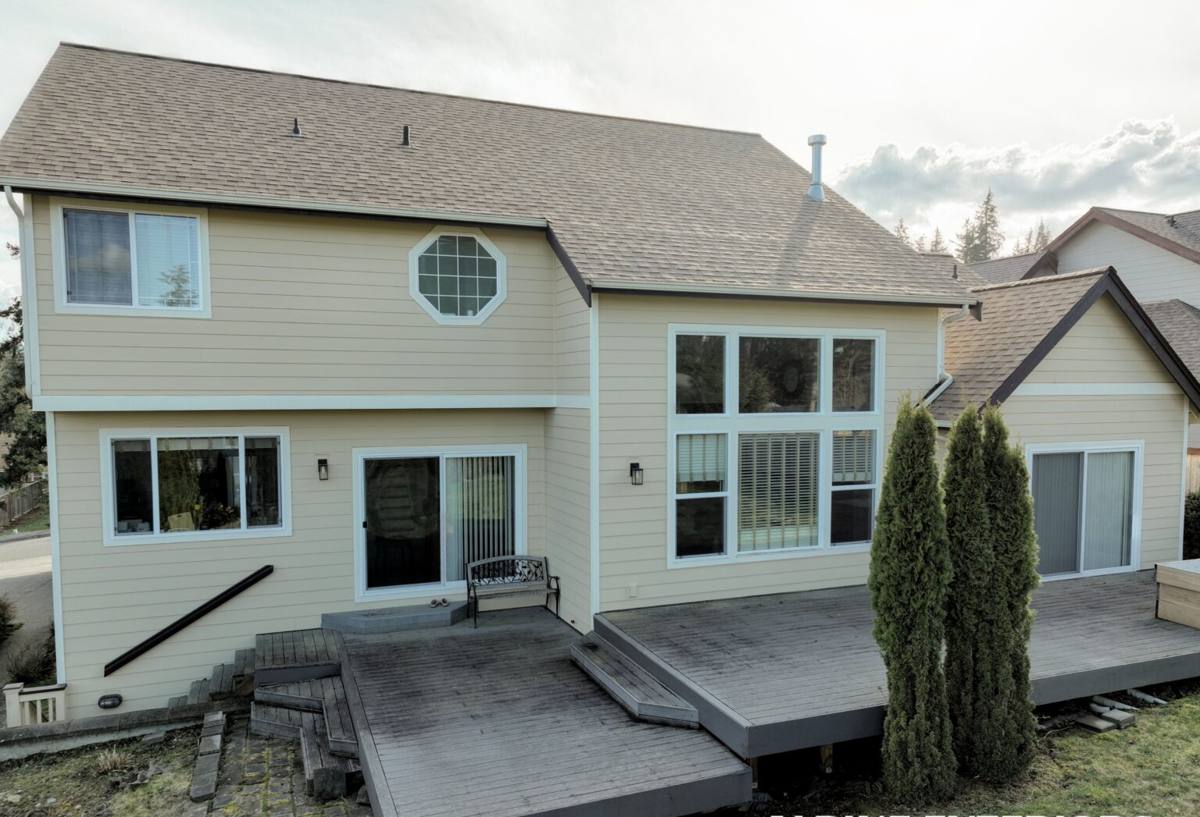
The Deck Problems We See Most Often in This Area
Wood Decks
Pressure-treated wood decks are common on older Snell Isle properties, and the failure pattern is fairly consistent: moisture gets trapped where boards meet, where railings anchor to the deck surface, or where the deck ties into the house at the ledger board. Once water sits in those joints, rot sets in from the inside out — which means a board can look fine on top while the structure underneath it is compromised. Fastener corrosion is the other big one. Standard hardware that wasn't rated for coastal exposure will streak, weep rust into the wood, and eventually lose its grip, which shows up as boards that flex or squeak more than they used to.
Composite and Capped Decking
Composite boards handle rot better than wood, but they're not immune to problems in this environment. Heat buildup from constant sun exposure can accelerate expansion and contraction cycles, which loosens fastener connections over time. On older or lower-grade composite, UV exposure can fade color unevenly and, in some cases, lead to surface degradation at butt joints where boards weren't gapped correctly during the original install. The substructure underneath composite decking is still almost always wood — so even if the decking itself looks fine, the frame it's fastened to needs the same inspection as a fully wood deck.
Railings, Stairs, and Connections
Railings and stair stringers take the most direct wind load during a storm, and they're often the first thing to show damage — loose posts, cracked balusters, stair treads that have started to separate from the stringer. These are also the components most likely to have been under-built to begin with, since railing systems are frequently the last thing addressed on a deck project and the first thing to get shortcut.
What a Correct Deck Repair Actually Involves
A repair that's done right starts below the surface, not on top of it. Here's the order we actually work in:
- Structural inspection first. Every joist, beam, post, and the ledger board connection to the house gets checked before any decking comes off. This is where hidden rot and corrosion actually live.
- Ledger board and flashing. This is the single most common source of hidden water damage on an attached deck. If flashing is missing, cracked, or was never installed, water has been getting behind it for years — often invisibly.
- Fastener and hardware audit. Anything showing rust bleed, pitting, or corrosion gets replaced with hardware rated for coastal exposure, not just swapped for the same grade that failed.
- Framing repair or sistering. Compromised joists or beams get sistered with new lumber or fully replaced, not just covered over with new decking.
- Surface decking and railing. Only after the structure underneath is sound does it make sense to replace boards, refinish, or rebuild railing and stairs.
Skipping straight to new boards on a deck with an underlying structural or moisture problem is the single most common shortcut in this trade — and it's the reason a "repaired" deck sometimes needs the same repair again within a couple of years.
Repair or Replace? How We Help You Decide
Not every deck problem calls for a full rebuild, and not every deck is worth patching. The honest answer usually comes down to how much of the structure is compromised versus how much is cosmetic.
| Factor | Leans Toward Repair | Leans Toward Replacement |
|---|---|---|
| Ledger board / house connection | Solid, properly flashed | Rotted, missing flashing, or improperly attached |
| Joists and beams | Isolated soft spots, sound overall | Widespread rot or corrosion across the frame |
| Surface decking | A handful of damaged boards | Cupping, splitting, or fading across most of the deck |
| Age of structure | Under 10–12 years, built to code | Older, or built before current fastener/flashing standards |
| Railings and stairs | Loose but structurally intact | Cracked posts, separated stringers, code-deficient spacing |
We'll walk the structure with you and point out exactly what we're seeing and why, rather than defaulting to "replace everything" or trying to stretch a repair past what's reasonable.
Our Deck Repair Process
- On-site assessment. We inspect the frame, ledger, fasteners, and surface materials, including areas you can't easily see from the top.
- Written scope and estimate. You get a clear breakdown of what's structural, what's cosmetic, and what it costs — no vague line items.
- Repair or rebuild. We address the structure first, then move to decking, railings, and finish work.
- Hardware and flashing upgrade. Any exposed connectors or missing flashing get brought up to a standard that actually holds up near the water.
- Final walkthrough. We go over the completed work with you before calling the job done.
The Materials and Hardware Standards We Hold To
Coastal exposure is why we don't treat every deck repair as a generic lumber-and-screws job. Standard zinc-coated fasteners are common in inland construction, but along Snell Isle's canals and open water they corrode faster than the wood around them, which is what causes those rust streaks and loosening connections you may have already noticed. Our standard is stainless steel or hot-dip galvanized hardware rated for coastal and treated-lumber contact, even where it costs more up front, because replacing corroded hardware twice ends up costing more than doing it right once.
The same logic applies to decking material choice. Wood is a legitimate option and we install and repair it regularly, but it demands a real maintenance schedule — sealing, inspection, and prompt attention to any soft spots — to hold up in this climate. Composite and capped composite decking trade that maintenance burden for a higher material cost and require correct gapping and fastening at installation, since improper spacing is what leads to the heat-expansion issues we see on some composite repairs. We'll walk you through the honest trade-offs for your specific deck rather than pushing one material as a universal fix.
Permits and Code Considerations in Pinellas County
Deck work that involves structural framing, railing height and spacing, or stair rebuilds typically falls under local permitting requirements, and St. Petersburg and Pinellas County inspect to wind-load and connection standards that have been tightened over the years specifically because of storm exposure along the coast. This matters most on older Snell Isle decks that were built under a previous code cycle — a repair is a good opportunity to bring railing spacing, guard height, and connection hardware up to current standards, not just replace what was there before. We handle the permitting and inspection process as part of the job so you're not left tracking that down yourself.
A Homeowner's Deck Maintenance Checklist
Between professional inspections, these are the things worth checking yourself a couple of times a year, especially after storm season:
- Press on boards near the house and around railing posts — sponginess means moisture damage underneath
- Look for rust streaking below fastener heads or metal connectors
- Check railing posts for any wobble or movement at the base
- Look underneath the deck at the ledger board area for staining, gaps, or missing flashing
- Watch for boards that cup, crack, or separate at the ends
- Clear leaves and debris from between boards so water isn't held against the wood
- After any major storm, do a quick visual check for loosened boards or hardware before heavy use
Why Hire a Crew That Already Works Snell Isle
A deck repair contractor who mostly works inland properties may not think twice about standard-grade fasteners or skip the flashing detail at the ledger board — because inland, that shortcut often doesn't show up as a problem for years. On a waterfront property, it shows up fast. Working regularly in Snell Isle and along St. Petersburg's waterfront means we're used to building and repairing for salt air, wind exposure, and the humidity levels this specific location deals with, and we price and specify materials accordingly from the first estimate rather than learning the hard way on your deck.
If you're noticing soft spots, loose railings, rust staining, or a deck that just doesn't feel as solid as it used to, we're happy to take a look and give you a straight answer about what's going on and what it'll take to fix it. Reach out for a free, no-pressure estimate using the form below.