 St. Petersburg Siding
 What Roser Park's Climate Does to Siding
Roser Park sits inland from Tampa Bay but still gets the full weather package that every St. Petersburg neighborhood deals with: hurricane-force wind gusts during tropical systems, intense year-round UV exposure, wind-driven rain that finds its way into every gap and lap joint, and a steady dose of salt-laden air moving in off the Gulf and the bay. None of that is unique to this block versus the next one over — but combined with the age and construction style of a lot of Roser Park's housing stock, it adds up to a siding problem that's a little different from what you'd tackle on a newer subdivision home.
Sun breaks down pigments and softens caulk faster here than almost anywhere else in the country. Wind-driven rain doesn't fall straight down — in a real Pinellas County storm it comes in sideways, which means any siding system that relies on face-sealed joints or loose-fitting laps will eventually let water behind the cladding. And once moisture gets behind old siding on an older home, it has plenty of original wood framing, furring, and trim to soak into.
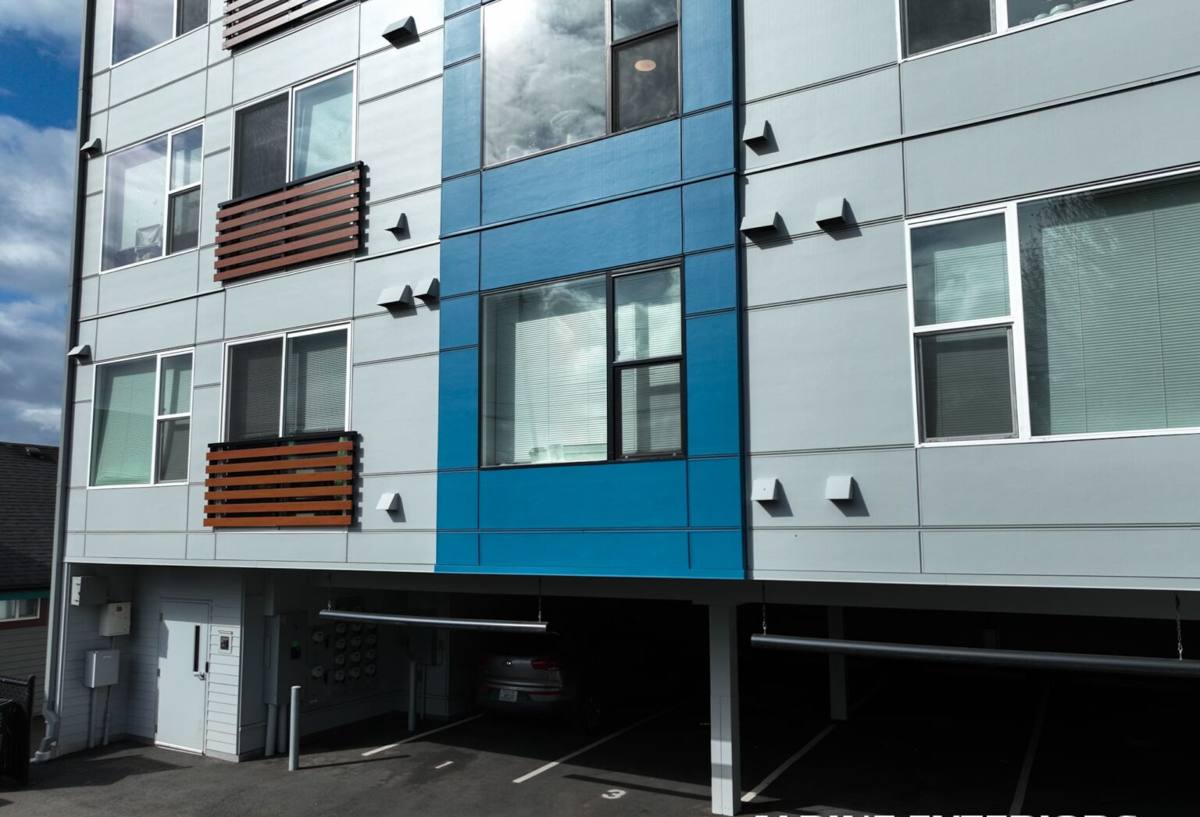
The Extra Challenge of Roser Park's Older Homes
A lot of homes in this part of St. Petersburg were built well before modern wind codes, weather-resistive barriers, or fiber cement even existed. That's part of the neighborhood's appeal — older construction, mature landscaping, more character than a lot of newer builds. But it also means a siding job here usually isn't a straightforward tear-off-and-replace.
Working Around Original Construction
Older homes tend to have irregular stud spacing, settled or slightly out-of-plane walls, and sheathing that wasn't designed with today's siding systems in mind. A rushed crew will just nail new siding over whatever's there and call it done. A correct job means checking the sheathing and framing underneath, addressing any rot or moisture damage before it gets covered up again, and shimming or correcting the wall plane so the new siding lays flat and true — otherwise you get visible waviness and stress points that show up within a couple of years.
Matching Character Without Sacrificing Performance
Homeowners in older, character-driven neighborhoods often want siding that respects the original look of the house — narrower reveals, certain trim profiles, a finish that doesn't scream "vinyl subdivision." That's one of the reasons fiber cement works well here: it can be manufactured in traditional lap profiles, shingle-style profiles, and trim widths that read as authentic rather than generic, without giving up any of the storm and moisture performance a modern product needs to have.
Why We Install Only James Hardie Fiber Cement
We don't install vinyl, LP SmartSide, Cemplank, Allura, or primed wood siding — not because there's no market for them, but because we don't think they hold up to this climate as well as James Hardie's fiber cement over the long run, and we'd rather stand behind one system we know inside and out than offer several we have reservations about.
Vinyl softens and can deform in extreme heat, and it's a poor match for the wind speeds this coastline sees — it's rated by thickness and locking design, not by the kind of impact and wind resistance fiber cement offers. Wood-based products like LP SmartSide use an engineered wood strand core that's more moisture-resistant than raw lumber, but it's still wood at its core, and wood-based sidings depend heavily on caulking, paint maintenance, and cut-edge sealing to keep water out over decades of Florida humidity. James Hardie's fiber cement is cement, sand, and cellulose fiber — it doesn't rot, it isn't attractive to termites or wood-boring insects, and it's non-combustible. The HZ5 product line is specifically engineered for high-humidity, high-moisture climates like ours, which is a meaningful difference from a siding line designed for a dry climate.
What Correct Installation Looks Like
James Hardie siding is only as good as the installation underneath it. The product itself is rated to hold up to hurricane-force wind and years of UV and salt exposure, but a large share of siding failures we get called out to inspect trace back to installation shortcuts, not the material itself.
Prep and Substrate
Before any new siding goes up, the wall needs a proper weather-resistive barrier, correctly lapped and taped, with all penetrations — pipes, vents, electrical, hose bibs — properly flashed. On an older Roser Park home, this is also when we address any rot, soft sheathing, or past moisture damage we find once the old siding comes off, rather than sealing problems in behind new material.
Fastening, Flashing, and Clearances
James Hardie publishes specific fastener types, spacing, and embedment requirements, and those specs change depending on wind zone. Corrosion-resistant fasteners matter more here than in most of the country because of the salt air — the wrong fastener can start rusting and staining the siding face within a few years. Clearances matter just as much: siding needs proper gaps above roof lines, decks, and grade, and every horizontal joint needs correct flashing so wind-driven rain sheds outward instead of tracking behind the board.
Finish and Trim
We install ColorPlus factory-finished siding wherever possible rather than field-painting job-site-primed boards. The factory finish is baked on under controlled conditions and carries its own finish warranty — it holds color and resists fading from constant Florida sun far better than a field-applied paint job, and it removes painting from your maintenance list for a long time.
How James Hardie Compares to Other Siding Options
Homeowners doing their homework on a Roser Park siding job usually end up comparing the same handful of materials. Here's how they stack up against the conditions this neighborhood actually deals with:
| Factor | James Hardie Fiber Cement | Vinyl | Wood / Engineered Wood |
|---|---|---|---|
| Hurricane-force wind performance | Engineered and rated for high-wind zones | Depends on thickness/locking; more prone to blow-off in extreme gusts | Adequate if installed to spec, but panel/lap failure is more common in storms |
| Salt air / corrosion resistance | Cement-based, doesn't corrode; fastener choice matters | Doesn't corrode but can chalk and become brittle | Vulnerable to moisture intrusion at cut edges and fasteners |
| UV / fade resistance | ColorPlus finish warranted against fading | Can fade and become brittle in intense, constant sun | Paint fades and requires repainting on a regular cycle |
| Moisture / rot risk | Non-combustible cement composite, does not rot | Doesn't rot but traps moisture behind it if installed poorly | Engineered core resists rot better than solid wood, but is still wood-based |
| Ongoing maintenance | Occasional wash; repaint only if not ColorPlus | Low maintenance but limited repair options once damaged | Regular repainting and caulk maintenance needed |
Our Process for a Roser Park Project
Every job on an older home in this neighborhood starts with an honest look at what's actually there, not just a quote based on square footage.
- On-site inspection of the existing siding, trim, and — once we can see it — the sheathing and framing condition.
- A written scope that spells out what's being replaced, what house wrap and flashing details are included, and which James Hardie product line and profile fits the home.
- Removal of old siding with attention to what's underneath, addressing any rot or moisture damage found before covering it back up.
- Installation to manufacturer fastening, flashing, and clearance specs for our wind zone.
- Final walk-through so you can see the trim work, joints, and finish before we consider the job complete.
Choosing a Contractor Who Actually Works This Neighborhood
Older homes punish inexperienced installers in ways that don't show up until a year or two later — wavy reveals, cracked caulk lines, water stains at trim joints. A crew that regularly works in Roser Park and similar older St. Petersburg neighborhoods has already seen the wall conditions, framing quirks, and trim details common to homes of this era, which means fewer surprises and a cleaner result.
- Ask whether they're a James Hardie-focused installer or one who installs "whatever the homeowner wants" — the latter often means less depth of expertise on any single system.
- Ask how they handle rot or sheathing damage found once old siding is removed, and whether that's addressed before the price is finalized.
- Ask which fastener type they use and why, given the salt-air environment.
- Ask whether they install factory-finished ColorPlus siding or plan to field-paint on-site.
- Ask for the manufacturer warranty terms in writing, including what's covered if installation errors cause a failure.
Maintenance and What to Expect Over Time
Correctly installed James Hardie siding is genuinely low-maintenance, but "low" isn't "none." Plan to rinse the siding periodically to keep salt residue and airborne grime from building up, especially on homes closer to the water. Check caulking at trim joints and penetrations every year or two, since caulk is the one component that wears out well before the siding itself does. Keep an eye on anywhere sprinklers hit the siding directly, since repeated wetting in one spot accelerates wear at that location regardless of the material. Beyond that, a well-installed system on an older Roser Park home should give you decades of service without the recurring paint and repair cycle that comes with wood-based sidings in this climate.
If you're weighing a siding project on a Roser Park home, we're happy to take a look and walk you through what your specific house needs — no pressure, no obligation, just a straight answer. Fill out the form below for a free estimate.