 St. Petersburg Siding
 Metal Roofing in Pinellas Point: Built for the Peninsula
Pinellas Point sits on the southern tip of St. Petersburg, with water on multiple sides and very little standing between these homes and whatever comes off Tampa Bay or the Gulf. That location is part of why people love living here, and it's also why the roof over your head works harder than a roof in a landlocked suburb. Salt-laden air, near-constant humidity, intense UV exposure, and the real chance of hurricane-force wind gusts all combine to shorten the life of a poorly chosen or poorly installed roof. Metal roofing, done correctly, is one of the better answers to that combination — but "done correctly" is doing a lot of work in that sentence, and it's the part that separates a 40-year roof from a 10-year roof.
This page is specifically about metal roofing for homes in and around Pinellas Point. We're not going to give you a generic rundown of every roofing material on the market. We're going to talk about what this particular product needs to do in this particular part of Pinellas County, what a correct installation actually involves, and why it matters that the crew on your roof already knows this neighborhood.
Why Pinellas Point's Climate Changes the Calculation
Salt Air and Corrosion
Proximity to open water means airborne salt settles on every exterior surface, roofs included. Metal roofing can handle this well, but only when the coating system, fastener metallurgy, and flashing details are matched to a coastal environment. Mixing incompatible metals, using standard-grade fasteners instead of coastal-rated ones, or skipping proper coating maintenance invites galvanic corrosion and premature rust streaking — problems that show up years down the road, not on installation day.
Wind-Driven Rain and Uplift
During tropical storms and hurricanes, the danger isn't just wind speed — it's wind-driven rain finding any gap in the roof system, combined with uplift forces trying to peel panels from the edges and corners inward. A metal roof's wind performance is a function of the fastening pattern, panel profile, and edge/perimeter detailing, not just the metal itself. This is where a lot of underqualified installs fail: the panels look right, but the attachment schedule at eaves, rakes, and ridges wasn't upgraded for a coastal wind zone.
Year-Round UV Load
Florida's sun doesn't take a season off. Constant UV exposure degrades paint systems, sealants, and underlayment over time. Quality finishes (like PVDF-based coatings) resist chalking and fading far better than economy-grade paint systems, and the difference is very visible after five or six Florida summers.
Heat and Attic Performance
Metal roofing reflects a meaningful amount of solar heat compared to darker asphalt shingles, which can ease the load on air conditioning during Pinellas Point's long cooling season. That benefit depends on proper ventilation and underlayment choice working together with the metal, not the metal alone.
What a Correct Metal Roof Installation Involves
A metal roof is a system, not a single product. Getting it right in a coastal wind and sun environment means every layer is chosen and installed to work with the others.
- Tear-off and deck inspection — checking for soft spots, rot, or prior water damage before anything new goes down
- Deck repair or resheathing where needed, so fasteners have solid material to bite into
- A high-temperature, self-adhering underlayment suited to Florida's heat and humidity
- Corrosion-resistant, coastal-rated fasteners matched to the panel metal to avoid galvanic reaction
- Correct panel profile and gauge for the home's exposure — open water frontage generally warrants a heavier-duty spec than a more sheltered lot a few blocks inland
- Reinforced attachment at eaves, rakes, ridges, and hips, where uplift forces concentrate
- Properly formed and sealed flashing at every penetration, valley, and wall transition
- Ridge ventilation detailing that manages heat without creating a wind-driven rain entry point
Skipping or shortcutting any one of these doesn't usually show up immediately. It shows up the first time a serious storm tests the roof, or a few years in when corrosion or leaks start appearing at the weak point.
Our Process for a Pinellas Point Metal Roof
1. On-Site Assessment
We start with a walk of the roof and attic, not just a look from the driveway. That means checking deck condition, existing ventilation, flashing points, and any signs of past water intrusion. For a home this close to the water, we also factor in exposure direction — a roof facing open water gets a different attachment and flashing approach than one shielded by neighboring structures.
2. Honest Scope and Options
We'll walk you through panel profile choices, gauge options, and coating tiers, along with the real trade-offs of each — not just the upsell version. If a lighter-duty product is genuinely adequate for your specific site, we'll say so. If your exposure calls for the heavier spec, we'll explain why in plain terms.
3. Tear-Off and Deck Prep
Old roofing comes off, the deck gets inspected and repaired as needed, and we don't cover up problems with new material. This step is where a lot of long-term issues get caught or missed.
4. Underlayment and Flashing
Self-adhering, high-heat-rated underlayment goes down first, followed by carefully formed flashing at every valley, wall, chimney, and vent penetration. This is the layer doing the real waterproofing work under the metal.
5. Panel Installation
Panels are installed with a fastening pattern and clip spacing appropriate to coastal wind exposure, not just manufacturer minimums for a standard inland install.
6. Final Walk-Through
We review the completed roof with you, cover basic maintenance expectations, and make sure you understand the warranty coverage on both material and labor before we consider the job done.
Choosing the Right Metal Roofing Option
| Factor | Standing Seam Panels | Exposed-Fastener Panels |
|---|---|---|
| Typical Lifespan | 40-60+ years with proper care | 25-40 years |
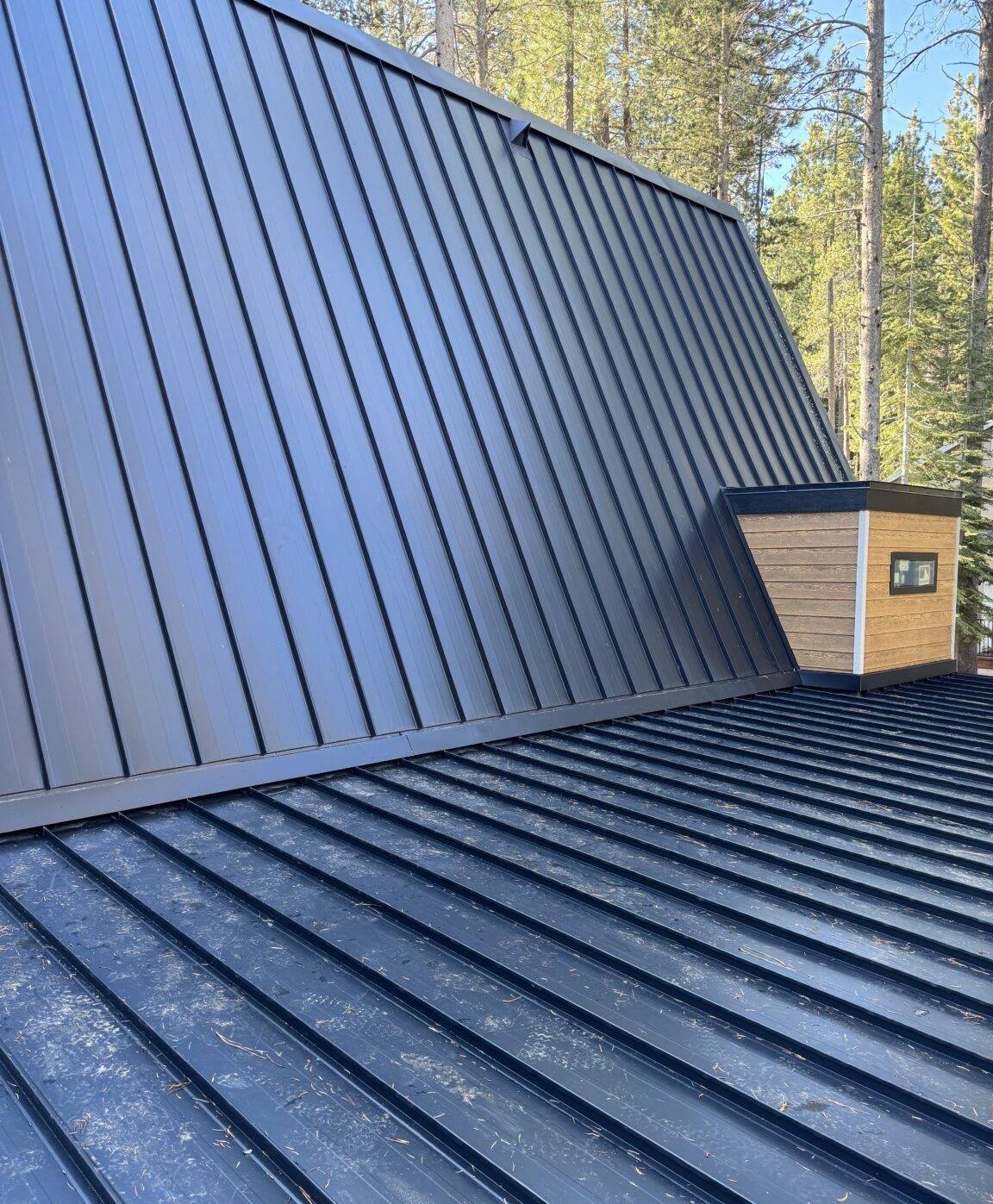
| Fastener Exposure | Concealed clips, fewer penetration points | Visible screws through the panel face |
| Wind Performance | Strong, especially with reinforced clip spacing | Good, but more dependent on gasket/washer condition over time |
| Maintenance | Lower — fewer exposed fasteners to check | Periodic fastener/washer inspection recommended |
| Upfront Cost | Higher | More moderate |
Neither option is "wrong" — the right call depends on your budget, how long you plan to stay in the home, and how much exposure your specific lot has to open water and prevailing wind. We'll give you our honest read during the assessment rather than steering you toward whichever option is more profitable for us.
What Metal Roofing Does Well — and Where It Needs Support
Metal roofing has real advantages for this kind of coastal exposure: strong wind uplift resistance when properly fastened, good resistance to wind-driven rain when flashing details are correct, reflective properties that help with cooling load, and long service life relative to many other roofing materials. It's not maintenance-free, though. Coastal salt air means periodic rinsing to clear salt deposits is worthwhile, and exposed-fastener systems benefit from occasional checks on washer condition. None of this is burdensome, but it's worth knowing going in rather than being surprised later.
A Simple Maintenance Checklist for Pinellas Point Homeowners
- Rinse accumulated salt and debris off the roof surface periodically, especially after long dry stretches
- Keep gutters and downspouts clear so water isn't backing up at the eaves
- After any major storm, do a visual check (or have us do one) for lifted flashing, dented panels, or debris damage
- Check exposed fasteners on screw-down panel systems every couple of years for washer wear
- Keep an eye on sealant at penetrations — chimneys, vents, and skylights — since UV exposure ages sealant faster here than in milder climates
Why a Local, Established Crew Matters Here
Pinellas Point isn't a generic subdivision — it's a specific micro-climate within St. Petersburg, with its own combination of water exposure, prevailing wind direction, and building stock. A crew that already works this neighborhood knows what to look for in the attics and decking common to homes here, understands which orientations take the worst of a Gulf-driven storm, and isn't guessing at fastening schedules from a manual written for a different climate zone. That familiarity shows up in fewer surprises during the job and a roof that's actually specified for the conditions it will face, rather than a one-size-fits-all install.
It also matters for accountability. A contractor who works Pinellas Point regularly has a reputation in the neighborhood to maintain, is easy to reach if a warranty question comes up later, and understands local permitting expectations without having to learn them on your project.
Get an Honest Look at Your Roof
If you're weighing a metal roof for your Pinellas Point home — whether you're replacing storm-damaged roofing, planning ahead of hurricane season, or just tired of asphalt shingles that don't hold up to the sun and salt air — we're glad to come take a look and give you a straightforward assessment. There's no pressure and no obligation. Use the form below to request a free estimate, and we'll walk the roof with you and talk through what actually makes sense for your home.