 St. Petersburg Siding
 Building a Deck That Actually Holds Up in Old Northeast
Old Northeast is one of the older, more established residential pockets of St. Petersburg — mature tree canopy, homes with real character, and lots that were laid out long before anyone was thinking about hurricane wind loads or composite decking. A lot of the decks we get called out to replace in this neighborhood were never built wrong exactly; they were built for a lighter climate reality than the one Pinellas County actually delivers year after year. Hurricane-force wind events, sun that doesn't really let up for most of the year, wind-driven rain that gets pushed sideways into ledger boards and joists, and salt-laden air moving in off Tampa Bay all put real stress on an outdoor structure that's sitting fully exposed, day after day, for decades.
This page is about deck building specifically for Old Northeast — what the neighborhood's setting actually demands from a deck, what a correctly built one involves from the footings up, and why it matters to hire a crew that already understands this particular stretch of St. Petersburg rather than one applying a generic build plan to a coastal Florida lot.
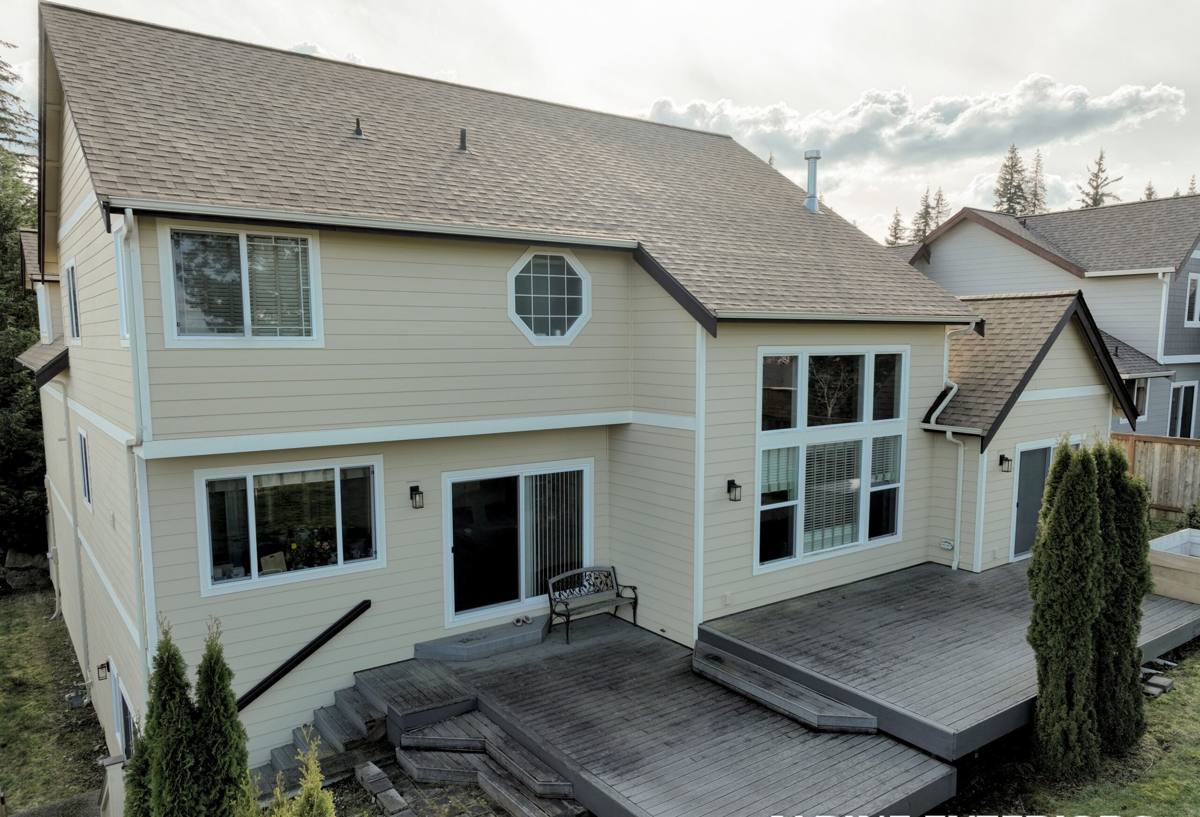
What Old Northeast's Setting Asks of a New Deck
Old Northeast sits close to the water and carries the mature tree canopy and older housing stock that give the neighborhood its character. Both of those things shape what a deck needs to survive out here. Established oak and other shade trees mean a lot of decks in this area live in partial shade for part of the day, which sounds like a break from the sun but actually creates its own problem: shaded, damp wood and composite surfaces dry more slowly after rain, which extends the amount of time moisture sits against the structure. Proximity to the bay means salt air is a constant, low-grade presence on every metal fastener and connector in the build, whether the home is directly on the water or several blocks back. And because many of the homes here are older, decks are frequently additions or replacements tied into an existing structure, which means ledger attachment and flashing at the house connection deserve extra attention rather than being treated as a formality.
The Climate Factors That Actually Determine How Long a Deck Lasts
Hurricane-Force Wind
A deck is a large, exposed, mostly horizontal structure, and in a real wind event it takes direct uplift and lateral load through the railing, joists, and connection to the house. Undersized hardware, insufficient footing depth, or a ledger that isn't properly through-bolted and flashed is exactly where a deck fails first in a storm — not usually in the decking boards themselves, but in the structure holding them up.
Wind-Driven Rain
Rain that comes in at an angle during a storm gets driven into every horizontal-to-vertical joint on a deck: where the ledger meets the house, where posts meet footings, and where fasteners penetrate the decking surface. Flashing details that would be optional in a milder climate aren't optional here, because those joints get tested by sideways rain on a regular basis, not just once a decade.
Near Year-Round UV
Florida sun is intense almost all year, and a deck has no roof overhead protecting it the way a wall assembly does. UV breaks down unstabilized wood finishes, dries out and cracks lower-grade composite material, and accelerates the wear on any exposed fastener or connector. A deck surface here gets more cumulative sun exposure in a few years than the same structure would see in a decade further north.
Salt Air
Salt-laden air off Tampa Bay accelerates corrosion in any unprotected metal — screws, joist hangers, bolts, post bases. Once a fastener starts corroding, it loses holding strength gradually and quietly, which is a bad combination with a structure that's also absorbing wind load. This is a continuous process, not a storm-season spike, which is part of why fastener and hardware choice matters as much as the decking material itself.
Choosing a Decking Material for This Setting
There isn't one right decking material for every home in Old Northeast — it depends on budget, how much maintenance the homeowner wants to take on, and how the deck will actually be used. What matters is understanding the real trade-offs each material carries in this specific climate, rather than choosing on appearance alone.
| Material | Moisture & Sun Behavior | Maintenance | Typical Trade-Off Here |
|---|---|---|---|
| Pressure-treated pine | Absorbs moisture readily; needs a sealed finish to resist wet-dry cycling | Regular re-staining or sealing, roughly every 1-2 years in this sun | Lowest upfront cost, but the shortest interval before it needs attention again |
| Tropical hardwoods | Dense and naturally moisture-resistant, but still moves with humidity swings | Periodic oiling to maintain color and prevent surface checking | Strong look and durability, at a materials cost well above treated pine |
| Composite decking | Doesn't absorb water into a wood fiber structure; some lines fade or chalk under sustained UV | Occasional washing; no staining or sealing | Higher upfront cost, low ongoing maintenance, quality varies a lot by product line |
| PVC decking | Fully synthetic; effectively moisture-proof and very UV-stable | Lowest maintenance of the group | Highest material cost; some homeowners prefer the look of a wood-grain composite instead |
Whatever surface material a homeowner chooses, it's worth remembering that the decking boards are the part everyone sees and the smallest part of what actually determines how long the deck lasts. The structure underneath does most of the real work.
What a Correctly Built Substructure Involves
The framing, footings, and connections below the decking are what carry wind load, foot traffic, and years of wet-dry cycling — and they're also what's hardest to inspect or fix later once the deck is finished. A few things we treat as non-negotiable on every build in this area:
- Footings sized and set to local frost-free, wind-load requirements — not just deep enough to look solid
- Ledger boards through-bolted (not just lag-screwed) into the home's structure, with proper flashing to shed water away from the house
- Joist hangers, post bases, and all structural fasteners rated for coastal, high-salt exposure
- Joist spacing and beam sizing matched to the actual span and expected load, not the minimum allowed on paper
- Proper clearance and drainage beneath the deck so water doesn't sit against footings or framing
- Railings and stair connections built to current wind and structural code, not legacy standards from an older build
A deck can look finished and still have a compromised substructure underneath — that's exactly the kind of problem that only shows up when it's tested by an actual wind event, which is not when you want to find out.
Permitting and Code in St. Petersburg
Deck construction in Pinellas County requires a permit, and depending on the height, attachment to the home, and proximity to property lines or the water, there can be additional review involved. Older neighborhoods like Old Northeast sometimes carry additional considerations tied to lot setbacks, tree protection, or flood zone requirements given the proximity to the bay. None of this needs to be complicated, but it does need to be handled correctly from the start — a deck built without the proper permit and inspections can create real problems at resale, and skipping wind-load-appropriate construction details to save time is exactly what gets exposed in a storm.
How We Approach a Deck Project in Old Northeast
We start with a site visit to look at the lot, the tree canopy, the home's existing structure at the attachment point, and how the space will actually be used — entertaining, grilling, a quiet spot off a bedroom, something that needs to hold up to daily foot traffic. From there we talk through material options honestly, including real maintenance expectations rather than just upfront cost. Once a design and material are settled, we handle the permitting, build the substructure to the standards above, and finish with the decking, railing, and any stairs. Before we consider the job done, we walk the finished deck with the homeowner and go over what regular maintenance looks like for the material chosen.
Keeping a New Deck in Good Shape
A well-built deck in this climate still needs some regular attention — the goal is catching small issues before they become structural ones.
- Check fasteners and hardware for corrosion or looseness at least once a year, more often after a major storm
- Clear leaves and debris from between boards and from underneath the deck, especially under tree canopy where things stay damp longer
- Inspect the ledger board connection and flashing at the house periodically for gaps or staining
- Re-seal or re-stain wood decking on the schedule the finish actually requires — don't wait until it visibly fails
- Walk the railing and stair connections occasionally to confirm nothing has loosened
- After any named storm, do a quick visual check of footings, posts, and the house connection before resuming normal use
Why Hiring a Crew That Already Works Old Northeast Matters
A deck builder who already works in this neighborhood has a practical sense of what actually plays out here — how the tree canopy affects drainage and drying time, what the permitting process in St. Petersburg actually involves, and how much extra attention hardware and connections need this close to the bay. That familiarity shows up in decisions that aren't obvious from a finished deck's appearance: footing depth, fastener grade, ledger flashing, how the structure is braced for wind. It's the difference between a deck that's built to the minimum and one that's built for what this specific setting actually puts it through.
If you're planning a new deck or need to replace one that's showing its age, we're glad to take a look and give you an honest read on what your property needs. Reach out below for a free, no-pressure estimate.