 St. Petersburg Siding
 Gulfport sits closer to open water than most of Pinellas County — a small peninsula community wrapped by Boca Ciega Bay, where older Florida bungalows and newer infill homes stand a few blocks from the shoreline. That waterfront position gives the neighborhood its character, but it also means siding here takes a harder beating than siding a few miles inland: more salt in the air, more direct wind exposure, and often years of prior storm cycles already logged in the walls before we ever get a call. Most of what we do in Gulfport isn't a full re-side — it's correctly diagnosing and repairing the specific sections of siding that took the damage, without disturbing everything else that's still sound.
Why Siding Fails Faster This Close to the Water
Every coastal Pinellas neighborhood deals with heat, humidity, and storms, but a shoreline-adjacent community like Gulfport gets a concentrated version of it. Salt-laden air accelerates corrosion on fasteners and metal flashing faster than it does further inland. Wind-driven rain — the kind that comes in sideways during a squall or tropical system — pushes water into laps, seams, and trim joints that would stay dry in a gentler rain. Intense, near-constant UV breaks down caulk and paint film faster near open water, where there's little shade canopy to soften the exposure. And every named storm that brushes the Gulf coast puts real wind load on exterior walls, flexing panels, working fasteners loose, and stressing joints that were fine the week before. None of this means siding here is destined to fail — it means repairs have to account for causes, not just symptoms.
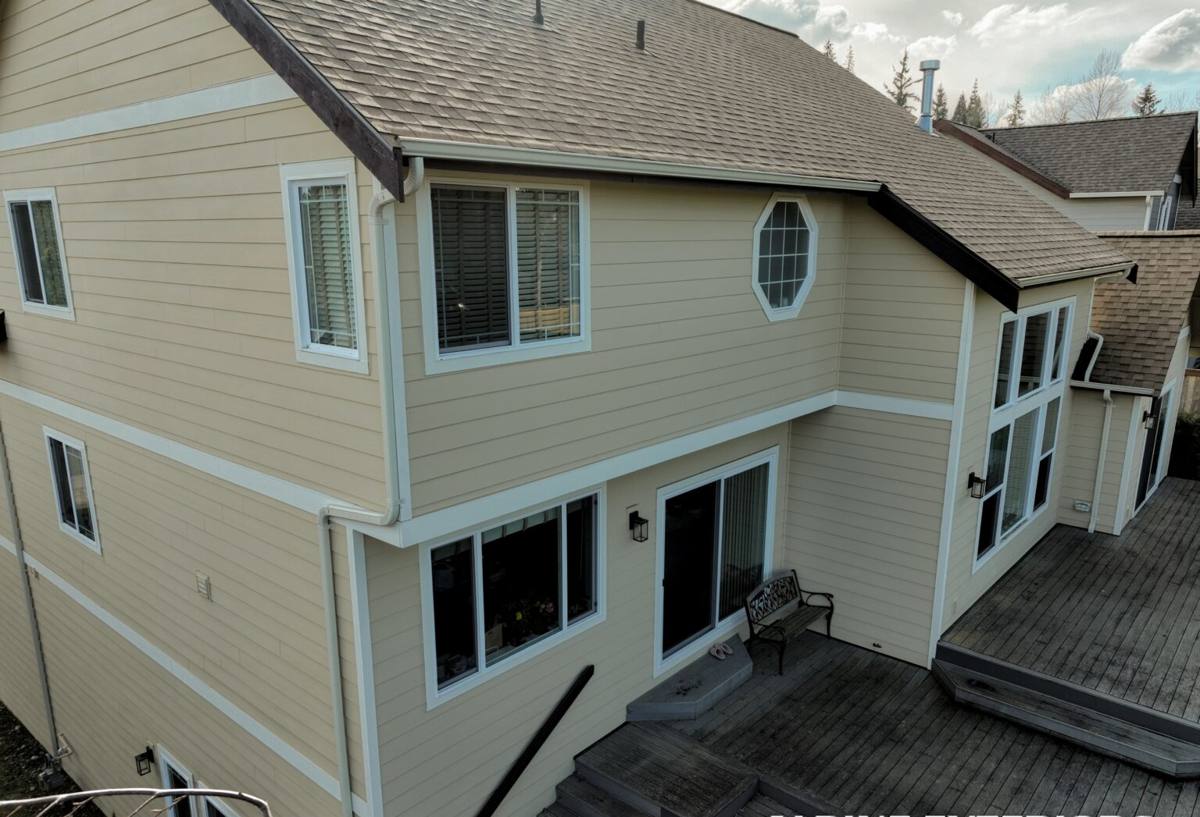
Signs Your Gulfport Home's Siding Needs Repair
Most siding repair calls start with something a homeowner noticed from the yard or during a routine walk-around. Catching these early is what keeps a repair a repair, instead of letting it grow into something bigger.
- Boards or panels that look buckled, warped, or bowed out from the wall
- Soft or spongy spots when you press on the siding near the bottom edge or around windows
- Cracked, shrunken, or missing caulk at trim, corners, and window and door edges
- Nail heads backing out, or rust streaks bleeding down from fastener points
- Dark staining or discoloration concentrated at seams and butt joints
- Gaps opening up at corners, trim boards, or where two courses meet
- Chalky, faded paint that no longer beads water when it rains
- Visible daylight, a draft, or a musty smell at an outlet, vent, or other wall penetration
What's Usually Behind the Damage We Find
Storm and Wind Damage
Hurricane-force wind events don't have to make direct landfall here to do damage. A close pass or a strong squall line can pop fasteners, crack panel edges, or peel back a section that was already marginal. The visible crack or missing piece is often the smallest part of the problem — what matters more is whether wind-driven rain got behind the siding during or after the event, because that's what turns a cosmetic fix into a repair involving the wall assembly underneath.
Water Intrusion at Trim, Windows, and Penetrations
Siding itself sheds most water, but the real waterproofing happens at the details: window and door flashing, the barrier behind the cladding, and kick-out flashing where a roofline meets a wall. When one of those details was installed short, or caulk that was never meant to be the primary water barrier finally fails, water tracks behind the siding and can sit there for months before it shows up as staining, softness, or a smell.
Fastener and Caulk Failure from UV and Salt Exposure
Caulk and sealant have a service life, and that life is shorter this close to the Gulf. Once a bead of caulk shrinks, cracks, or separates from the surface it was sealing, it stops doing its job long before it looks obviously bad. Fasteners that weren't rated for coastal exposure corrode faster here too, and a corroding nail eventually loses its grip on the framing behind it.
Aging or Mismatched Prior Repairs
We regularly find sections that were patched before — sometimes with the wrong material, sometimes without addressing what caused the original damage. A patch that doesn't match the surrounding siding's profile, thickness, or fastening pattern almost always fails again, usually at the seam between old and new.
Repair or Replace? How We Make That Call Honestly
Not every damaged section needs a full re-side, and not every "small" repair should stay small. We walk the house, open up the affected area, and base the recommendation on what we actually find rather than what's easiest to sell.
| What We Look At | What It Tells Us |
|---|---|
| How far the damage spreads | Isolated sections point to a targeted repair; damage tracking across multiple elevations points to a broader problem |
| Condition of the sheathing and barrier behind the siding | Sound sheathing means a clean repair; soft or rotted sheathing means the repair scope grows before siding even goes back on |
| Age and remaining life of the existing siding | Siding near the end of its service life may not be worth chasing repair after repair |
| How many times that section has already been patched | Repeated failure in the same spot usually means the underlying cause was never fixed |
| Whether a matching material is still available | Older or discontinued profiles can make a seamless patch difficult, which affects whether a repair or a section replacement makes more sense |
We'll tell you plainly when a repair is the right, cost-effective answer — and we'll tell you just as plainly when we think you're about to spend money patching a wall that needs a bigger conversation.
What a Correct Siding Repair Actually Involves
A repair that's done right takes more steps than just pulling off a damaged piece and nailing up a new one. Skipping any of these is how the same spot ends up failing again in a year or two.
- Diagnose the actual water path, not just the visible symptom — where did the water get in, and where did it travel before it showed up
- Open the affected area to inspect the weather-resistive barrier and flashing behind the siding
- Repair or replace any compromised sheathing or framing found underneath before new siding goes back on
- Cut in replacement material that matches the profile, exposure, and fastening pattern of the surrounding wall
- Correct or re-integrate flashing at the repaired section so water sheds the way it's supposed to
- Fasten with corrosion-resistant hardware suited to salt-air exposure, at the manufacturer's specified spacing
- Match the finish — color-matched touch-up paint or a properly blended repaint, depending on the material
- Seal joints and transitions with a sealant rated for exterior, coastal use
Why We Only Repair With James Hardie Fiber Cement
We're a James Hardie-only shop — we don't install or stock vinyl siding, LP SmartSide, or primed wood, and that carries through to repair work. If your home already has James Hardie fiber cement siding, a repair is usually the cleanest scenario we deal with: replacement boards or panels come from the same product line, and factory ColorPlus finishes or a properly matched field paint let a repaired section blend into the wall rather than stand out as an obvious patch.
If your Gulfport home has vinyl, engineered wood, or another siding product that's damaged, we'll still come look at it and give you an honest read on the situation. In many cases the damaged section can be repaired or sourced through a specialty supplier without us touching the rest of the wall. Where the damage is extensive, or the existing material is failing broadly rather than in one isolated spot, we'll say so directly — and if you're at the point of deciding whether to keep chasing repairs on a product that's reaching the end of its useful life, we'll walk you through what moving that section, or eventually the whole elevation, to fiber cement would look like. That's not a sales pitch tacked onto every visit; it's what we'd tell a neighbor.
Our Siding Repair Process
- Inspection. We walk the affected area and open it up enough to see what's actually happening behind the surface, not just guess from the visible damage.
- Written diagnosis and estimate. You get a plain-English explanation of what we found, what caused it, and a firm scope and price before any work starts.
- The repair. We do the work to the standard above — proper flashing, matched material, correct fastening, correct sealant — not the fastest version that looks fine from the street.
- Cleanup and walkthrough. We clear debris and walk the repair with you so you know exactly what was done and why.
What Drives the Cost of a Siding Repair
Repair costs vary more than full re-side costs, because so much depends on what's hiding behind the damaged section. As a broad range, small, contained repairs are a modest expense; repairs that uncover sheathing or framing damage cost more because that structural work has to happen before new siding goes back up.
| Cost Factor | Why It Matters |
|---|---|
| Size and number of damaged sections | More linear footage and more separate repair areas both add labor and material |
| Condition of what's behind the siding | Rotted sheathing or framing turns a surface repair into a structural one |
| Access and elevation height | Second-story sections, tight side yards, or landscaping close to the wall add time |
| Color and finish matching | Blending into faded or aged siding takes more care than repairing a newer wall |
| Availability of matching material | Discontinued profiles or colors can require sourcing time or a broader repair scope |
Why Hiring a Crew That Already Works in Gulfport Matters
Gulfport's housing stock skews older than a lot of Pinellas County — plenty of homes were built well before current wind-load and flashing standards existed, on lots that sit close together with mature trees and limited side-yard access. A crew that's already worked in the neighborhood knows what to expect from that construction era, knows how to stage a job on a tight lot without disrupting the block, and has a realistic sense of how a repair on an older wall assembly is likely to go before the first board comes off. After a storm rolls through the Gulf coast, that local familiarity also means a faster, more accurate read on what actually needs attention versus what can wait.
If you've got a section of damaged siding on a Gulfport home — storm damage, an old leak, or something that's just been bothering you for a while — we're glad to come take a look, give you a straight diagnosis, and put together a free, no-pressure estimate. The form below is the easiest way to get started.