 St. Petersburg Siding
 New-Construction Windows in Childs Park
New-construction windows are a different job from swapping out an old window in an existing wall. This service applies when a home is being built from the ground up, when a room addition is going in, or when a renovation opens the wall back to the studs. In all three cases, the window goes in during framing, before stucco, siding, or exterior finish is applied, and it gets tied directly into the house wrap and flashing system rather than sealed into an existing opening. Done right, it becomes part of the home's water and air barrier for the next several decades. Done wrong, it's one of the most common sources of hidden water intrusion in Florida construction.
Childs Park is a long-established St. Petersburg neighborhood, and the work we see here is a mix of true new builds on infill lots, additions to existing homes, and full-gut renovations where a homeowner or builder wants the window package handled correctly the first time. Whichever category a project falls into, the fundamentals of a correct new-construction window install are the same, and they matter more in Pinellas County than in most parts of the country.
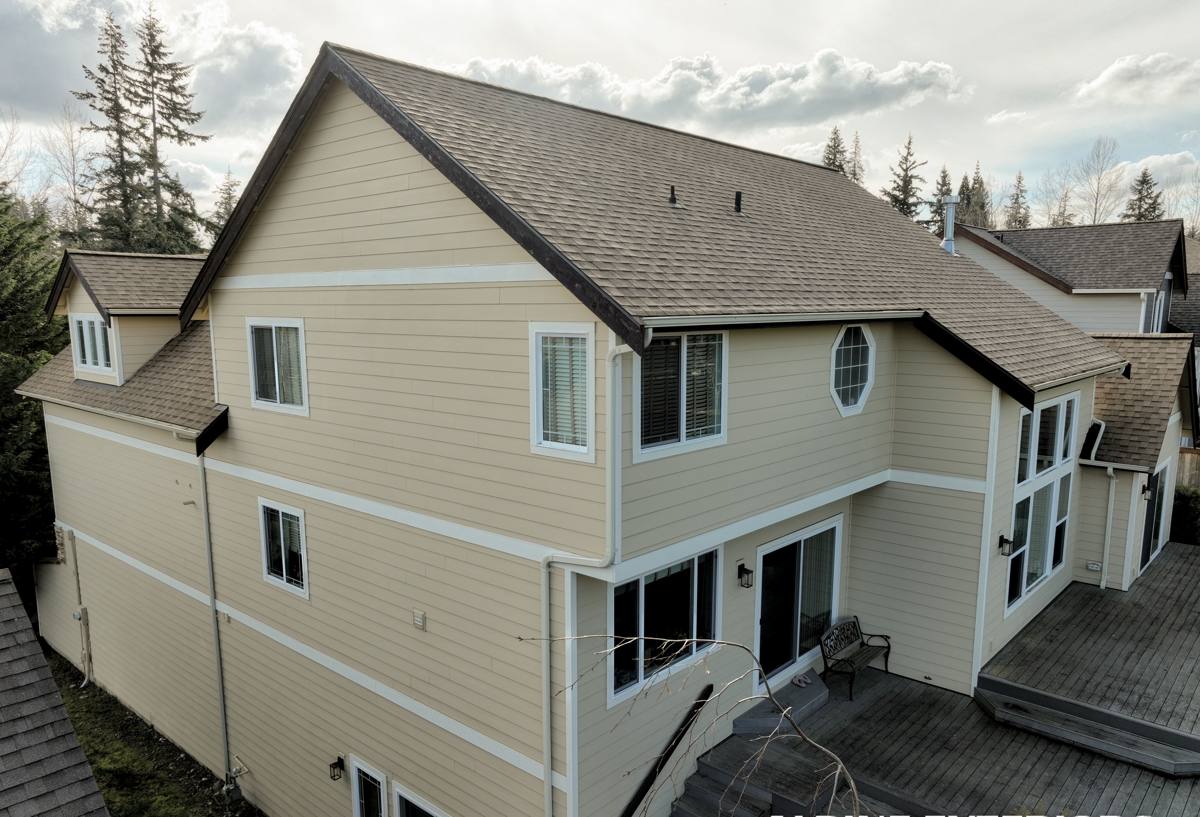
What Childs Park's Climate Demands From a New Window
St. Petersburg sits on a peninsula between Tampa Bay and the Gulf, and every home in Pinellas County deals with the same basic exposure, whether it's a block from the water or well inland like Childs Park. That exposure shapes what a new-construction window needs to do beyond just opening and closing.
Hurricane-force wind and wind-driven rain
Florida Building Code assigns every address a wind speed and exposure category, and Pinellas County falls within the state's wind-borne debris region for most of its geography. That means new windows have to carry a wind load and, in many cases, an impact rating (or be paired with code-compliant shutters) that matches the specific site conditions, not a generic "hurricane window" label. Wind-driven rain is the other half of the problem: during a tropical system, rain doesn't fall straight down, it gets pushed sideways into the wall assembly, and a window's ability to shed that water depends entirely on how the flashing and sill pan were built, not just the window itself.
Year-round UV exposure
Florida's sun angle and day length mean window frames, seals, and glazing coatings are under near-constant UV load, twelve months a year. Frame materials and coatings that aren't formulated for this will chalk, discolor, or go brittle years ahead of their rated life, and low-E coatings that aren't matched to a south or west exposure will underperform on cooling costs from day one.
Salt air
Because Pinellas is a peninsula, salt-laden air off Tampa Bay and the Gulf reaches well past the immediate waterfront, including inland neighborhoods like Childs Park. Salt accelerates corrosion on fasteners, hinges, balance hardware, and low-quality cladding. It's a slower issue than wind or rain, but it's a real one, and it factors into what hardware and fastener spec we use on every install.
What a Correct New-Construction Window Installation Involves
This is the part of the job that isn't visible once the exterior finish goes on, which is exactly why it has to be done right the first time.
Sill pan flashing
Every rough opening gets a sloped, back-dammed sill pan before the window ever goes in. This gives any water that gets past the window a way out, rather than a place to pool against the framing.
Shingle-lapped flashing integration
Flashing tape and the house wrap have to be layered like shingles on a roof, so water sheds downward and outward at every layer, never into a seam that funnels it inward. This is where a rushed crew cuts corners, and it's the single biggest predictor of a window leak five or ten years down the road.
Nailing fin fastening and rough opening tolerance
The window's nailing fin gets fastened per the manufacturer's schedule, into a rough opening sized within the tolerance the manufacturer specifies, not just "close enough." An opening that's too tight or too loose forces shims to do work they weren't meant to do, and it can rack the frame just enough to affect long-term operation and seal performance.
Shimming, square, and plumb
The frame gets shimmed at the manufacturer's specified points to keep it square and plumb without stressing the corners. A frame installed out of square will bind, won't lock tightly, and will wear its weatherstripping unevenly.
Product approval verification
Every window we install for new construction has a Florida Product Approval or Miami-Dade Notice of Acceptance on file that matches the wind load and impact requirements for that specific address. This gets checked before the window is ordered, not discovered during a failed inspection.
Choosing the Right Window for a New-Construction Opening
Material choice matters more here than in a straightforward replacement, because a new-construction frame is exposed to the elements the moment it's set, sometimes for weeks, before the exterior finish is complete. Here's how the common options compare for this climate and this type of installation:
| Material | Coastal/salt-air durability | UV stability | Impact-rated options | Maintenance |
|---|---|---|---|---|
| Vinyl | Good; no corrosion risk on the frame itself | Depends on formulation; look for UV-stabilized compounds | Widely available | Low |
| Aluminum | Fair; needs marine-grade fasteners and coatings near the water | Very good | Widely available, common in impact-rated storefront and specialty applications | Low to moderate |
| Fiberglass/composite | Very good; dimensionally stable, resists salt and moisture well | Very good | Available, typically at a higher price point | Low |
| Wood-clad | Poor without diligent upkeep; not our recommendation for this climate | Moderate; exposed wood elements need regular maintenance | Available but adds cost and upkeep burden | High |
We steer most Childs Park new-construction projects toward vinyl or fiberglass for the field windows, with aluminum reserved for larger openings or specific architectural details where its strength-to-frame-width ratio is the better fit. Wood-clad units aren't something we push on new construction in this climate; the maintenance burden and moisture sensitivity don't match up well against Pinellas County's humidity and salt exposure, whatever their appearance advantages might be elsewhere.
How Our Process Works
Plan review and product selection
Before anything is ordered, we review the window schedule against the site's wind zone and exposure category, and we confirm product approvals match. On additions and renovations, we coordinate directly with the homeowner or the general contractor on sizing, egress requirements for bedrooms, and energy code compliance for the glazing package.
Ordering and lead time
Impact-rated and larger custom sizes carry longer lead times than stock sizes. We build that into the schedule up front so the framing crew isn't waiting on us, or worse, isn't tempted to dry the house in before the windows are staged.
Installation during dry-in
Windows go in as part of the dry-in sequence, integrated with the house wrap or self-adhered membrane before exterior finish starts. This is the point where sill pans, flashing laps, and fastening happen, and it's not a stage we compress to hit a schedule.
Final check and inspection support
We do our own quality check on every opening: operation, seal, square, and flashing integration, before we consider it done. We also provide whatever documentation the City of St. Petersburg or Pinellas County building inspector needs to sign off on the window portion of the job.
New-Construction vs. Replacement Windows: Why the Distinction Matters
Homeowners sometimes call us about "new windows" without realizing there are two very different jobs hiding under that phrase. A replacement window is installed into an existing, finished wall, usually without disturbing the exterior siding or stucco around it, and it relies on its own frame and an insert method to manage water. A new-construction window is installed into an open stud wall as part of the original weather barrier system, with a nailing fin and full flashing integration.
Using the wrong approach in either direction causes problems. Installing a new-construction window into an already-finished wall means tearing out exterior finish unnecessarily. Installing a replacement-style window during actual new construction skips the nailing fin and flashing integration the wall assembly is designed around, leaving a weaker connection to the water barrier than the house otherwise would have had. Telling us upfront whether you're building, adding on, or replacing existing windows in a finished wall changes which product and which install method we quote.
What to Confirm Before Installation Begins
Whether you're a homeowner overseeing an addition or working with a builder on a new home, these are the items worth confirming before the windows go in:
- The wind load and impact rating quoted match the wind zone and exposure category for the actual address, not a generic regional default
- Florida Product Approval or Miami-Dade NOA numbers are documented for the specific products being installed
- Rough openings are framed to the manufacturer's tolerance before windows arrive on site
- A sill pan and shingle-lapped flashing plan is part of the install, not an afterthought
- Low-E glazing spec accounts for the actual orientation of each opening (south and west exposures carry the heaviest solar load)
- Fasteners and hardware are rated for coastal/salt-air exposure, not standard interior-grade hardware
- Someone on the job is coordinating window lead times against the framing and dry-in schedule
Why a Crew That Already Works Childs Park Matters
New-construction window work depends on getting a lot of unglamorous details right in sequence, and a crew that's worked this neighborhood and this county repeatedly has already worked through the practical realities: what the City of St. Petersburg and Pinellas County building department want to see at inspection, what wind zone and exposure category apply to this part of the county, and how the older housing stock mixed in with newer infill construction around Childs Park tends to be framed. That familiarity shows up in fewer surprises mid-project, fewer callbacks for inspection corrections, and a window package that's specified right the first time rather than adjusted after the fact.
It also means we're not learning the region's climate demands on your project. Hurricane wind exposure, constant UV, wind-driven rain, and salt air aren't abstract concerns here, they're the baseline every window install has to be built for, and that's the standard we hold every opening to, whether it's one window in an addition or a full house of them.
If you're planning a new build, an addition, or a renovation in Childs Park and need the window package handled correctly from the framing stage forward, we're glad to walk the plans with you and put together a free, no-pressure estimate using the form below.