 St. Petersburg Siding
 Roser Park's Older Homes Face Siding Problems Most Neighborhoods Don't
Roser Park is one of St. Petersburg's oldest platted neighborhoods, and it looks the part — bungalow and Craftsman-style homes, mature tree canopy, and a housing stock that in many cases predates modern building codes entirely. That history is the neighborhood's biggest asset and also its biggest siding challenge. Homes here have often been re-sided or patched more than once over the decades, sometimes with whatever material was standard at the time — old wood lap, later replaced sections, and in some cases mismatched repairs layered on top of each other. By the time we get a call, it's common to find two or three generations of siding material on the same wall.
That layered history matters when it comes time to repair. A patch job that ignores what's underneath — or that uses a material that behaves differently than what's already on the wall — tends to fail again within a few years. Getting it right in Roser Park means understanding both the age of the home and the way Pinellas County's climate has already worked on it.
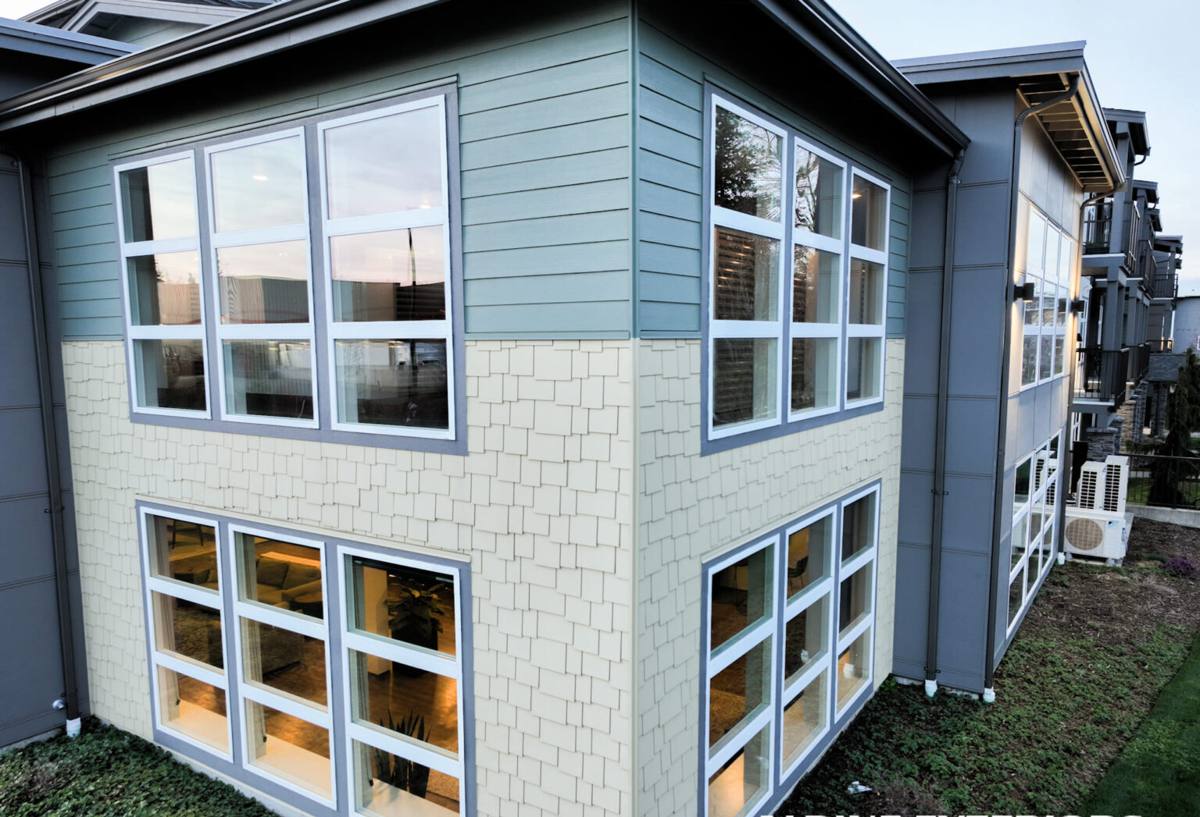
What Pinellas County's Climate Does to Siding Over Time
St. Petersburg sits on a peninsula between Tampa Bay and the Gulf, and that location puts real stress on exterior materials year-round. It isn't one thing wearing siding down — it's several working together:
Hurricane-force wind
Even homes that never take a direct hit see repeated exposure to tropical-storm-strength gusts most seasons. Wind doesn't just rattle loose boards — it works fasteners loose, stresses lap joints, and can crack or dislodge panels that were already compromised by rot or old caulk failure.
Intense, year-round UV
Florida's sun angle and day length mean siding here takes far more UV exposure annually than siding in most of the country. UV breaks down paint films and, over time, degrades the wood fiber in older or lower-grade siding products, leading to checking, splitting, and chalking.
Wind-driven rain
Rain that comes in sideways during a squall behaves very differently than rain falling straight down. It gets forced up under laps, around trim, and into any gap in flashing or caulking that a calm-weather inspection would miss. This is usually how water gets behind siding long before there's any visible sign on the surface.
Salt air
Being close to the bay means airborne salt accelerates corrosion on fasteners and metal flashing, and it speeds up the breakdown of coatings on any material not engineered to resist it.
None of these forces is unique to Roser Park, but on an older home with original or long-since-replaced siding, the cumulative effect shows up sooner — and it shows up in ways that are easy to miss until the damage is significant.
Signs Your Roser Park Home May Need Siding Repair
- Cracked, split, or visibly warped boards, especially on south- and west-facing walls
- Soft or spongy spots when you press on the siding — a sign of moisture damage underneath
- Paint that peels or bubbles again within a year or two of being repainted
- Gaps opening up at seams, corners, or where siding meets trim and windows
- Dark streaking or staining running down from a seam or fastener
- Buckling or waviness across a section of wall
- Visible insect activity or damage near the base of walls or around penetrations
- Rust streaks around fasteners or corroded flashing
- Sections that came loose, cracked, or blew off during a storm
Repair or Replace? How We Decide
Not every damaged section needs to come off the wall entirely, but not every problem should be patched over, either. The right call depends on a handful of factors we walk through during an inspection:
| Factor | Repair Usually Makes Sense | Full Section Replacement Usually Makes Sense |
|---|---|---|
| Extent of visible damage | Isolated to a few boards or a small area | Spread across a wall or multiple elevations |
| Condition of surrounding siding | Rest of the wall is sound and holding up well | Adjacent boards show early signs of the same problem |
| Sheathing/framing underneath | Dry, solid wood when probed | Soft, delaminated, or showing rot |
| Moisture history | Single, identifiable source now corrected | Ongoing or unknown source, or repeated past repairs in the same spot |
| Cosmetic match | New material can be matched closely to existing color and profile | Existing siding is discontinued, faded, or a different material entirely |
We won't recommend a full re-side when a targeted repair will hold — but we also won't patch over a moisture problem just to save you money today if it means you're paying for the same repair again in three years.
Why We Only Repair With James Hardie Fiber Cement
We install and repair with James Hardie fiber cement exclusively. We don't carry vinyl, LP SmartSide, primed wood, or other fiber cement brands, and that applies to repair work the same as new installations. There's a practical reason: patching a wall with a material that doesn't behave the same way as what's already there — different expansion rate, different moisture absorption, different paint adhesion — is how you end up with a repair that looks fine for a season and then telegraphs through as a visible seam or a fresh failure point.
James Hardie's HZ product lines are engineered specifically for humid, storm-exposed climates like ours, and the ColorPlus factory finish is baked on under controlled conditions rather than field-applied, which matters a lot in a climate where UV and salt air chew through ordinary paint jobs. Fiber cement is also non-combustible, doesn't provide a food source for the insect activity that's common in older Florida neighborhoods, and holds up to wind-driven rain far better than materials that rely on caulk and paint as their primary line of defense.
To be fair, other products have their place and their advocates — vinyl is cheap and low-maintenance in mild climates, and primed wood has its traditional appeal on historic homes. But in a Gulf-coast wind and moisture environment, we've seen those trade-offs consistently cost homeowners more over time than the upfront savings are worth, which is why we standardized on one product line and one installation standard instead of stocking several.
What a Correct Repair Actually Involves
A repair that's done right starts before anyone touches a board. Here's what that looks like in practice:
Diagnose before you patch
We probe and, where needed, moisture-test the area around visible damage — not just the damaged board itself. Water rarely stays exactly where it entered, and a repair that only addresses the spot you can see often leaves the actual source untouched.
Check what's underneath
If sheathing or framing has been compromised by long-term moisture intrusion, replacing the siding alone won't solve the problem. We flag structural concerns honestly rather than covering them up with new boards.
Fix the water path, not just the symptom
Most siding failures trace back to a flashing detail, a caulk joint, or a penetration (a vent, a light fixture, a hose bib) that was never properly sealed or flashed. Replacing the siding without correcting that detail just resets the clock on the same failure.
Install to spec
Correct fastener placement and spacing, proper clearances at the ground and at trim, and factory-finished cut edges sealed per manufacturer requirements all affect how long a repair lasts — and whether it holds up to the next round of hurricane-season wind and rain.
Match the finish
Because ColorPlus is a factory finish, matching an existing color exactly on a small patch isn't always possible with field-applied paint. Where a close cosmetic match matters, we'll walk you through realistic options rather than promising an invisible repair we can't deliver.
Our Process for Roser Park Repairs
- Free inspection — we look at the full elevation, not just the spot you called about, and probe for moisture and hidden damage.
- Honest scope — you get a clear explanation of whether it's a repair or a replacement, and why, before any work starts.
- Material and match plan — we identify the closest available Hardie profile and finish, and tell you upfront if an exact match isn't realistic.
- Permitting where required — some repair work in St. Petersburg requires a permit, and homes in locally designated historic districts can have additional exterior review requirements; we handle that conversation rather than leaving you to figure it out.
- Scheduled around the weather — we plan around Florida's wet season and storm outlooks rather than rushing a repair into a system that's about to test it.
- Clean finish — sealed edges, correct fastening, and a job site left the way we found it.
Why Hiring a Crew That Already Works Roser Park Matters
Older neighborhoods have their own quirks, and Roser Park has more than most. A crew unfamiliar with the area might not think to check whether a property falls within a locally designated historic district — where exterior changes, including siding, can be subject to architectural review before work begins. A crew that already works here knows to ask that question early, not after materials are ordered.
There's also a practical matching issue: homes of this era were often built with narrower board profiles than what's standard on newer construction, and getting a repair to sit right next to original or long-installed siding takes knowing which Hardie profiles come closest. And because St. Petersburg's storm season puts real demands on scheduling, a crew that already has a rhythm working in Pinellas County is better positioned to get repair work done before the next system rolls in — rather than adding your job to a long queue built around a different part of town.
If you're seeing damage, staining, or storm-related wear on your Roser Park home's siding, we're happy to take a look and give you a straight answer on what it needs. The estimate is free, there's no pressure to commit to anything, and you'll walk away knowing exactly what's going on with your siding either way.