 St. Petersburg Siding
 Composite Decking Built for Old Northeast's Coastal Conditions
Old Northeast sits close enough to Tampa Bay and Coffee Pot Bayou that salt-laden air, humidity, and afternoon storms are simply part of owning a home here. The neighborhood's mature tree canopy adds shade, which homeowners love, but it also means decks deal with damp leaf litter, filtered moisture, and less direct sun to dry things out between rains. Add in the hurricane-force winds Pinellas County sees during storm season, intense year-round UV, and wind-driven rain that finds its way into every seam and fastener hole, and it's clear a deck here needs to be built differently than one going into a drier, inland climate.
Composite decking has become the practical answer for a lot of Old Northeast homeowners precisely because it doesn't rely on paint, sealant, or yearly maintenance to hold up against that mix of conditions. But "composite" isn't one product — board quality, core construction, and installation details vary a lot, and in a climate like St. Petersburg's, those details are what determine whether a deck lasts 25 years or starts showing problems in five.
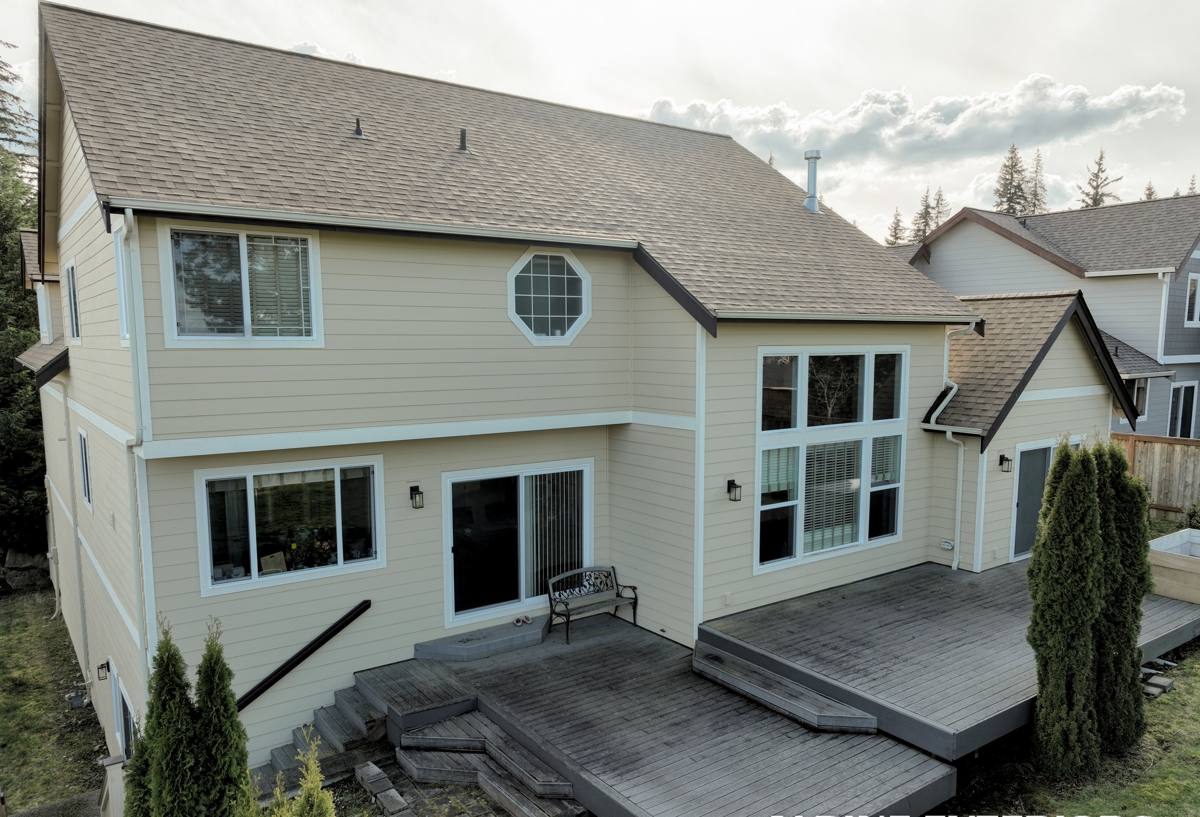
Why This Climate Is Hard on Decking
Salt Air and Corrosion
Homes near the bay deal with airborne salt that settles on every exterior surface, including deck boards and hardware. Salt accelerates corrosion in fasteners and hidden clips, and it can dull or discolor lower-grade composite surfaces over time. Fastener selection and hardware grade matter more here than they would 20 miles inland.
UV Exposure
Florida sun is relentless, and even on shaded lots the reflected heat and UV around a deck adds up over a full year. Cheaper composite boards without a real cap layer can fade, chalk, or go soft in the sun within a few seasons. Higher-quality capped composites are engineered specifically to resist UV breakdown, which is why board selection is worth getting right the first time.
Wind-Driven Rain and Moisture
Pinellas County's storm season brings rain that doesn't just fall — it drives sideways under railings, through gaps, and into ledger connections. Combined with the shade from Old Northeast's tree canopy, moisture can linger on and under a deck longer than it would in full sun. That's a problem for wood, which absorbs water and starts to rot from the inside, but composite handles it differently since the boards themselves don't absorb moisture the way lumber does — the risk shifts instead to the substructure, fasteners, and ledger attachment if those aren't detailed correctly.
Hurricane-Force Wind
A deck isn't just a surface to walk on — it's a structure that has to stay attached to the house and stay standing through storm-force gusts. Ledger board attachment, joist hangers, post connections, and railing anchoring all need to meet the same wind-resistance standard as the rest of the home's exterior work, not just look finished.
What a Correct Composite Deck Install Actually Involves
A deck that's going to hold up in this environment starts below the decking boards, not at them. Here's what we treat as non-negotiable on every Old Northeast composite deck project:
- Pressure-treated or naturally decay-resistant substructure framing, sized and spaced to the composite manufacturer's specification — composite boards flex differently than wood and often need tighter joist spacing
- Corrosion-resistant, coastal-rated fasteners and hardware — stainless steel or coated hardware rated for salt-air exposure, not standard interior-grade hardware
- Properly flashed ledger board connection where the deck meets the house, so wind-driven rain can't work its way behind the siding or into the rim joist
- Hidden or approved fastening systems that keep the board surface intact and reduce the number of exposed penetration points where water and salt can concentrate
- Adequate airflow and clearance underneath the deck so moisture from shade and rain doesn't sit trapped against the framing
- Railing and post connections engineered to meet local wind-load requirements, not just aesthetic preference
- Board layout planned around expansion and contraction — composite moves with temperature swings, and gaps need to be set correctly at install, not adjusted later
Skipping any one of these doesn't necessarily show up on day one. It shows up two or three years later as a soft spot, a loose railing, or fastener staining — the kind of problem that's expensive to fix because it means pulling up finished decking to get at the structure underneath.
Choosing the Right Composite Product
Not all composite decking is built the same, and in a bayfront-adjacent climate, the difference matters more than it would elsewhere. We generally steer homeowners toward fully capped composite boards over uncapped or low-cap products for one main reason: the cap layer is what actually resists moisture absorption, staining, and UV fade. Uncapped composite can still take on moisture at cut ends and exposed edges, which defeats a lot of the point of choosing composite in a coastal neighborhood in the first place.
Composite vs. Wood in This Climate
| Factor | Composite Decking | Natural Wood |
|---|---|---|
| Moisture response | Doesn't absorb and swell; core stays stable if properly ventilated | Absorbs water, prone to rot and cupping in shaded, damp areas |
| UV fade resistance | Capped boards resist fading and chalking | Requires periodic staining/sealing to prevent graying and checking |
| Salt air impact | Surface unaffected; hardware grade is the main concern | Accelerates weathering and fastener corrosion |
| Maintenance | Periodic cleaning, no sealing or staining needed | Annual or biannual sealing/staining to maintain protection |
| Upfront cost | Higher material cost | Lower material cost, higher lifetime maintenance cost |
| Wind performance | Depends entirely on substructure and fastening, same as wood | Depends entirely on substructure and fastening, same as composite |
Worth noting: composite doesn't make the structural wind-resistance question go away — that's a substructure and connection issue regardless of what decking material sits on top. The material choice affects surface durability, moisture behavior, and maintenance; it doesn't substitute for correct framing and fastening.
Color and Finish Considerations for a Shaded, Coastal Lot
Old Northeast's tree cover means a lot of decks here get partial to significant shade for part of the day, which changes how a board reads visually and how it handles moisture compared to a full-sun deck. Darker composite tones can look great against the neighborhood's older home styles but tend to hold more heat in the sun exposure they do get, while lighter and mid-tone boards stay cooler underfoot and show less surface debris from tree canopy. Streaked or wood-grain finishes also tend to hide the occasional water spot, pollen, or leaf tannin stain better than a flat, uniform color — a practical consideration for a shaded lot near mature trees.
Our Process for Old Northeast Deck Projects
- On-site assessment — we look at existing structure (if replacing a deck), house connection points, drainage, shade exposure, and how close the property sits to salt air influence
- Product and layout recommendation — based on sun/shade pattern, home style, and budget, we recommend board types and a layout that accounts for expansion gaps and drainage
- Permitting — deck projects in St. Petersburg typically require permitting and inspection; we handle that process as part of the job
- Substructure build — framing, ledger flashing, and hardware selection matched to coastal exposure
- Decking installation — board fastening, railing, and trim work to manufacturer spec
- Final walkthrough — we go over care basics and what to expect from the specific product installed
Why Local Experience Matters for This Job
A deck built to a generic national spec sheet can still fail in Pinellas County if it doesn't account for how this specific environment behaves — the salt exposure near the bay, the shade patterns from mature neighborhood tree canopy, and the wind and rain load of a real Florida storm season. A crew that already works in and around St. Petersburg neighborhoods like Old Northeast has already seen which fastener grades hold up, which board types handle shaded, damp conditions well, and how to detail a ledger connection so it doesn't become a hidden moisture problem behind the siding. That local pattern recognition is hard to get from a crew that mostly works inland or out of the area.
Maintaining Your Composite Deck
Composite decking is low-maintenance, not no-maintenance. In this climate, a periodic rinse to clear salt residue, pollen, and tree debris goes a long way, along with keeping gutters and nearby drainage clear so water isn't sheeting onto the deck surface repeatedly. Checking railing connections and fastener points once a year is a good habit, especially after a active storm season, even though composite itself won't rot or need refinishing.
If you're planning a new deck or replacing an aging one in Old Northeast, we're happy to take a look and talk through what makes sense for your home, your budget, and the shade and exposure your specific lot gets. Reach out for a free, no-pressure estimate using the form below.