 St. Petersburg Siding
 Board & Batten in a Neighborhood Built on Character
Old Northeast is one of the more architecturally distinct pockets of St. Petersburg — a mix of bungalows, Mediterranean Revival homes, colonial revivals, and older Florida frame houses, many sitting under mature oak canopy just blocks from Tampa Bay. Board and batten siding fits naturally into that mix. The vertical lines read as classic Florida craftsman or coastal cottage depending on the trim and color, and it's a profile that was genuinely common on homes of this era, so it doesn't look out of place on a house built in the 1920s or 1940s the way a lot of modern siding profiles do.
That said, board and batten is not a cosmetic decision on its own. On a house this close to Tampa Bay, the siding also has to survive hurricane-force wind gusts, intense year-round UV exposure, wind-driven rain that gets forced sideways into wall assemblies, and salt-laden air that corrodes fasteners and degrades cheap coatings over time. This page is specifically about doing board and batten right for that combination — an established historic neighborhood and a genuinely harsh coastal climate — not a generic rundown of the siding style.
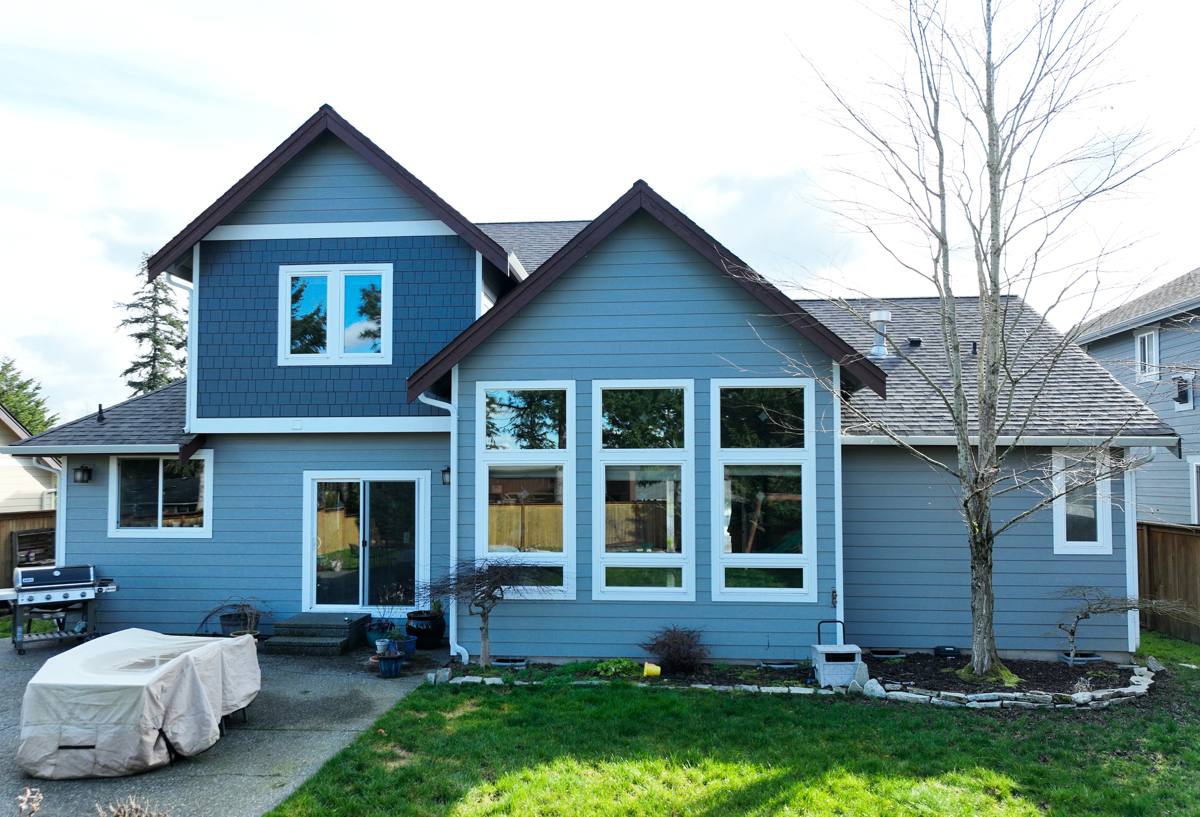
What Pinellas County's Climate Does to Board & Batten Siding
Board and batten has more seams, more vertical joints, and more fastening points than a typical horizontal lap profile. Every one of those details is a place where St. Petersburg's climate can find a weakness if the material or the installation isn't right for the environment.
UV and Heat
Central Florida gets sun exposure most of the country doesn't see. Painted wood and lower-grade composite battens chalk, fade, and lose their finish faster here than in milder climates, which means more frequent repainting to keep a board and batten wall looking sharp — especially on south- and west-facing elevations that take direct afternoon sun most of the year.
Wind-Driven Rain
Storms here rarely deliver rain straight down. Wind pushes it sideways and up under laps, battens, and trim. A board and batten wall depends on correct water-shedding order — house wrap, flashing, and lapping done in the right sequence — because once moisture gets behind the boards, it has nowhere to go and no way to dry out quickly in Florida's humidity.
Salt Air
Old Northeast sits close enough to Tampa Bay that salt-laden air is a real factor, not a theoretical one. Salt air accelerates corrosion on fasteners, hardware, and any exposed metal, and it degrades cheaper paint films and coatings faster than inland exposure does. Fastener selection and coating quality matter more here than they would on a house forty miles inland.
Hurricane Wind Loads
Pinellas County sits in a wind-borne debris region, and board and batten siding has to be fastened to handle sustained high winds and gusts, not just look good on a calm day. Fastening pattern, batten spacing, and attachment into structural sheathing all affect how the wall performs when a storm actually tests it.
Why We Install Only James Hardie for Board & Batten
Board and batten can be built from several materials — solid wood, engineered wood like LP SmartSide, vinyl, or fiber cement — and each one handles St. Petersburg's climate differently. We standardized on James Hardie fiber cement for every siding job we do, board and batten included, and we don't install the alternatives. That's not a marketing position; it's a decision based on what actually holds up here.
Solid wood board and batten looks great when it's new, but it needs consistent repainting and caulking to survive Florida humidity and UV, and it's vulnerable to rot and insect damage if moisture gets trapped behind it. Engineered wood products use wood fiber with resin binders, which means the cut edges and any breach in the factory coating are still an entry point for moisture — a real risk on a wall that takes wind-driven rain. Vinyl board and batten is affordable and low-maintenance, but it's a thin plastic panel that can soften, warp, or crack under intense sun and can rattle or pull loose in high wind if it isn't installed and fastened correctly.
James Hardie fiber cement is cement, sand, and cellulose fiber — it doesn't rot, it isn't a food source for insects, and it's non-combustible. Hardie's ColorPlus finish is factory-baked rather than field-applied, which holds color and resists UV fading and chipping far better than a job-site paint job, and it's backed by a real finish warranty. Hardie also makes climate-engineered HZ product lines built specifically for high-humidity, high-moisture regions like the Gulf Coast — which is the category St. Petersburg falls into. For a coastal, sun-heavy, hurricane-exposed neighborhood like Old Northeast, it's the material that's actually engineered for the conditions the house will face every year, not just the conditions on install day.
What a Correct Board & Batten Installation Actually Involves
Board and batten looks simple from the street, but the parts nobody sees are what determine whether it lasts fifteen years or fifty. A correct installation includes:
- Sound, properly prepared sheathing — any soft or water-damaged sheathing gets replaced before siding goes up, not covered over
- A continuous weather-resistive barrier installed and lapped correctly to shed water downward and outward
- Correct flashing at every window, door, roofline, and penetration — the majority of siding failures trace back to flashing, not the siding material itself
- Vertical panels or boards fastened into structural framing at the manufacturer's specified pattern and spacing, not just into sheathing
- Battens installed with proper spacing and fastening to cover seams while still allowing the wall to manage moisture
- Corrosion-resistant fasteners rated for coastal exposure, not standard interior-grade hardware
- Correct clearance at the bottom edge — siding held up off decks, patios, and grade so it isn't sitting in standing water after a storm
- Caulking and sealant used at the right joints only — over-caulking a fiber cement assembly can trap moisture instead of shedding it
Every one of those steps is where a rushed or inexperienced crew cuts corners, and on an older Old Northeast home, the existing wall assembly often has its own quirks — inconsistent framing, old repairs, or original sheathing that needs a closer look before new siding goes over it.
Board & Batten Material Comparison
| Material | Coastal Durability | Maintenance | Typical Lifespan | Why We Do / Don't Install It |
|---|---|---|---|---|
| James Hardie fiber cement (HZ5) | Engineered for high-humidity, coastal climates | Low — factory ColorPlus finish, occasional wash | 30+ years with correct install | Our standard install for every siding job |
| Solid wood | Vulnerable to rot, insects, and moisture intrusion | High — regular repainting and caulk inspection | 10–20 years before major repaint/repair cycles | Not installed — maintenance burden too high for this climate |
| Engineered wood (e.g. LP SmartSide) | Better than solid wood, but cut edges and coating breaches remain moisture risks | Moderate | 20–30 years, install-quality dependent | Not installed — we standardized on fiber cement instead |
| Vinyl | Can warp, soften, or crack under intense UV and heat | Low | 15–25 years | Not installed — poor performance in extreme sun and wind exposure |
Our Process for an Old Northeast Board & Batten Project
We start with an on-site walk of the exterior, checking the current siding and sheathing condition, looking for signs of past water intrusion, and talking through where board and batten makes sense on the house versus where a different profile might be a better fit — some homes benefit from board and batten on gables or accent areas paired with a different Hardie profile elsewhere. From there we cover panel width, batten spacing and reveal, and ColorPlus color options, and put together a written scope and cost estimate before anything is scheduled.
On install day, that means proper removal of the old siding and an honest look at what's underneath, sheathing repair where needed, correct house wrap and flashing detail, and fastening to Hardie's specification for our wind zone — not a generic install. We do a final walk-through with the homeowner before calling the job done, checking seams, caulking, and clearances rather than just checking the box that panels are up.
Why Hiring a Crew That Already Works Old Northeast Matters
Older St. Petersburg neighborhoods come with their own set of variables that a crew unfamiliar with the area can easily miss. Homes of this vintage often have original sheathing, older framing dimensions, and prior repair work that isn't obvious until the old siding comes off. Parts of Old Northeast fall within a designated historic district, and if that applies to your property, it's worth checking with the city's historic preservation guidelines before changing a siding profile or exterior appearance — a contractor who's done work in the neighborhood before knows to flag that conversation early rather than after materials are ordered.
There's also a practical site-access piece: mature tree canopy, narrower older lots, and tight setbacks are common in this part of town, and they affect how a crew stages material, sets up scaffolding, and protects landscaping during the job. None of that is exotic knowledge, but it's the difference between a crew that's planned for it and one that's improvising on your property.
Signs Your Old Northeast Home's Siding Needs Attention
- Visible cracking, buckling, or separation at board and batten seams
- Soft or spongy spots when you press on the siding near the base of walls
- Paint that's chalking heavily or peeling in sheets rather than wearing evenly
- Staining or discoloration that keeps returning after cleaning, especially near flashing points
- Gaps opening up around window and door trim
- Rust streaks running down from fastener heads or hardware
Any one of those can be a minor fix. Several at once, especially on a home that's had the same siding for a couple of decades, usually means it's worth a full assessment before storm season finds the weak spot for you.
What This Typically Involves for Homeowners
Every Old Northeast home is different — lot size, wall square footage, how much of the old siding and sheathing needs replacing, and how much trim and detail work the house has all move the final number. Rather than post a generic price range that doesn't reflect your actual house, we'd rather walk the property, look at what's really going on with the current siding, and give you a real written estimate based on what your home needs.
If you're considering board and batten siding for a home in Old Northeast, we're happy to come take a look and talk through what makes sense for your house, your budget, and this climate. There's no pressure and no obligation — just a straightforward assessment and a written estimate, using a form below to get started.