 St. Petersburg Siding
 Siding Built for Gulfport's Waterfront Climate
Gulfport sits on a peninsula between Boca Ciega Bay and the open Gulf, which means homes here take on a heavier climate load than siding manufacturers assume in their generic product specs. Salt-laden air moves through the neighborhood daily, humidity stays high most of the year, and the same afternoon storms that make Florida summers dramatic also drive rain sideways into wall assemblies that weren't detailed to handle it. Add in the intense, near-constant UV exposure of a peninsula town and the occasional direct hit from tropical-storm or hurricane-force wind, and you have a set of conditions that separates siding that lasts twenty-plus years from siding that starts failing in five.
We install James Hardie fiber cement siding exclusively, and this page is specifically about what that looks like for a Gulfport home — not a generic overview. The material choice matters, but so does the installation detailing, and in a coastal Pinellas County neighborhood like this one, the two are inseparable.
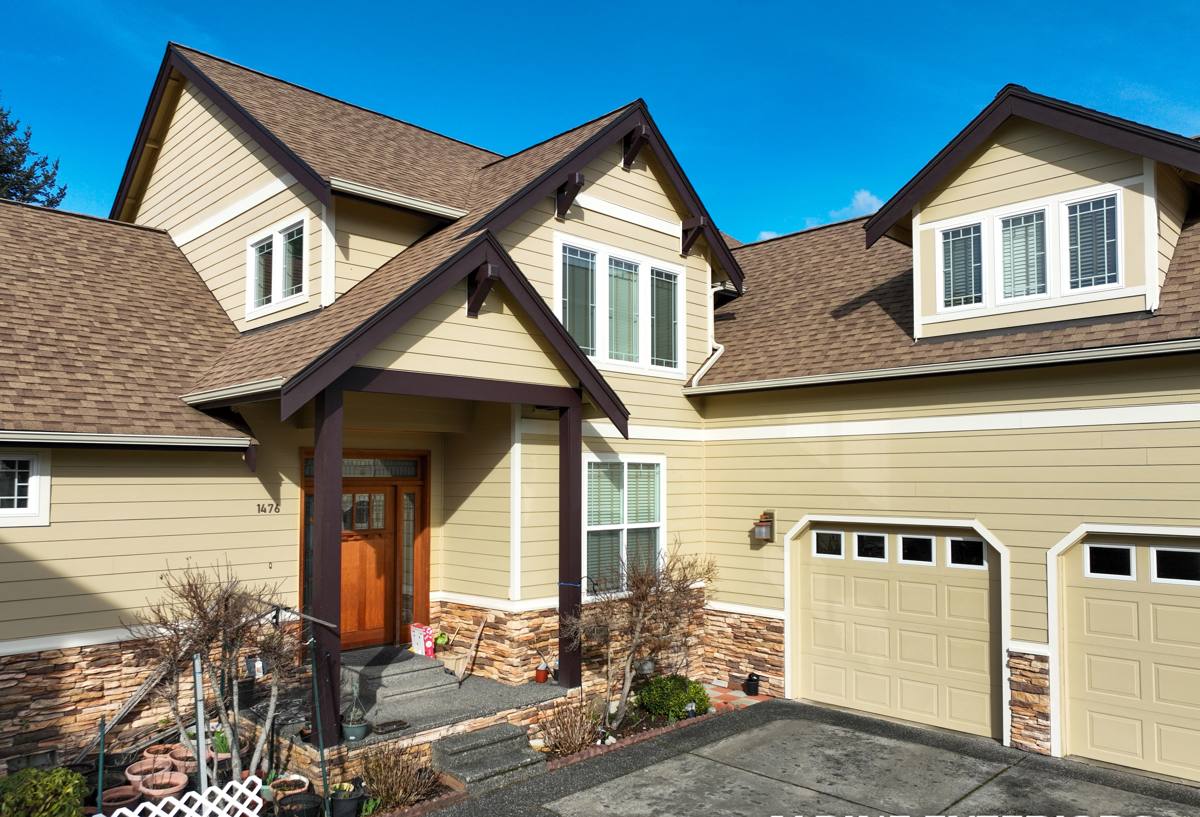
What Gulfport's Climate Actually Does to Siding
Salt Air and Corrosion
Airborne salt doesn't just sit on the surface of a wall — it works into fastener heads, trim joints, and any exposed metal. Over years, that accelerates corrosion in fasteners and flashing that weren't rated for coastal exposure, which in turn creates staining, loosening panels, and small gaps where water intrudes. This is one of the biggest reasons we specify corrosion-resistant fasteners and flashing on every Gulfport project, not just as an upsell but as a baseline requirement.
UV and Heat Cycling
Florida sun is hard on any exterior finish. Paint film breaks down faster under sustained UV, and daily heat cycling — hot pavement and direct sun during the day, cooler nights off the water — makes siding materials expand and contract. Materials with poor dimensional stability telegraph that movement as cracking, cupping, or joint separation. Fiber cement resists this far better than wood or engineered wood products because it isn't wood-based; it doesn't absorb and release moisture the same way, so it doesn't swell and shrink at the rate that drives those failures.
Wind-Driven Rain
Pinellas County's building code reflects a real risk: wind-driven rain that gets pushed horizontally into wall systems during storms. Siding that looks fine on a calm day can still be part of a wall assembly that's letting water behind it during a squall, because the failure point is usually the flashing, the laps, and the water-resistive barrier — not the face of the siding itself. This is why installation quality matters as much as the product on a peninsula lot.
Humidity and Moisture Cycling
Consistently high humidity means any siding product with a weak moisture tolerance stays damp longer after rain, which is exactly the condition that promotes rot in wood-based products and paint failure on poorly sealed cut edges. Fiber cement's moisture resistance is one of the core reasons it holds up better in this environment over the long term.
Why We Only Install James Hardie
We get asked why we don't offer LP SmartSide, vinyl, Cemplank, Allura, or primed wood siding. The honest answer is that we standardized on one product system because we'd rather install one thing extremely well than several things adequately. James Hardie's fiber cement is non-combustible, holds paint and factory-applied ColorPlus finish longer than wood-based alternatives, and Hardie engineers specific product lines for high-moisture, high-UV climates — which is directly relevant to a Gulfport install. Other fiber cement brands make reasonable products, but Hardie's HZ climate-engineered formulations, factory finish warranty, and installation documentation are what we've built our process around, and switching between systems on different jobs invites installation mistakes.
| Material | Moisture behavior | UV/fade resistance | Coastal fit |
|---|---|---|---|
| James Hardie fiber cement | Dimensionally stable, resists swelling | ColorPlus factory finish resists fading | HZ5 formulated for humid, high-moisture climates |
| Vinyl siding | Doesn't rot, but can warp under sustained heat | Fades and becomes brittle over time in strong UV | Can rattle or blow off in high wind if not rated correctly |
| LP SmartSide / engineered wood | Wood-based; vulnerable to moisture intrusion at cut edges and seams | Requires field-applied paint maintenance | Higher maintenance burden in humid coastal air |
| Primed wood/cedar | Most moisture-sensitive; prone to rot without diligent upkeep | Needs frequent repainting | Least suited to sustained salt air exposure |
This isn't a claim that other products are unusable — plenty of homes around the country carry them successfully. It's that for a peninsula neighborhood with this specific combination of salt, sun, and storm exposure, fiber cement's stability and Hardie's climate-specific engineering are what we're willing to put our name behind.
HardieZone HZ5 and What It Means for a Gulfport Install
James Hardie designs its siding formulations by climate zone, and Pinellas County falls into the HZ5 zone — Hardie's designation for regions with sustained humidity and moisture exposure. HZ5 products are formulated to resist moisture-related damage better than a one-size-fits-all fiber cement product would. For a Gulfport home, that means specifying the correct HZ5 product line, not just "Hardie siding" generically, and that's a detail some installers who don't work this specific coastline regularly can miss.
Beyond the base material, the ColorPlus factory finish matters here too. It's baked on and cured under controlled conditions before the boards ever reach the jobsite, which gives it better UV and fade resistance than a field-applied paint job — a meaningful advantage in a location that sees strong sun most of the year.
What Correct Fiber Cement Installation Involves
The material is only half the equation. A large share of siding failures we see on older homes trace back to installation shortcuts, not the product itself. On every job we do the following, and we don't treat any of it as optional:
Water Management First
Before a single board goes up, the wall needs a correctly lapped water-resistive barrier, properly integrated window and door flashing, and drainage planes that let any incidental moisture escape rather than get trapped behind the siding. This is the step that actually determines whether wind-driven rain stays outside the wall assembly.
Fastening and Clearances
Hardie specifies fastener type, spacing, and penetration depth, and those specs exist for a reason — under-fastened or over-driven boards are a common source of early failure. We also hold correct clearances from grade, roofing, and decking so the bottom edge of the siding isn't sitting in standing water or splashback, which is a real risk on lower-elevation lots near the water.
Joint and Seam Detailing
Butt joints and trim intersections are where most leaks start on any siding job. We follow Hardie's joint treatment specifications — proper caulking where called for, correct flashing behind horizontal joints — rather than relying on caulk alone to do a flashing detail's job.
Fastener and Trim Corrosion Resistance
Given the salt air, we use fasteners and trim accessories rated for coastal exposure. This is a small line-item cost that prevents a much bigger problem — rust streaking and loosened boards — a few years down the road.
Our Process for a Gulfport Project
- On-site assessment: we walk the exterior, check for existing moisture damage, evaluate the current wall assembly, and note site-specific factors like proximity to water, sun exposure, and drainage.
- Product and color selection: we help you choose the right HardiePlank, HardieShingle, or HardiePanel profile and ColorPlus finish for the home's style and HOA or neighborhood expectations.
- Tear-off and substrate check: we remove the old siding and inspect sheathing for hidden rot or damage before closing anything back up — this is where problems that have been hiding for years get found and fixed.
- Water-resistive barrier and flashing: installed and lapped correctly before any siding goes on.
- Siding installation: installed to Hardie's fastening, clearance, and joint specifications, with coastal-rated fasteners and trim.
- Final inspection and walkthrough: we review the finished work with you before calling the job complete.
Signs a Gulfport Home Needs New Siding
- Visible cracking, buckling, or warping in existing siding panels
- Soft spots or discoloration near the base of walls, especially close to grade
- Paint that's peeling or chalking faster than expected for its age
- Rust streaking around fasteners or trim
- Gaps opening up at butt joints or trim corners
- Rising energy bills that suggest the wall assembly is no longer performing
- Visible storm damage after high wind or heavy rain events
Maintenance and Long-Term Care
One advantage of switching to Hardie fiber cement in a salt-air environment is how little ongoing maintenance it asks for compared to wood-based siding. It doesn't need repainting on the same cycle a wood product would, and it isn't prone to the rot and insect issues that come with sustained moisture exposure. That said, no exterior material is maintenance-free on a peninsula lot. We recommend an annual visual check of caulked joints and trim, a gentle rinse to clear off accumulated salt residue, and prompt attention to any impact damage from storm debris before it becomes an entry point for moisture.
Why Hiring a Crew That Already Works Gulfport Matters
Siding installation quality varies a lot based on whether a crew understands the specific conditions of the site they're working on. A crew that mostly installs inland, in drier or less UV-intense areas, may not default to coastal-rated fasteners or HZ5 product specs unless they're specifically asked. We work throughout St. Petersburg and Pinellas County, including Gulfport, and that means we're already factoring in salt exposure, wind-driven rain, and local permitting expectations without having to relearn them project by project. It also means we're familiar with Pinellas County's wind-load and building code requirements that apply to exterior work in this area, so the installation is built to hold up to what actually happens here, not just to a generic spec sheet.
What Drives the Cost of a Fiber Cement Siding Project
| Factor | Why it matters |
|---|---|
| Home size and wall complexity | More corners, dormers, and trim details mean more labor and cutting |
| Substrate condition | Rot or damage found during tear-off adds repair scope before siding can go on |
| Product line and profile | HardiePlank, HardieShingle, and HardiePanel carry different material and labor costs |
| Trim and accessory scope | Corner boards, fascia, and soffit work add to the total project |
| Site accessibility | Tight lots, landscaping, or multi-story walls affect labor time |
We won't quote a number without seeing the home — anyone who does is guessing — but we're upfront that fiber cement is a mid-to-upper investment relative to vinyl, offset by a longer service life and lower long-term maintenance in this climate.
Questions to Ask Before You Hire
- Are you a James Hardie-certified or preferred installer, and can you explain your fastening and flashing process?
- Will you inspect and address substrate damage found during tear-off, or just cover it up?
- What fastener and trim materials do you use, and are they rated for coastal exposure?
- Which HardieZone product line will you specify for this home, and why?
- What does your warranty cover, and how does it relate to James Hardie's manufacturer warranty?
If your Gulfport home's siding is showing its age, or you're planning ahead of the next storm season, we're happy to walk the exterior with you and give you a straight, no-pressure assessment. Use the form below to request a free estimate.