 St. Petersburg Siding
 Disston Heights Homes Face a Specific Kind of Weather Stress
Disston Heights sits inland enough from Tampa Bay to feel like a quiet, shaded, established St. Petersburg neighborhood — but it's still fully exposed to everything Pinellas County's climate throws at a house. Like most of the city's older inner neighborhoods, Disston Heights is built out largely with mid-century bungalows and ranch homes alongside newer infill construction, which means a lot of the siding on these blocks is either original, a prior repaint-and-patch job, or a replacement that was never really matched to what the climate demands here.
That distinction matters more in St. Petersburg than in most of the country. A siding product that performs fine in a dry, mild climate can fail here in a fraction of the time, not because it was installed badly, but because it was never engineered for this environment in the first place. Choosing the right material — and installing it correctly — is the difference between siding that looks good at year fifteen and siding that's already curling, cracking, or rotting at year seven.
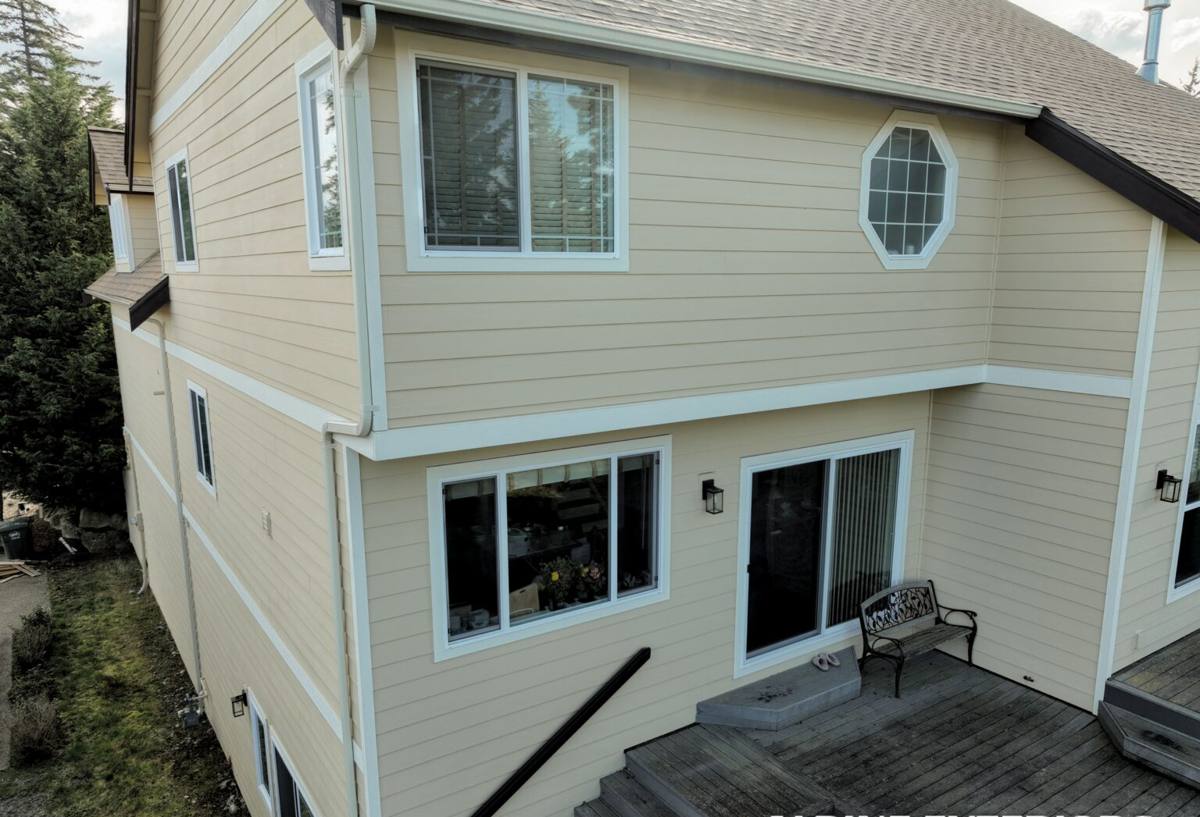
What Sun, Storms, and Salt Air Do to the Wrong Siding
Four things do most of the damage to exterior siding in this part of Florida, and they're all present in Disston Heights year-round:
- Hurricane-force wind: Even homes well inland from the Gulf take direct wind loading during tropical systems, plus the wind-driven debris and pressure cycling that loosens poorly fastened panels over time.
- Intense, near-constant UV exposure: Florida's sun angle and day length mean siding here absorbs far more UV over a year than siding in most of the country, which accelerates fading, chalking, and breakdown of weaker finishes.
- Wind-driven rain: St. Petersburg's storms don't just rain straight down — wind pushes water sideways into seams, laps, and trim joints that were never designed to handle rain moving horizontally.
- Salt air: Even a few miles from open water, airborne salt accelerates corrosion of fasteners and trim, and it interacts with certain siding materials in ways that shorten their service life.
None of these are unique to Disston Heights, but together they're why siding decisions in Pinellas County carry more weight than they do in a lot of the country. A product or installation shortcut that's a minor issue in a milder climate becomes a real problem here on a much shorter timeline.
Why We Only Install James Hardie Fiber Cement
We install one siding product: James Hardie fiber cement. We don't install vinyl, LP SmartSide, Cemplank, Allura, or unfinished wood siding like primed spruce or cedar, and that's a deliberate standard, not a limitation in what we're capable of installing.
Vinyl softens, warps, and becomes brittle under sustained heat and UV the way Florida delivers it, and it has no real fire resistance. Engineered wood products like LP SmartSide depend on their outer resin-saturated skin staying intact — once that's compromised by a cut edge, a fastener error, or years of moisture exposure, the wood substrate underneath is vulnerable to swelling and rot in a way fiber cement simply isn't. Unfinished wood siding demands a repaint and recaulk cycle that most homeowners underestimate, and salt air only shortens that cycle further.
James Hardie fiber cement is non-combustible, doesn't support pest damage, and is manufactured with regional climate zones specifically in mind — Hardie's HZ5 product formulation is engineered for exactly the humidity, moisture, and freeze-thaw profile of the Gulf Coast South. Paired with a factory-applied ColorPlus finish instead of field paint, it holds color and resists the fading and chalking that UV causes far longer than a job-site paint job. That's the combination — the right material, engineered for this region, backed by a real transferable warranty — that we're willing to put our name behind.
Matching the Right Hardie Product to Your Home
James Hardie makes several distinct product lines, and part of doing this job right is matching the product to the house rather than defaulting to one option for every project. On a street like the ones in Disston Heights, where home styles vary from small mid-century bungalows to ranch homes to newer construction, that matters.
| Home Style | Typical Hardie Product | Why It Fits |
|---|---|---|
| Mid-century bungalow / cottage | HardiePlank lap siding, narrower reveal | Matches the original scale and shadow lines these homes were designed with |
| Ranch-style home | HardiePlank lap siding, standard reveal | Clean horizontal lines suit the low, wide roofline typical of the style |
| Homes with gable or dormer accents | HardieShingle in a straight-edge or staggered pattern | Adds texture and visual interest without changing the whole home's siding profile |
| Newer infill construction | HardiePanel with battens, or HardiePlank | Fits more contemporary exterior designs while keeping the same fiber cement performance |
Trim, soffit, and fascia work usually pair with HardieTrim boards so the whole exterior envelope is fiber cement rather than mixing materials that age at different rates and create maintenance headaches down the road.
What a Correct Installation Looks Like in This Climate
James Hardie siding fails prematurely almost exclusively because of installation errors, not the product itself. In a climate with this much wind, rain, and UV, the margin for a shortcut is smaller than it is elsewhere.
Fasteners and Nailing Pattern
Hardie specifies particular fastener types, spacing, and embedment depth, and those specs get stricter in high-wind regions. Overdriven nails crack the board's edge and create a point where water gets in; underdriven nails leave panels loose enough to rattle and eventually work free in sustained wind.
Clearance and Flashing
Siding needs proper clearance from grade, roof lines, and horizontal surfaces, along with correctly lapped flashing at every window, door, and penetration. Skip this and wind-driven rain finds its way behind the siding regardless of how good the panels themselves are.
Cut Edges and Caulking
Every field-cut edge on a Hardie board needs to be sealed per manufacturer spec before installation, and joints need the right sealant applied correctly — not just caulked over as a finishing step. Unsealed cut edges are one of the most common causes of moisture intrusion on fiber cement siding.
- Manufacturer-specified corrosion-resistant fasteners, set to the correct depth
- Weather-resistive barrier installed and lapped correctly behind the siding
- Correct starter strip at the base course for proper alignment and drainage
- Minimum clearance maintained from grade, roofing, and decks
- Flashing integrated at every window, door, and penetration
- All field-cut edges sealed before installation, not after
- Product matched to the home's exposure and climate zone (HZ5 for this region)
- Final inspection against Hardie's published installation specifications
Our Process From First Call to Final Inspection
- On-site assessment: We look at your home's current siding, sheathing condition, trim, and any moisture or wind damage before recommending a scope of work.
- Product and color selection: We walk through which Hardie line and ColorPlus finish fits your home's style and the neighborhood's overall character.
- Permitting: Siding replacement in St. Petersburg requires a permit, and we handle that process so the work is inspected and documented correctly.
- Tear-off and substrate check: Old siding comes off and we inspect the sheathing underneath for rot or moisture damage before anything new goes up — this step gets skipped more often than it should.
- Weather barrier and flashing: A correctly lapped weather-resistive barrier and flashing package goes on before a single piece of siding.
- Installation to manufacturer spec: Fastening, clearances, and sealed cut edges are done to Hardie's published requirements, not shortcuts.
- Final walkthrough: We inspect the finished job with you before calling it complete.
What Affects Your Project's Cost
Every home is different, so instead of a flat number, here's what actually moves the cost of a Hardie siding project up or down:
| Cost Factor | Why It Matters |
|---|---|
| Home size and complexity | More linear footage, corners, and roof lines mean more cutting, flashing, and labor time |
| Condition of existing sheathing | Rotted or water-damaged sheathing found during tear-off needs to be replaced before new siding goes on |
| Product line chosen | HardiePlank, HardieShingle, and HardiePanel carry different material and labor costs |
| Trim and accent work | HardieTrim boards, shingle accents on gables, and detailed corner work add labor |
| Color and finish | Factory ColorPlus finishes cost more upfront than primed board but eliminate an early repaint |
| Access and site conditions | Tight lots, mature landscaping, or two-story sections add labor time |
We give a firm, written estimate after seeing the home in person — not a phone quote — because these factors vary too much from house to house to guess accurately.
Why Hire a Crew That Already Works in Disston Heights
Siding work in an established neighborhood like this comes with details that a crew unfamiliar with the area can miss: older homes with sheathing that may not match what current plans show, setbacks and easements typical of lots platted decades ago, and the general wear pattern that comes from years of Gulf Coast sun and storms on a specific building era. A contractor who's done this work up and down these blocks already knows what to expect when the old siding comes off, and pulls Pinellas County permits as routine business rather than a rare event.
That familiarity also shows up in smaller ways — knowing which color choices read well against the neighborhood's mature tree canopy, anticipating what's usually found under a 1950s or 1960s exterior, and having a realistic sense of timeline for a street like yours rather than a generic estimate.
If you're weighing a siding replacement in Disston Heights, we're glad to come take a look and walk you through exactly what your home needs — no pressure, no obligation, just a straight answer and a written estimate. Use the form below to request your free estimate.