 St. Petersburg Siding
 Building a Deck That Can Handle St. Pete Beach's Coastline
St. Pete Beach sits right on the Gulf, and that location is exactly why a deck built here needs different choices than one built a few miles inland in St. Petersburg proper. Salt-laden air, near-constant UV exposure, wind-driven rain, and the real possibility of hurricane-force gusts all work on a deck year-round, not just during storm season. A deck that would hold up fine in a shaded inland yard can start showing corrosion, fastener failure, or surface breakdown within a couple of seasons on a barrier island lot.
This page is about one thing: building custom decks for St. Pete Beach homes, done in a way that accounts for where the property actually sits. That means the right decking material, the right hardware, the right framing details, and a build that meets Pinellas County wind and code requirements from the start — not as an afterthought.
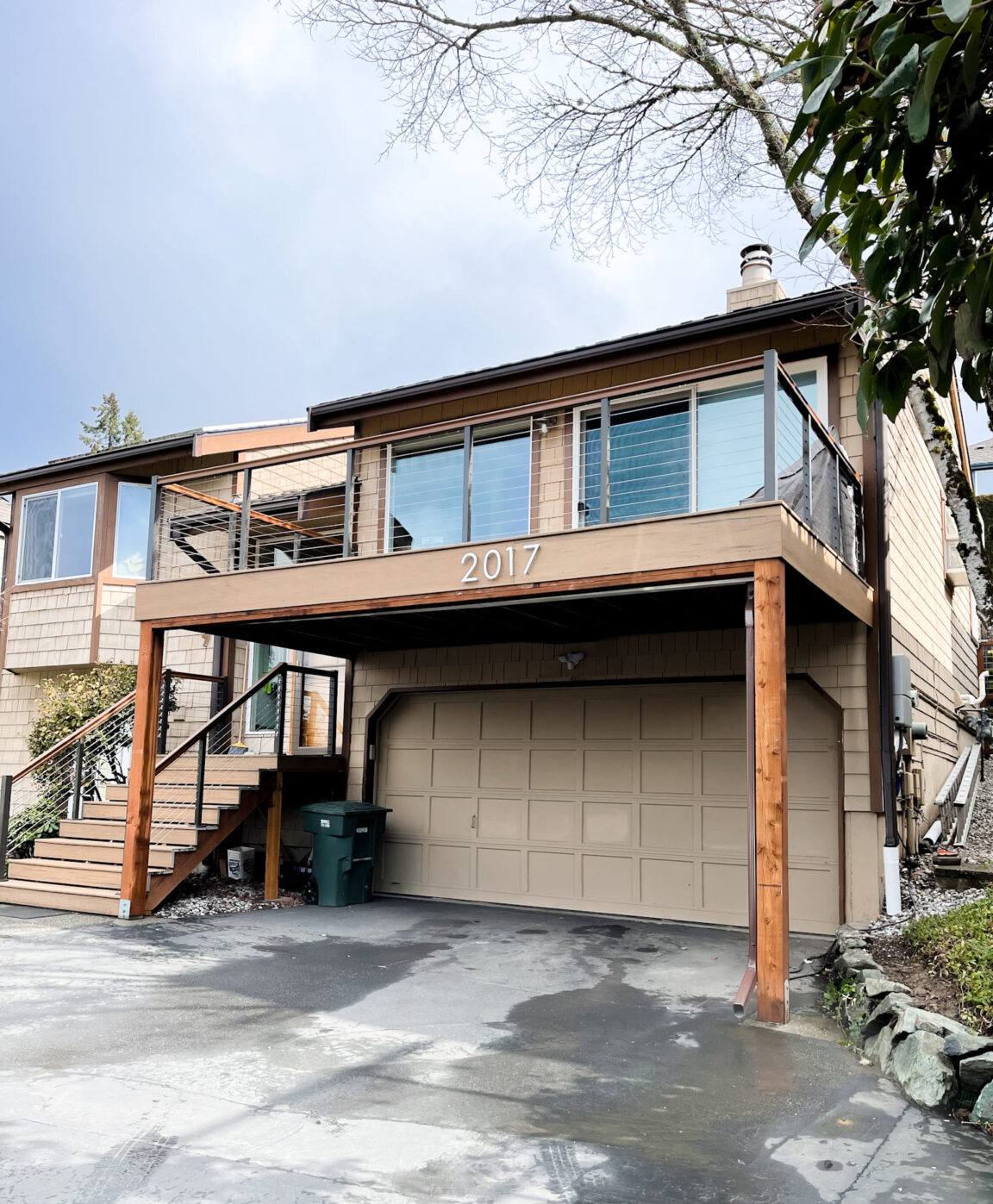
What Barrier Island Conditions Do to an Unprotected Deck
It helps to understand what's actually working against a deck this close to the water:
- Salt air corrosion — airborne salt settles on metal fasteners, brackets, and connectors, accelerating rust even on hardware rated for general outdoor use.
- UV exposure — Florida sun breaks down unprotected wood fibers and can fade or chalk lower-grade composite and PVC boards faster than the manufacturer's marketing suggests.
- Wind-driven rain — rain doesn't just fall here, it drives sideways into ledger connections, stair stringers, and railing posts, finding any gap in flashing or sealant.
- Hurricane-force wind loads — railings, posts, and their connections to the structure need to resist uplift and lateral load, not just support a leaning guest.
- Humidity and moisture cycling — constant wet-dry cycling stresses wood movement, fastener grip, and any finish that isn't built for it.
None of these are exotic problems — they're the normal cost of building on a Gulf-front barrier island. The fix isn't complicated either, but it does require making the right calls at every stage instead of defaulting to whatever's cheapest at the lumber yard.
Choosing Decking Material for Salt Air and Sun
What Actually Holds Up Out Here
There's no single "best" decking material for every St. Pete Beach home — it depends on budget, how much upkeep you want to do, and how close to the water you actually are. What we won't do is put a low-grade or moisture-sensitive product on a coastal deck and call it a day. Here's how the common choices stack up in this environment:
| Material | Salt Air Performance | Maintenance | Typical Lifespan Here |
|---|---|---|---|
| Pressure-treated wood | Good if sealed and re-sealed on schedule | Annual cleaning + resealing | 10-15 years with upkeep |
| Capped composite | Strong resistance to salt and UV fading | Occasional washing, no sealing | 20-25+ years, warranty-backed |
| Cellular PVC | Excellent — doesn't absorb moisture or salt | Lowest of the three | 25+ years |
| Tropical hardwoods (e.g., ipe) | Naturally dense and rot-resistant | Regular oiling to maintain color | 20-30 years |
Pressure-treated wood remains the most affordable option and is fine on a covered or less exposed deck if you're committed to sealing it. For open, sun-exposed decks close to the water, capped composite or PVC decking generally makes more sense — the upfront cost is higher, but you're not fighting UV fade, splintering, or repeated sealing every season. We'll walk through the real trade-offs for your specific lot rather than pushing one product line.
A Word on What We Steer Clear Of
We're selective about lower-tier composite decking that lacks a full cap or UV-stable formulation — on an inland shaded lot it may perform acceptably, but on a Gulf-facing St. Pete Beach property, uncapped or budget composite boards tend to fade, stain, and absorb moisture at the cut ends faster than homeowners expect. That's a maintenance and warranty headache we'd rather help you avoid than repair in three years.
Framing, Fasteners, and Footings: The Parts You Don't See
A deck's surface material gets all the attention, but the framing underneath is what actually determines whether it survives a coastal environment. This is where corners get cut on cheap builds, and where it matters most:
- Fasteners and connectors: stainless steel or heavy hot-dip galvanized hardware rated for coastal/marine exposure — standard zinc-coated screws and brackets corrode faster in salt air and can fail well before the boards do.
- Ledger attachment: proper flashing and sealing where the deck ties into the house is the single most common point of water intrusion on any deck, coastal or not, and it's non-negotiable here.
- Footings: footing depth and sizing account for local soil conditions and wind uplift requirements — sandy barrier island soil behaves differently than inland ground and needs to be sized accordingly.
- Post-to-beam and beam-to-joist connections: hurricane ties and rated structural connectors at every load path, not just toe-nailing and hoping.
None of this shows once the decking is installed, which is exactly why it's worth asking a contractor directly what hardware and framing methods they use before signing anything.
Permits, Wind Load, and Pinellas County Code
Custom decks in St. Petersburg and St. Pete Beach need to meet Florida Building Code requirements as adopted and enforced by Pinellas County, which includes wind load provisions appropriate to the area's coastal exposure category. Depending on the size, height, and attachment method, that can mean permitted plans, an engineered footing or ledger detail, and inspections at framing and final stages.
Skipping permits on a deck build might save time up front, but it creates real problems later — unpermitted structures can complicate home insurance claims, resale, and county compliance if there's ever storm damage. We pull permits and handle inspections as part of the build, not as an extra line item you have to chase down yourself.
Railings, Stairs, and Elevation Considerations
Railings on a coastal deck do double duty: code-required fall protection and a structural element that has to resist real wind load, not just casual weight. Baluster spacing, post attachment, and railing height all follow code minimums, and hardware selection matters just as much here as it does in the framing below deck.
Stairs and any elevated sections also need attention to how water sheds off the structure — standing water and poor drainage under a raised deck accelerates everything from wood rot to hardware corrosion. On barrier island lots where finished floor elevation and flood zone requirements can come into play, we account for that in the design rather than treating it as a surprise mid-build.
Our Process From Estimate to Finished Deck
- On-site consultation: we look at your lot, sun and wind exposure, existing structure, and how you actually want to use the space.
- Material and design walkthrough: honest comparison of decking materials, railing styles, and layout options based on your budget and exposure — no upselling toward whatever has the best margin.
- Permitting: we prepare and submit what Pinellas County requires, including engineering where the design calls for it.
- Framing and structural work: corrosion-resistant hardware, proper ledger flashing, and footings sized for local soil and wind load.
- Decking, railing, and finish work: installed to manufacturer specifications so warranties stay valid.
- Final walkthrough and inspection: we confirm everything passes and that you understand any maintenance the material requires.
Maintenance Checklist for a St. Pete Beach Deck
Whatever material you choose, a little routine care goes a long way in this climate. A realistic maintenance rhythm looks like:
- Rinse salt residue off decking and railings periodically, especially after windy stretches off the Gulf
- Check fastener heads and railing connections for early rust or looseness once or twice a year
- Reseal or stain wood decking on the schedule the product actually requires — don't stretch it to save a weekend
- Clear debris and standing water from under raised sections to prevent trapped moisture
- Inspect ledger flashing and any wall connection points for signs of water intrusion after major storms
- Wash composite or PVC decking with mild soap and water to prevent salt film buildup and mildew
Why a Crew That Already Works St. Pete Beach Matters
Building decks in Pinellas County means dealing with permitting details, wind exposure categories, and coastal soil and drainage conditions that don't come up the same way on an inland job in another part of the state. A crew that regularly works in St. Petersburg and on St. Pete Beach specifically has already worked through the local permitting process, knows what inspectors are checking for, and has seen firsthand how different materials and hardware actually hold up a mile off the Gulf versus a few miles inland. That's not something a general contractor unfamiliar with the barrier island picks up on the first job.
If you're planning a custom deck for a St. Pete Beach property, we're glad to walk the site, talk through material options honestly, and put together a straightforward estimate — no pressure, no pushy sales pitch. Use the form below to get started.